10/06/22 - CNPA Board Paper2 Annex1NPPP4
Cairngorms National Park Partnership Plan
MINISTERIAL FOREWORD To be added
INTRODUCTION The National Park aims CAIRNGORMS NATIONAL PARK AUTHORITY Formal Board Paper 2 Annex | 10th June 2022 National Park Partnership Plan 2022 – 2027
The Cairngorms is the UK’s largest national park at 4,528 sq km (6% of Scotland’s land mass) and is home to one-quarter of the UK’s rare and endangered species. Around 18,000 people live in the National Park across the areas of Aberdeenshire, Angus, Highland, Moray, Perth and Kinross, with two million visitors enjoying this special place every year.
The National Park has four distinct aims as set out by Parliament:
- To conserve and enhance the natural and cultural heritage of the area.
- To promote sustainable use of the natural resources of the area.
- To promote understanding and enjoyment (including enjoyment in the form of recreation) of the special qualities of the area by the public.
- To promote sustainable economic and social development of the area’s communities.
These aims are to be pursued collectively. However, if there is conflict between the first aim and any of the others, greater weight is given to the first aim (as set out in Section 9.6 of the National Parks (Scotland) Act 2000). This helps ensure conservation of the natural and cultural heritage underpins the economic, social and recreation value of the Cairngorms National Park.
The Partnership Plan embeds this approach in the strategy for the National Park that is approved by Ministers and sets the framework for all public bodies that work within the Cairngorms, from organisations like NatureScot and the five local authorities to Transport Scotland, Highlands and Islands Enterprise and Skills Development Scotland. The plan is also supported and delivered by a range of private and voluntary organisations.
What is a National Park Partnership Plan? The National Park Partnership Plan sets out how all those with a responsibility for the National Park will co-ordinate their work to tackle the most important issues. In particular, this plan:
- Sets out the vision and overarching strategy for managing the National Park.
- Guides the work of all public bodies and other partners to deliver the aims of the National Park.
- Provides the strategic context for the Local Development Plan.
- Is the Strategic Regional Land Use Framework and Regional Spatial Strategy for the National Park.
- Is the Economic and Sustainable Tourism Strategy for the National Park.
The document is arranged in three sections: Nature, People and Place. In each section we set out on overall outcome that we want to achieve by 2045 (the year Scottish Government has committed to achieving net zero), plus a series of long-term objectives and key targets or indicators of progress. Each of these targets is supported by a set of actions and policies for the next five years.
We are aware that individuals reading the Partnership Plan will have different interests and priorities; however, we would recommend considering the plan as a whole to see how the four aims of the National Park will be delivered collectively. As an example: To meet the target for peatland restoration there will need to be a change to deer management in the National Park. To enable the scale of peatland restoration to be delivered we will need to increase investment in skills and training of people to deliver this work, which in turn will be an opportunity for economic diversification within the Cairngorms economy. Finally, if we are going to have local contractors who undertake this
CAIRNGORMS NATIONAL PARK AUTHORITY Formal Board Paper 2 Annex | 10th June 2022 National Park Partnership Plan 2022 – 2027
work, we will need to invest in training and have the right level of affordable housing that allows people to live and work in the area. In this way, all the long-term objectives are interrelated, as the diagram below illustrates:
Place Nature
Objective C1 Ensure that there is sufficient affordable housing stock to enable people to live and work within the National Park.
Objective A3 Restore and manage peatland within the National Park to reduce carbon emissions and improve biodiversity.
Peatland restoration
Objective A4 Reduce the negative impacts of red deer and other herbivores across the National Park to enable woodlands to expand, heather loss to be reversed, peatlands to recover and wider bio- diversity and landscape enhancements to take place.
Objective B2 Develop a wellbeing economy that delivers social justice in a healthy ecosystem, drawing on the special natural and cultural qualities of the Cairngorms.
Objective B4 Increase skills and training opportunities for people in the National Park to meet business needs and ensure opportunities created by the growth in green jobs can be filled by residents and under-represented groups.
People
CAIRNGORMS NATIONAL PARK AUTHORITY Formal Board Paper 2 Annex | 10th June 2022 National Park Partnership Plan 2022 – 2027
The wider policy landscape There have been significant changes in the policy landscape since the last Partnership Plan was published in 2017. A climate emergency and nature crisis have been declared. The UK has left the European Union and its policy framework and the Covid-19 pandemic — and our collective need to recover from its impacts — is at the forefront of policy discussion. There is also a deepening cost-of-living crisis and a desire to move to an economy that works for everyone, with the wellbeing of our citizens at its heart.
National policy framework As a whole, this Partnership Plan is guided by Scottish Government’s National Performance Framework and by the UN Sustainable Development Goals. The following are the key national policy documents that underpin the approach taken in this plan.
Nature A Future Strategy for Scottish Agriculture Climate Change Plan 2018 — 2032 Deer Working Group — Scottish Government Response Environment Strategy for Scotland Grouse Moor Management Review — Scottish Government Response Land Use Strategy for Scotland 2021 — 2026 Scottish Biodiversity Strategy 2022, Biodiversity Statement of Intent, Edinburgh Declaration Water Framework Directive and River Basin Management Plans
People Equalities Duty Land Rights and Responsibilities Statement National Gaelic Language Plan Nature-based Jobs and Skills Action Plan Scotland’s National Strategy for Economic Transformation Scotland’s Public Health Priorities Skills Action Plan for Rural Scotland Volunteering for All
Place Cultural Strategy for Scotland Housing to 2040 Strategy Let’s Get Scotland Walking — National Walking Strategy National Planning Framework 4 National Transport Strategy Scotland Outlook 2030 — Responsible Tourism for a Sustainable Future Strategic Transport Projects Review 2
CAIRNGORMS NATIONAL PARK AUTHORITY Formal Board Paper 2 Annex | 10th June 2022 National Park Partnership Plan 2022 – 2027
The Cairngorms National Park also has a significant role to play in delivering the policy ambitions of Scottish Government. This is focused on Scotland being a place to innovate, trial new ways of thinking and show ambition to tackle the key challenges of our time. The National Park has done this in the past on issues like windfarm or hilltrack policy, on increasing the percentage of affordable housing up to 45% in certain villages and towns, and pursuing ambitious projects like Heritage Horizons: Cairngorms 2030. This National Park Partnership Plan looks to promote the National Park as a place to trial solutions to some of the issues facing Scotland as a whole.
Heritage Horizons: Cairngorms 2030 It is easy to feel powerless in the face of a global climate emergency and nature crisis. But we believe it doesn’t have to be this way. Inspired by the Gaelic word Dùthchas — meaning the deep-rooted connection between people and nature — Heritage Horizons: Cairngorms 2030 is putting the power to tackle the climate and nature crises in the hands of people who live, visit and work in the UK’s largest national park.
Across 24 long-term projects, Heritage Horizons will bring about transformational change in the Cairngorms, benefitting people’s health and wellbeing, delivering on climate change and enhancing nature across the National Park. The programme is on a larger scale than anything previously attempted in the UK, and aims to inspire rural and urban communities throughout Scotland and beyond to take action and make a difference.
In particular, Heritage Horizons: Cairngorms 2030 will focus on:
- Putting local people at the heart of decision-making and giving them more say in future funding decisions.
- Working with land managers to explore new ways of managing land, as well as restoring and enhancing large areas of peatland and woodland.
- Working with communities and partners to improve public transport and better connect the National Park.
- Developing an economy that benefits people and nature, and providing green solutions to public health issues including Covid-19 recovery, social isolation and dementia.
Heritage Horizons is an unprecedented partnership of over 45 organisations, delivering a seven-year programme of investment worth £43.2m. It is supported by the National Lottery Heritage Fund, with thanks to players of the National Lottery.
Project Description Link to partnership plan objectives
Wellbeing economy Developing a new economic model for the National Park that benefits people and nature, whilst protecting the planet’s resources and special qualities of the Cairngorms for future generations. Nature objective A1. People objectives B2, B3 and B9.
Public health and the outdoors Working with NHS Highland and partners in a range of sectors to deliver a unique public health programme focused on improving health and wellbeing through access to nature and the outdoors. People objectives B2 and B9.
Dementia activity resource centre Creating the country’s first outdoor resource centre specifically designed to support people living with dementia, their families and carers, enabling enjoyment and exploration of the outdoor environment. People objectives B9 and B10.
Climate learning and education Putting the voices of young people at the heart of decision making in the National Park and empowering them to take forward pro-environmental behaviours and activity. Nature objective A1. People objectives B4 and B11.
Effective community engagement and outreach Shaping the way we engage with people in the National Park, ensuring individuals and communities feel empowered, want to contribute and have the resources to effect real change. People objectives B5, B6, B7 and B10.
CAIRNGORMS NATIONAL PARK AUTHORITY Formal Board Paper 2 Annex | 10th June 2022 National Park Partnership Plan 2022 – 2027
Project Description Link to partnership plan objectives
Community arts and culture programme Bringing together the National Park’s creative sector and communities to identify and develop activities that create a greater connection to our landscapes and foster a sense of place. People objective B8. Place objective C10.
Climate conscious communities Increasing awareness and deepening understanding of the climate emergency and its relevance to residents, communities, landowners and businesses in the National Park. Nature objective A1.
Community-managed grant scheme Helping achieve our net zero and wellbeing economy targets by giving communities the power to define, design, fund and deliver projects that matter most to them. Nature objective A14. People objectives B2, B5, B6, B7 and B10. Place objectives C3, C4 and C10.
Regional Land Use Partnership and Land Rights and Responsibilities Statement Creating an international showcase for fair and inclusive land management that tests new models and helps everyone with a stake in land use understand their rights and responsibilities. Nature objectives A1, A8 and A10.
Green investment plan Blending public and private finance to deliver our net zero and biodiversity targets, whilst also providing long-term benefits for land managers, investors and communities. Nature objectives A1, A2, A3, A5, A11 and A14.
Woodland expansion Helping absorb and store large amounts of CO2 by increasing woodland cover in the National Park by 1,000 ha over the next five years. Nature objectives A1, A2, A10, A11, A13 and A14.
Peatland restoration Repairing around 3,500 ha of damaged peatland over a five-year period, storing CO2 and delivering significant ecological benefits through restoration. Nature objectives A1, A3, A5, A10, A11, A13 and A14.
Climate resilient catchments Increasing climate change resilience to reduce the risk of flooding in the National Park and ensure that rivers continue to deliver for the people and wildlife that depend upon them. Nature objectives A1, A2, A3, A8, A9, A11 and A14.
Deer management Engaging a broad range of people involved in deer management to develop strategic land use plans that will support land managers through the economic and environmental changes associated with reducing deer numbers and mitigating the impact of deer on the environment. Nature objectives A1, A2, A3, A4 and A11. People objective B4.
Cairngorms future farming Working with six pilot farms in the National Park to demonstrate how a transition to carbon zero (or even carbon negative) farming can be delivered practically and profitably in the Cairngorms. Nature objectives A1, A8 and A10.
Landscape and communities Exploring how communities perceive, experience and value the landscapes of the National Park, identifying special landscape qualities and establishing community preferences for landscape change. Nature objectives A1, A10 and A12. People objectives B2, B5, B7 and B11. Place objectives C9 and C10.
E‑bike network Reducing car use by creating a rural e‑bike network and connecting nine communities across Badenoch and Strathspey, two communities in Deeside and ten key visitor destinations. Nature objective A1. People objective B7, B9 and B10. Place objectives C4, C5, C6, C7, C8 and C9.
Glenmore transport plan Designing a new sustainable model of transport in the Cairngorms’ busiest visitor hotspot to reduce reliance on private vehicles, in turn reducing carbon emissions from transport in the National Park. Nature objective A1. People objective B7, B9 and B10. Place objectives C4, C5, C6, C7, C8 and C9.
Active travel in Badenoch and Strathspey Making getting around Badenoch and Strathspey easy, safe and enjoyable for both residents and visitors, creating the infrastructure required to connect communities without using a car. Nature objective A1. People objective B7, B9 and B10.
CAIRNGORMS NATIONAL PARK AUTHORITY Formal Board Paper 2 Annex | 10th June 2022 National Park Partnership Plan 2022 – 2027
Project Description Link to partnership plan objectives
Sustainable transport in Deeside and Angus Developing, testing and delivering electric public transport that meets community and visitor needs in Deeside and Angus. Nature objective A1. People objective B7, B9 and B10. Place objectives C4, C5, C6, C7 and C9.
Sustainable transport in Highland Perthshire Developing high quality walking and cycling infrastructure in Highland Perthshire to reduce car use and promote sustainable and active transport. Nature objective A1. People objective B7, B9 and B10. Place objectives C4, C5, C6, C7 and C9.
Active Aviemore Increasing active travel and reducing car use in the National Park’s largest and busiest town through the development of high-quality segregated walking and cycling infrastructure. Nature objective A1. People objective B7, B9 and B10. Place objectives C4, C5, C6, C7 and C9.
Cairngorms active travel plan Helping the Cairngorms become a rural exemplar for sustainable and active travel by developing an active travel plan that covers the whole of the National Park and links to public transport provision. Nature objective A1. People objective B7, B9 and B10. Place objectives C4, C5, C6, C7 and C9.
Striking the right balance One of the key points around a management plan that takes a long-term view (in this case 25 years and beyond) is the need to be realistic and make clear that there will be trade-offs. The dial cannot be ‘turned up’ on everything. We will look for areas where we can deliver multiple benefits and mitigate impacts, but we will also be honest about areas where compromise will be required.
For example, the climate is changing and this will affect the species and habitats that can survive in the Cairngorms National Park. For example, scaling up nature recovery and ecosystem restoration may mean a change to the abundance and distribution of certain species. Equally, it might not be possible — or indeed desirable — to get all features on designated sites into favourable condition if our collective goal is long-term ecological restoration. There may be a need for controls on holiday rental properties to ensure housing is affordable for local people.
These are all points of reasonable debate — and we have heard views on all sides during the extensive consultation on this plan — but it is essential that we strike the right balance to ensure the National Park thrives for both nature and people in the future. This means having difficult conversations with people from all walks of life who care about the National Park and making important decisions, backed up by the best available evidence, for the long term. As the data and evidence changes over the next five years we will also need to adapt and change our approach to managing the National Park, reflecting the best knowledge available.
Fair and just transition To address the climate and nature crises, we will need to act at unprecedented speed and scale across all parts of society. Change of this nature is never easy and we need to be careful to bring everyone with us on the journey. It will be crucial that we do not impact any one group of people unduly, and that we use the resources and economic changes to bring benefits to as wide a range of people as possible. This is what we mean by a fair and just transition.
Balancing the objectives contained within this plan with some of the fundamental changes that they will bring about will require careful discussion and balancing of different priorities. Understanding and addressing concerns about the changes to current ways of life does not negate the need for transformative action, but it will make it easier to pursue those aims collectively. Hard choices will still need to be made; however, an approach which listens to and involves communities of place and interest in the National Park has the best possible chance of delivering a decarbonised and nature-based economy where people and nature thrive together.
CAIRNGORMS NATIONAL PARK AUTHORITY Formal Board Paper 2 Annex | 10th June 2022 National Park Partnership Plan 2022 – 2027
Our long-term vision ‘An outstanding National Park, enjoyed and valued by everyone, where nature and people thrive together.’
What does that look like? Visual representations to be added
Nature 1) Structurally diverse moorland 2) Natural regeneration woodland 3) Peatland being restored 4) River Restoration 5) Species assemblage 6) Farming good practice
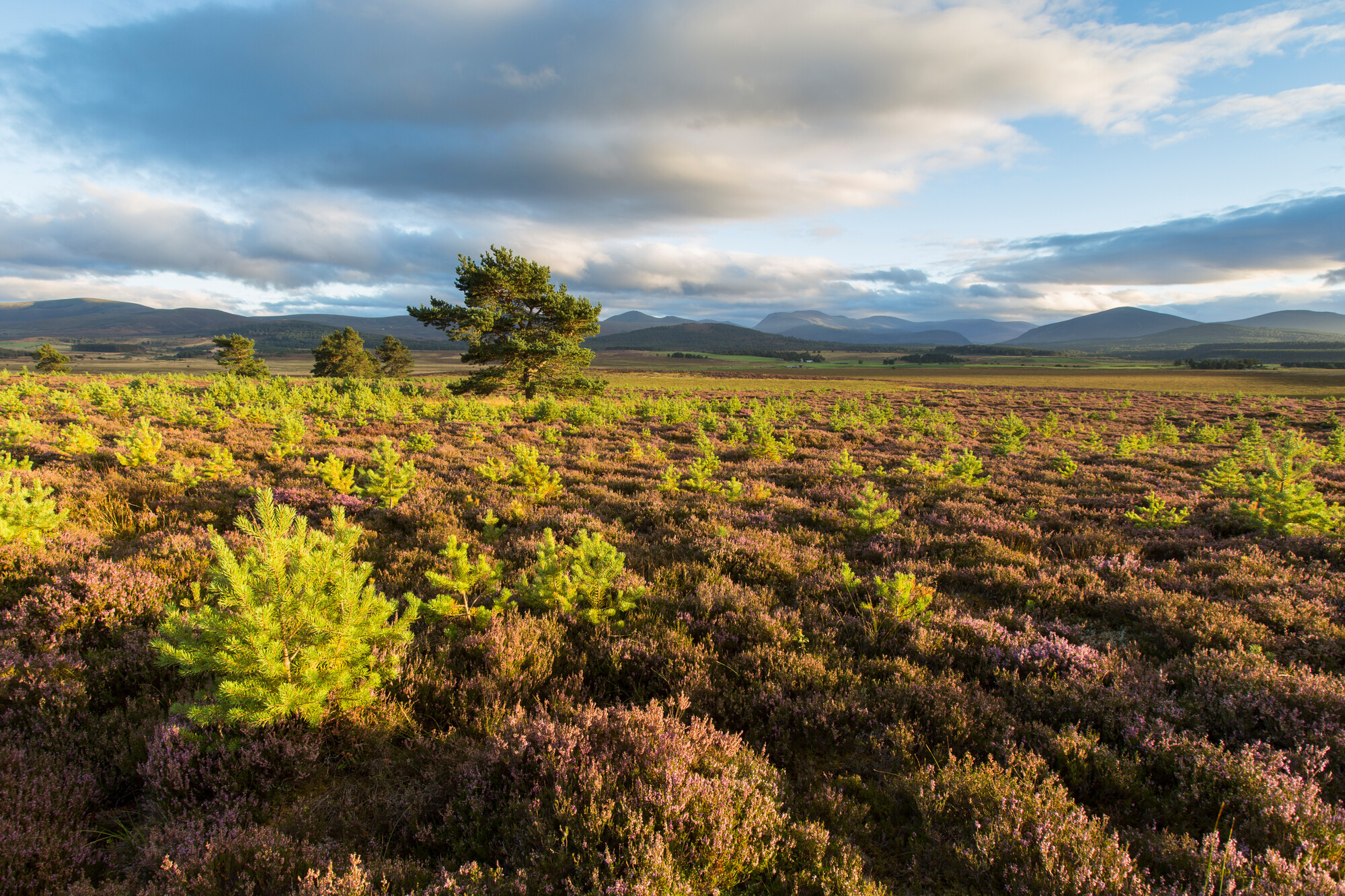
Moorland is more structurally diverse, providing a greater range of habitats for plants, insects, birds and mammals, and supporting a thriving rural economy. Woodlands are larger and more natural, delivering benefits for biodiversity, carbon storage, water quality and flood mitigation. Thousands of hectares of peatland have been restored, trapping CO2, aiding species recovery, improving water quality and reducing flooding risk. Rivers have been restored and reconnected to create thriving wetlands and floodplains, helping mitigate the impacts of climate change. Species are recovering within a network of connected habitats and are less reliant on targeted conservation activity. Farming is carbon neutral or carbon negative, helping combat climate change, enhance species diversity and provide a sustainable source of food.
People 1) Community assets 2) Health and wellbeing 3) Green jobs and skills 4) Equalities and diversity 5) Volunteer rangers 6) Young people
Residents are more involved in the way land is managed, with the number of community-owned or managed assets and social enterprises increasing. Communities are healthier, happier and more resilient, benefiting from a diverse local economy that puts wellbeing and the environment first. There has been a significant increase in the number of green jobs, with skills and training opportunities available for people to meet the growing demand. The Cairngorms is a true ‘Park for All’, welcoming and supporting people from more diverse backgrounds to live, work and visit here. Hundreds of volunteers are helping look after the landscape of the National Park, bringing benefits for nature and for their own health and wellbeing. The proportion of young and working-age people has stabilised and begun to increase, supporting thriving communities and a robust economy.
Place 1) Affordable housing with solar panels 2) Electric bus / EV charging 3) Active travel route 4) High quality visitor infrastructure 5) Cultural heritage
More people have access to affordable housing in the Park and the proportion of second homes, vacant properties and holiday lets has decreased. People increasingly choose to leave their car at home, with residents and visitors being more active and making regular use of low and zero carbon transport. Communities across the Park are better connected by a network of fully accessible paths and cycle routes, improving people’s health and wellbeing. Visitors choose to stay longer and travel at different times of year, supported by improved infrastructure and high-quality ranger services. The area’s rich cultural heritage is cared for and celebrated in communities across the Cairngorms, from events and interpretation to storytelling and music.
CAIRNGORMS NATIONAL PARK AUTHORITY Formal Board Paper 2 Annex | 10th June 2022 National Park Partnership Plan 2022 – 2027
OUR PLAN FOR THE FUTURE Nature Outcome: A carbon negative and biodiversity rich National Park with better functioning, better connected and more resilient ecosystems.
The interaction between people and nature is central to addressing many of the challenges we face in the National Park and in society more generally. There is a need to find solutions to the climate emergency and biodiversity crisis that have nature at their heart. As the UK’s largest protected area — home to one-quarter of the UK’s rare and endangered species — the Cairngorms should be a rural exemplar of this approach, and in this section we identify a range of measures to conserve and enhance nature in the National Park. This means addressing a number of significant land use and ecological issues over the next 25 years that will continue to have significant positive effects in the National Park for the next 200 years.
We do not pretend that this process will be easy. To achieve the kind of systemic change we are talking about will require a massive collective effort across all areas of society. We need to ensure that this takes place as part of a ‘just transition’, supporting people in different sectors to both take new opportunities and share traditional skills that will be needed to deliver this plan. We have set out a range of measures to support people and jobs across the National Park in the People section of this plan, and we believe that there will be significant opportunities over the next 25 years for all those currently involved in land management, alongside the creation of additional jobs in areas such as peatland restoration, river restoration, species management and habitat enhancement.
There is also a need to base our approach on the best available data and to adapt as we proceed to ensure we are delivering the long-term targets set out in the plan. We have set out a series of targets and indicators alongside each objective and we will be reporting on these on an ongoing basis, tracking our progress and informing future decision-making.
Objectives
Name Narrative Objective Target / indicator Actions by 2027 Partners (alongside the Park Authority)
A1 — Net zero The climate and nature crisis is the single biggest challenge that we face and it is critical that the Cairngorms National Park — as the largest protected area in the UK — is an exemplar in achieving net zero, developing nature-based solutions and helping Scotland as a whole meet its targets as part of a just transition. The Park Authority is working with independent experts to establish the National Park’s existing carbon footprint and will use this to present a route map to net zero (and beyond) during 2023. This will present an ambitious but realistic action plan based on the best available evidence, helping us identify and track the key steps we need to take over the coming years. Ensure the Cairngorms National Park reaches net zero as soon as possible and contributes all it can to helping Scotland meet its net zero commitments. By 2023, establish the timeframe within which the Cairngorms National Park will be net zero and set a target for becoming carbon negative. Annual independent progress report on net zero for the Cairngorms National Park.
- Carbon audit and baseline established for the Cairngorms National Park in 2022.
- Establish date for Cairngorms National Park to be net zero and carbon negative by 2023.
- Establish a Community Climate Action Hub for the National Park.
- Heritage Horizons: Cairngorms 2030 programme (see page XX above). All
A2 — Woodland expansion Woodland expansion to join up our existing woodlands is crucial to deliver biodiversity and landscape benefits, capture and store carbon dioxide, provide a sustainable Increase the amount of woodland in the National Park to support larger, more natural woodlands, expanding A minimum of 35,000 ha of new woodland cover created by 2045, which:
- Expand woodland by a minimum of 7,000 ha through the delivery of the Cairngorms National Park Scottish Forestry, Forest and Land Scotland, Landowners, NatureScot, ConFor
CAIRNGORMS NATIONAL PARK AUTHORITY Formal Board Paper 2 Annex | 10th June 2022 National Park Partnership Plan 2022 – 2027
Name Narrative Objective Target / indicator Actions by 2027 Partners (alongside the Park Authority)
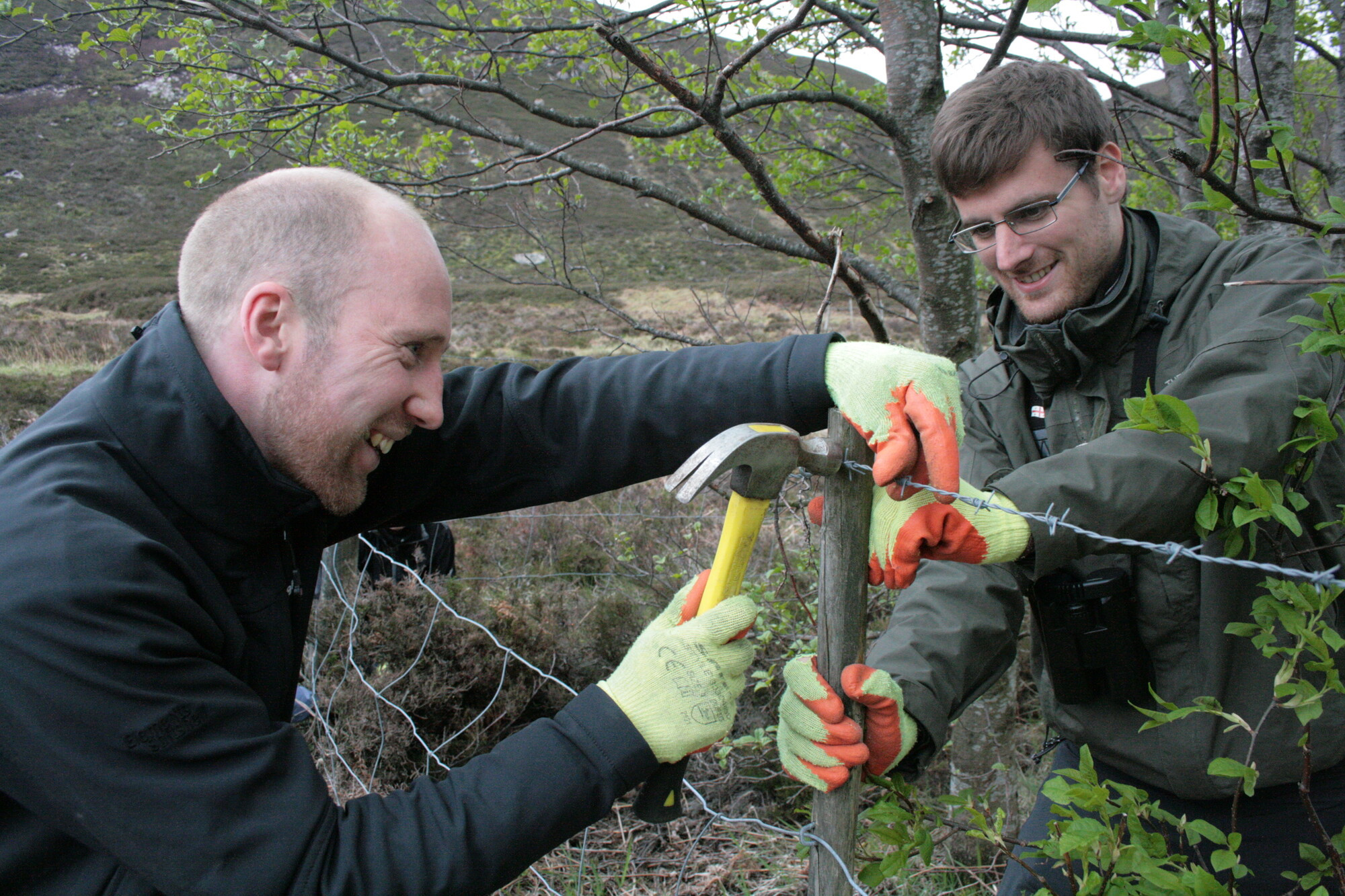
source of timber, improve water quality and help reduce the risk of flooding. in places up to a natural treeline, providing connections across river catchments and around the central core of the mountains. a) Includes a minimum of 80% native woodland. b) Includes a minimum of 10,000 ha of natural regeneration without planting. c) Results in no wholesale conversion of enclosed, in-bye agricultural land to forestry. d) Minimises the amount of fencing in the National Park by favouring establishment through herbivore management and removing redundant fences. Forest Strategy and targeted grant schemes.
- Ensure all scales of woodland are considered and supported, including agro-forestry, and that at least 2,500 ha is achieved through natural regeneration without planting.
- Work with land managers to ensure existing woodlands are managed for a range of benefits including timber production, public access, biodiversity etc.
- Work to deliver improvements to woodland deer management planning in forest plans.
- Heritage Horizons: Cairngorms 2030 programme (see page XX above).
Our guiding principle in the National Park is ‘the right tree in the right place for the right reason’, and this is especially true for planting associated with carbon sequestration and the woodland carbon code. There is also a need to ensure that the relatively limited area of in-bye land in the National Park continues to play a part in the nation’s food security and is protected from wholesale conversion to woodland.
Diverse, well-planned, climate-resilient and productive woodland will continue to generate economic and conservation benefits in the National Park. This plan sets out a direction for woodland that is about increasing areas of natural regeneration; however, planting and fencing will still be required in some places, notably those with limited seed sources and where there is conflict with herbivore impacts (especially in the early years of the plan). Fencing is recognised as an important tool for woodland management, but it can have negative impacts. Its use should be carefully considered and, before fencing is agreed, establishment through herbivore management should be encouraged where the surrounding land use context is favourable.
Finally, there is a need to recognise that the management of existing woodlands plays a key role in delivering biodiversity, recreation and economic outcomes and there needs to be a continued focus on long-term forest planning, habitat enhancement, high quality timber production, rural employment, responsible access and community engagement.
A3 — Peatland restoration Degraded peatland produces 10% of Scotland’s carbon emissions and preventing these emissions is a vital part of the national drive to reach net zero by 2045. Within the Cairngorms National Park, we estimate there are around 90,000 ha of impacted peatland and 57,000 ha of this has experienced some form of erosion. Peatland restoration also helps store carbon: restoring one hectare of actively eroding peat saves up to 19 tonnes of CO2 equivalent each year. Restore and manage peatland within the National Park to reduce carbon emissions and improve biodiversity. A minimum of 38,000 ha peatland is under restoration management by 2045. 80% of all drains are restored by 2035. All erosion features are restored by 2050.
- Restore a minimum of 6,500 ha of peatland.
- Increase contractor and estate capacity while creating job opportunities through a peatland skills training programme (see People objective B4 — Skills and training). Skills Development Scotland, Highlands and Islands Enterprise, Scottish Enterprise, NatureScot, private contractor businesses, landowners, deer management groups, Scottish Land and Estates
CAIRNGORMS NATIONAL PARK AUTHORITY Formal Board Paper 2 Annex | 10th June 2022 National Park Partnership Plan 2022 – 2027
Name Narrative Objective Target / indicator Actions by 2027 Partners (alongside the Park Authority)
- Develop guidance on the integration of peatland restoration and woodland expansion in the National Park
- Explore protection options for peatland restoration from herbivores.
- Heritage Horizons: Cairngorms 2030 programme (see page XX above).
We want the Cairngorms to become a centre of excellence in repairing degraded peatland and providing long-term jobs in peatland restoration and management (see People objective B4 — Skills and training).
The restoration of peatland stops the loss of carbon, benefits biodiversity, improves water quality and helps alleviate flooding. This is one of the key deliverables that the Cairngorms can undertake to help Scotland meet its net zero targets. There is a need to ensure that our peatland and woodland work is closely integrated to ensure the best outcomes for the National Park.
A4 — Deer and herbivore impacts Deer are important species in the National Park, providing income, employment and enjoyment. However, we need to reduce the impacts of deer and other herbivores in key areas of the National Park to enable peatland and woodland work to proceed at the scale necessary to meet our climate and nature commitments. In particular, we need to reduce deer numbers where they are having a significant impact on existing habitats or preventing beneficial habitat change. Reduce the negative impacts of red deer and other herbivores across the Cairngorms National Park to enable woodlands to expand, heather loss to be reversed, peatlands to recover and wider biodiversity and landscape enhancements to take place. Average open range red deer densities in each deer management group are a maximum of five to eight per km² by 2030. Non-native sika and fallow deer will be contained within their current distribution in the National Park by 2030.
- Work in partnership with deer management groups to produce strategic land use plans which explore a wide range of income streams (including from natural capital), reduce habitat impacts and deliver a wide range of public and private benefits.
- Explore new models of public / private partnership for maintaining stalker employment in key areas of the National Park to achieve overall deer policy objectives.
- Explore the use of measures of deer and herbivore occupancy across the National Park and investigate how those measures might be used to improve the management of herbivores and, specifically, reduce deer impacts on restoration targets.
- Heritage Horizons: Cairngorms 2030 programme (see page XX above). NatureScot, deer management groups, environmental NGOs, British Deer Society, Scottish Gamekeepers’ Association, Association of Deer Management Groups, British Association of Shooting and Conservation
As an example, on peatland restoration sites with deer densities of between ten and 12 per km², we regularly see negative impacts and damage to restoration work. Given the scale of the task, the sensitivity of peat to trampling and the slow growing nature of our upland vegetation, it is difficult to conceive how we can restore significant areas of eroded peat without deer reductions. Fencing many of these areas would be impossible and, even if it were, the compensation culls associated with the fencing would be very large.
An average deer density across a deer management group area of five to eight per km² will allow for differences within a deer management group area for ecological restoration, sport shooting and so on, whilst helping to deliver the overall objectives of the park plan.
There is a need to deliver public interest priorities (peatland restoration, woodland creation etc) alongside private interests and build on the work to reduce deer
CAIRNGORMS NATIONAL PARK AUTHORITY Formal Board Paper 2 Annex | 10th June 2022 National Park Partnership Plan 2022 – 2027
Name Narrative Objective Target / indicator Actions by 2027 Partners (alongside the Park Authority)
numbers and impacts already happening in the National Park. We also need to consider how best to support estates to deliver deer management targets and how best to support stalking employment and the skills that will be needed to do this work over the long-term. programme (see page XX above).
A5 — Moorland management Moorland management plays a significant role in supporting a range of habitats and species in the Cairngorms and is an important part of its culture and economy. During the lifetime of this plan a new national licensing régime for grouse moors is due to be introduced by Scottish Government. Increase the sustainability of moorland management in the National Park to ensure greater species and structural diversity in moorland areas of the National Park. A measurable and sustained increase in both the home range, occupation and breeding success of golden eagle, hen harrier, merlin and peregrine across the National Park.
- Introduction of grouse moor licensing and other elements of the Independent Review of Grouse Moor Management within the Cairngorms National Park. Scottish Government, NatureScot, landowners, environmental NGOs, Scottish Land and Estates, Game and Wildlife Conservation Trust, British Association of Shooting and Conservation, East Cairngorms Moorland Partnership, Wildlife Estate Scotland
Delivering sustainable grouse moor management is a key part of this plan. In particular, this means greater species and structural diversity on grouse moors, with more pockets and strips of trees and shrubs on moorland edges, steep slopes, in gullies and around woodland remnants. It means identifying further opportunities to make space for nature recovery alongside — and as part of — moorland management; and specifically wanting to see an end to raptor persecution. Increased species and habitat diversity on grouse moors, linking together a natural transition from woodland to montane scrub to upland heath.
- Support knowledge exchange and sharing of good practice from the East Cairngorms Moorland Partnership to other parts of the National Park.
- Develop and support Estate Management Plans and Wildlife Estates Scotland accreditation.
This plan aims to work with moorland managers to adapt to and mitigate against the twin biodiversity and climate emergencies, while working to maintain estate incomes through market adjustment and other income sources, e.g. carbon markets.
A6 — Gamebird management There are significant releases of non-native gamebirds in the National Park, but information on their impact upon native biodiversity needs to be better understood. The regulatory framework around releases of species is not consistent at present, meaning that a licence is not required to release pheasants and partridges, but is required to release beaver or red squirrels. Ensure that all pheasant and partridge shoots adhere to best practice and that all gamebird releases are sustainable and do not negatively impact on native biodiversity. Gamebird releases have no negative impact on native biodiversity. Impacts of gamebirds released around the National Park each year.
- Establish a baseline for the number of gamebirds released in the National Park and assess their impact on native biodiversity.
- Depending on the evidence gathered, investigate the use of Park Authority powers to regulate gamebird releases and develop a regulatory approach if required. NatureScot, landowners, environmental NGOs, Scottish Land and Estates, Game and Wildlife Conservation Trust, British Association of Shooting and Conservation
There is a need to gather data on releases of non-native gamebirds and determine their impacts on native wildlife. Depending on what these impacts are, changes may need to be made to the overarching regulatory framework.
A7 — Fire management Muirburn is used as a management tool in the Cairngorms to improve grazing, to increase grouse densities, to create firebreaks and to create seed bed Ensure that all managed burning (muirburn) follows best practice as defined by All muirburn will comply with regulations set out in the muirburn licensing scheme,
- Conduct an audit to establish an accurate baseline for the extent of Scottish Government, NatureScot, Scottish Land and Estates, landowners,
CAIRNGORMS NATIONAL PARK AUTHORITY Formal Board Paper 2 Annex | 10th June 2022 National Park Partnership Plan 2022 – 2027
Name **Narrative