Formal Board Paper 1 Annex 1.6 - Landscape
Cairngorms National Park Authority Formal Board Paper 1 Annex 1.6 13 March 2026
Paper 1
Annex 1.6
Cairngorms National Park Authority Ughdarras Pàirc Nàiseanta a’ Mhonaidh Ruaidh
Sustainable places
Schedule 6: Landscape
Cairngorms National Park Local Development Plan: Evidence Report March 2026
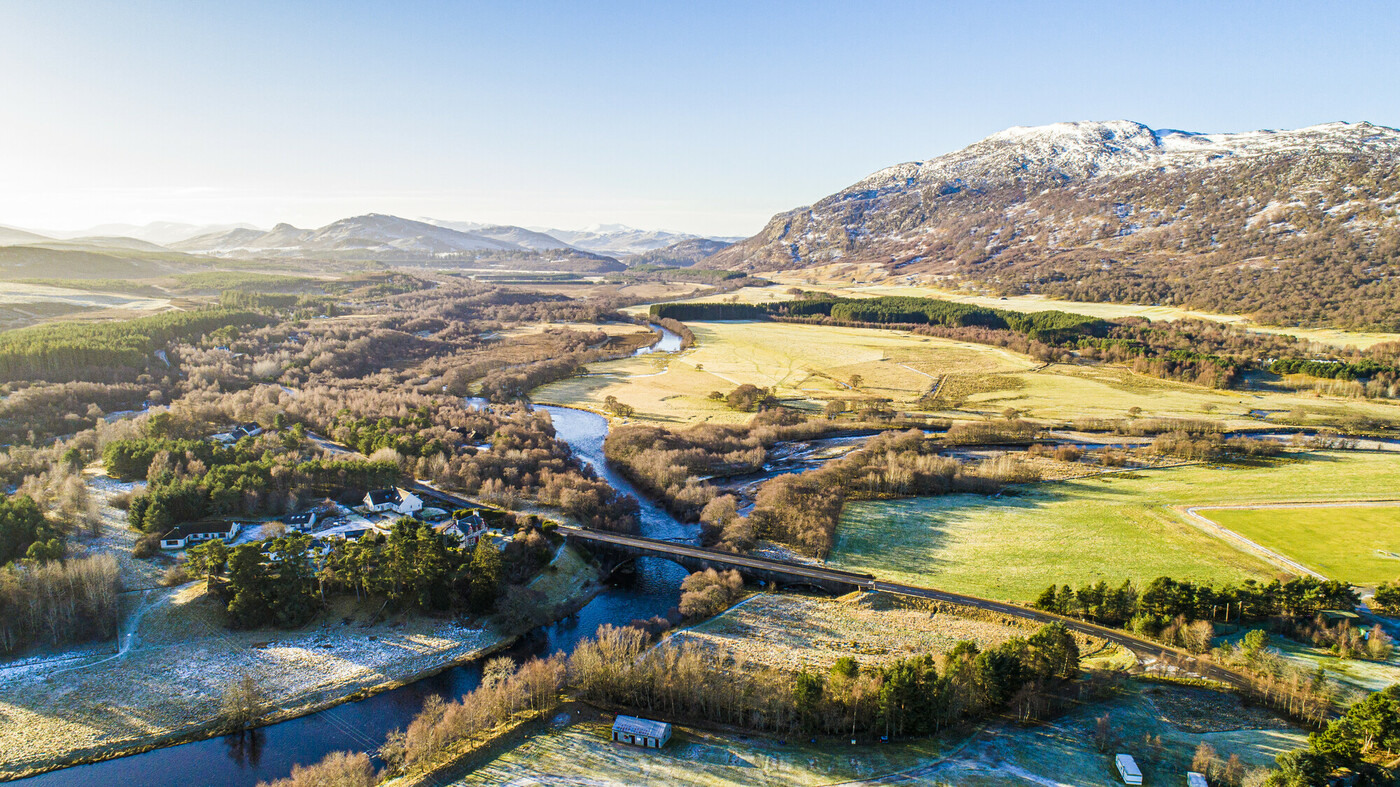
(Image of a landscape with a bridge and people on bicycles)
Cairngorms National Park Authority Ùghdarras Pàirc Nàiseanta a’ Mhonaidh Ruaidh Page 1 of 38
Schedule 6: Landscape
March 2026
Schedule contents
- Requirements addressed in this schedule 2
- Links to evidence 3
- Summary of evidence 5
- Policy context 5
- National Planning Framework 4 5
- Legislation and national documents 7
- National Park Authority documents 8
- Local authority documents 10
- Community action plans 10
- Baseline 12
- This section provides baseline information on the following matters:
- Special landscape qualities of the Cairngorms National Park 13
- National Scenic Areas 17
- Cairngorms National Park landscape character assessment 19
- Wild land 20
- Relative wildness 22
- Dark skies 27
- Private roads and ways 29
- Wind energy 30
- Digital infrastructure – mobile coverage 33
- This section provides baseline information on the following matters:
- Evidence gaps 33
- Summary of stakeholder engagement 34
- Summary of implications for Proposed Plan 35
- Statements of agreement 36
- Statements of dispute 37
Cairngorms National Park Authority Ughdarras Pàirc Nàiseanta a’ Mhonaidh Ruaidh Page 2 of 38
Requirements addressed in this schedule
Table 1 Information required by the Town and Country Planning (Scotland) Act 1997, as amended (CNPA003), regarding the issue addressed in this schedule.
| Section | Requirement |
|---|---|
| Section 15(5) | The principal [physical], [cultural], economic, social, built heritage and [environmental] characteristics of the district. |
| Section 15(5)(f) | Any change which the planning authority think may occur in relation to any of the matters mentioned in paragraphs (a) to (eb). |
| Section 16(2)(a) | to take into account— i. The National Planning Framework and ii. Any local outcomes improvement plan (within the meaning of section 6 of the Community Empowerment (Scotland) Act 2015) for the part of their district to which the local development plan relates, iii. Any registered local place plan (see schedule 19) that is for the part of their district to which the local development plan relates. |
| Section 16(2)(b) | Are to have regard to such information and considerations as may be prescribed. |
| Section 16(2)© | May have regard to such other information and considerations as appear to them to be relevant. |
| Section 16B(3)(a) | The evidence report is to set out the planning authority’s view on the matters listed in section 15(5) for land in the part of the authority’s district to which the local development plan will relate, |
| Section 16B(3)(e) | Include such other matters as are prescribed. |
| Section 16B(4)© | The evidence report is also to include a statement on the extent to which the views expressed under paragraphs (a) and (b) have been taken into account in the report. |
| Section 264A | In the exercise, with respect to any land in a National Park, of any power under the planning Acts, special attention shall be paid to the desirability of exercising the power consistently with the National Park Plan as adopted under section 12(7)(a) of the National Parks (Scotland) Act 2000 (asp 10). |
Cairngorms National Park Authority Ùghdarras Pàirc Nàiseanta a’ Mhonaidh Ruaidh Page 3 of 38
Links to evidence
International documents
- CNPA690 — IUCN Management Categories of Protected Areas
Legislation
- CNPA003 — Town and Country Planning (Scotland) Act 1997
- CNPA004 — National Park (Scotland) Act 2000
- CNPA634 — Natural Environment (Scotland) Bill as passed
National documents
- CNPA008 — National Planning Framework 4
- CNPA015 — Scotland’s Landscape Charter
- CNPA648 — National Planning Framework 4 Explanatory Note November 2022
Key agency documents
- CNPA017 — Cairngorms Special Landscape Qualities
- CNPA018 — National Scenic Areas
- CNPA021 — Wild Land Areas
- CNPA022 — Mapping of Scotland’s Wildness and Wild Land: Non-technical Description of the Methodology
- CNPA603 — Special Landscape Qualities — Guidance on assessing effects
National Park Authority documents
- CNPA010 — Cairngorms National Park Partnership Plan 2022
- CNPA016 — Cairngorms Local Development Plan 2021
- CNPA019 — Cairngorms Landscape Toolkit
- CNPA024 — Mapping hill tracks in the Cairngorms National Park
- CNPA020 — Cairngorms Landscape Character Assessment
- CNPA026 — Cairngorms Local Development Plan Interactive Map Engagement Report
- CNPA027 — Cairngorms Youth Action Team Place Standard Tool Engagement Report
- CNPA028 — Cairngorms National Park Gypsy / Traveller Engagement Report 2024
- CNPA528 — Heritage Horizons – Cairngorms 2030
- CNPA681 — Kingussie High School Higher Criminology Students Place Standard Tool Engagement 2024
Cairngorms National Park Authority Ùghdarras Pàirc Nàiseanta a’ Mhonaidh Ruaidh Page 4 of 38
- CNPA682 — Kingussie High School S1 Geography Students Place Standard Tool Engagement 2024
- CNPA683 — Kingussie High School S3 Geography Students Place Standard Tool Engagement 2024
- CNPA833 — Cairngorms Local development plan place standard tool engagement with Kingussie High School Youth Forum 2025
- CNPA834 — Local development plan place standard tool engagement with the Cairngorms National Park Junior Rangers 2025
- CNPA1104 — Cairngorms National Park Local Development Plan engagement — gamification approach 2025
- CNPA1105 — Local Development Plan engagement – Planning Power with Cairngorms 2030
- CNPA1346 — Topic: Landscape — engagement version
Local authority documents
- CNPA638 — 2024 – 2027 Highland Outcome Improvement Plan
- CNPA636 — Aberdeenshire Local Outcomes Improvement Plan 2017 – 2027 (website)
- CNPA637 — Angus Community Plan 2022 – 2030
- CNPA639 — Moray Local Outcomes Improvement Plan v2
- CNPA640 — Perth and Kinross Community Plan (Local Outcomes Improvement Plan) 2022 — 2032
- CNPA1091 – 2024 – 2027 Highland Outcome Improvement Plan – Delivery Plan
Community action plans
- CNPA011 — Community action plans
- CNPA065 – Grantown-on-Spey Community Action Plan: Looking to 2030
- CNPA121 — Braemar Community Action Plan 2017
- CNPA122 — Carrbridge Community Action Plan: Looking to 2030
- CNPA125 — Dalwhinnie Community Action Plan: Looking forward to 2030
- CNPA131 — Nethy Bridge Community Action Plan: Looking to 2030
- CNPA132 — Newtonmore Community Action Plan: Looking to 2030
- CNPA133 — Strathdon Community Action Plan: Looking to 2030
- CNPA331 — Dulnain Bridge Community Action Plan: Looking to 2030
Data sources
- CNPA023 — Cairngorms Dark Sky Park
Cairngorms National Park Authority Ùghdarras Pàirc Nàiseanta a’ Mhonaidh Ruaidh Page 5 of 38
- CNPA174 — Cellmapper
- CNPA649 — Dorenell Wind Farm Extension and Biodiversity Enhancement Plan
- CNPA650 — Balnespick Wind Farm
- CNPA930 – Onshore Windfarm Proposals
Consultation material
- CNPA604 — Topic Landscape — Interim Consultation — NatureScot Comments
- CNPA1340 — Evidence report engagement responses
Summary of evidence
Policy Context
National Planning Framework 4
National Planning Framework 4 (CNPA008) recognises Scotland’s rich heritage, culture and outstanding environment as national assets which support our economy, identity, health and wellbeing.
The identification and protection of nationally important landscape assets are provided in Policy 4 Natural Places with the intent to protect, restore and enhance landscapes and to ensure they are managed in a sustainable way. The protection Policy 4 affords applies to both National Parks and the National Scenic Areas that sit within them.
Policy 4 c) has two stages of the policy test for managing change from development proposals and has a high level of protection, where development will only be supported where:
- The objectives of designation and the overall integrity of the areas will not be compromised: or
- Any significant adverse effects on the qualities for which the area has been designated are clearly outweighed by social, environmental or economic benefits of national importance.
Wild lands Areas (as identified on NatureScot’s 2014 mapping) are afforded some protection within Policy 4. As a protected landscape and not a designation in statute, the level of protection is less than the National Park or National Scenic Areas and applies strictly to the defined boundary as indicated in Policy 4(g). Within the Wild Land Area, the level of protection applies only in so far as the assessment of renewable energy developments can illustrate that they support meeting defined targets for
Cairngorms National Park Authority Ùghdarras Pàirc Nàiseanta a’ Mhonaidh Ruaidh Page 6 of 38
generation or small-scale development linked to crofting or fragile communities. Buffer zones around wild land will not be applied, and effects of development out with wild land areas will not be a significant consideration in the determination of development proposals.
Policy 11 Energy requires Local Development Plans to realise the areas full potential for electricity and heat from renewable, low carbon and zero emission resources by identifying a range of opportunities for energy development. This is to encourage, promote and facilitate all forms of renewable development onshore. The exception to the National Park (and National Scenic Areas in Policy 11b) is that wind farms proposed in these designations will not be supported¹.
Policy 14 Design, quality and place gives a strong steer of the importance of a design-led approach to encourage, promote, and facilitate well designed and successful places. This requires Local Development Plans to be place-based and created in line with the Place Principle adopted by the Scottish Government illustrating commitment to a collaborative design and inclusive approach with local communities.
According to Policy 14 the spatial strategy of local development plans should be underpinned by the six qualities of successful places and provide clear expectations for design, quality and place taking account of the local context, characteristics, and connectivity of the areas. The production of detailed design guidance, using formats such as development brief and masterplans, are expected and encouraged. Use of the Place Standard Tool is expected in the preparation of the Local Development Plan and design guidance and to engage with communities and other stakeholders. National Planning Framework 4 sees the connection of this Policy with all other policies in the Framework, imparting a strong steer on the importance of siting and design to deliver sustainable growth, even in the contact of the global climate crises and just transition to net zero. This would draw on information gathered through approaches including Place Standard assessments.
Other policies which raise new or particularly significant issues directing change within the National Planning Framework are:
Significant expansion of the existing woodland resource in the National Park is proposed. Policy 6 Forestry, Woodland and trees seeks to protect and expand forests, woodland and trees and ensure their sustainable management. This policy requires the
¹ See Schedule 9: Energy for detailed consideration of these matters.
Cairngorms National Park Authority Ùghdarras Pàirc Nàiseanta a’ Mhonaidh Ruaidh Page 7 of 38
production of an up-to-date Forest and Woodland Strategy. National Planning Framework 4 cites both Policies 4 and 6 as being key connections and which should influence the siting and design of the forestry and woodland proposals recognising and responding to the special landscape qualities of the National Park².
Policy 21 Play Recreation and Sport place a requirement in the Local Development Plan to identify sites for sports, play and outdoor recreation for people of all ages. This is particularly salient in a National Park where one of the 4 distinct aims is to promote the understanding and enjoyment of the special qualities of the National Park, including enjoyment in the form of recreation. The existing management and development of new facilities and spaces should be based on an understanding of the needs and demand in the community and informed by the planning authorities Play Sufficiency Assessment and Open Space Strategy. For the purposes of the Open Space Strategy, National Parks are not considered to be a planning authority and therefore are not required to do this. In any event open space assessment information is not required to inform the evidence report but is required for the new Local Development Plan. The National Park are required to produce an audit of play sufficiency, which will be developed in consultation with the relevant local authorities.
Linked to this Policy 20 b) considers the Open Space Strategy to be an appropriate means for the design of blue and green infrastructure to take account of existing provision and new requirements and network connections for well-designed and integrated infrastructure. In the preparation and publishing of an Open Space Strategy, National Parks are not considered to be a planning authority and as such are not required to produce one³.
There are no specific policies addressing the development of private roads and ways within National Planning Framework 4.
Legislation and national documents
National Parks (Scotland) Act 2000)
The National Park has four distinct aims as set out in The National Parks (Scotland) Act 2000 (CNPA004). As outlined in Schedule 1: Plan outcomes, these will be amended by the Natural Environment Scotland (Scotland) Bill (CNPA634) once enacted. These are, as to be amended by the Natural Environment (Scotland) Bill:
² See Schedule 5: Natural heritage for detailed consideration of these matters. ³ See Schedule 17: Play, recreation and sport for detailed consideration of matters related to Policies 20 and 21.
Cairngorms National Park Authority Ùghdarras Pàirc Nàiseanta a’ Mhonaidh Ruaidh Page 8 of 38
- To conserve and enhance the area’s natural and cultural heritage.
- To promote sustainable management and use of the area’s natural resources.
- To promote public understanding and enjoyment of the area’s natural and cultural heritage.
- To promote sustainable economic, social and cultural development of the area’s communities.
All of the aims are relevant to the matters discussed in this schedule. The aims are all to be pursued collectively. However, if there is conflict between the first aim and any of the others, greater weight is given to the first aim (as set out in Section 9(6) of the 2000 Act).
Scottish Landscape Charter
The Charter (CNPA015) sets out a vision on the importance of Scotland’s landscapes. With regard to development it recommends that developers ‘meet best practice standards, and ensure new development enhances landscapes and townscapes, and results in high quality surroundings’ and:
- Ensure that the siting, design and use of materials in new development are in keeping with, or contribute positively to, the local townscape and landscape.
- Seek views from the community on development proposals at an early stage, and look to incorporate their aspirations for their local landscape.
- Design the landscape with future climate change in mind, while providing greenspace and maximising opportunities for walking and cycling.
- Ensure that your organisation has access to landscape expertise which, for new development, will deliver integrated design, implementation and management that is sensitive to the landscape.
This approach is supported by the National Park Partnership Plan (CNPA008) and may inform the preparation of the Proposed Plan, particularly through promoting good design, ensuring that development does not adversely affect the Special Landscape Qualities of the National Park (see page 13), and incorporating community views into the drafting of place based information.
National Park Authority documents
National Park Partnership Plan 2022
The Partnership Plan (CNPA010) sets out the vision and overarching strategy for managing the National Park and provides the strategic context for the Local Development Plan. The Partnership Plan seeks to strike the right balance to ensure that
Cairngorms National Park Authority Ùghdarras Pàirc Nàiseanta a’ Mhonaidh Ruaidh Page 9 of 38
the National Park strives for both nature and people in the future. The landscapes of the National Park are the fundamental way people (communities and visitors alike) experience all that the Cairngorms has to offer, its nature, culture and settlements.
The National Park also has a significant role to play in delivering the policy ambitions of Scottish Government and is pursuing several ambitious projects like Heritage Horizons: Cairngorms 2030. Across these projects Heritage Horizons will bring about transformational change in the Cairngorms, benefiting people’s health and wellbeing, delivering on proposals to tackle climate change and enhancing nature across the National Park. Whilst all the projects are relevant to the appreciation of the landscapes in the National Park, in particular two projects have direct or significant implications:
- Landscape and Communities
- Effective Community engagement and outreach
Within the Partnership Plan, Policy A4 seeks to conserve and enhance the special landscape qualities of the National Park. Within this the Partnership Plan places a particular emphasis on the conservation and enhancement of the special qualities of wildness and dark skies. Woodland expansion is supported where it maximises opportunities for long-term enhancement of the special landscape qualities through good design. Policy A4 also seeks to enhance the opportunities for communities and visitors alike to enjoy and experience the landscapes of the National Park. In open moorland, Policy A4 applies a presumption against new constructed tracks. Where there is agreement for their provision, new tracks are to be constructed to a high standard.
Wild Land Areas within the National Park are identified as a special landscape quality of the National Park and as such have a higher level of protection than that afforded by National Planning Framework 4Policy 4(g). Areas beyond the wild land boundary, but still within the National Park and which still retain high scores of wildness and contribute significantly to the experience of the wildness special landscape quality will also be given a higher level of protection than that afforded by National Planning Framework 4Policy 4(g).
Proposals for constructed private roads and ways in the upland landscapes of the National Park are currently considered against Partnership Plan Policy A4 (f) and Local Development Plan Policy 5.2. The inclusion of a