
Item 6 Hydro Committee Report 20250300DET
Cairngorms National Park Authority Item 6 Planning Committee 24 April 2026
Committee report
Development proposed: Installation of a hydro-electric scheme and associated works at Land 650 Metres South West Of Dalmunzie Castle Hotel, Spittal Of Glenshee, Blairgowrie, PH10 7QG
Reference: 2025/0300/DET Applicant: Dalmunzie Ltd Date called-in: 24 November 2025 Recommendation: Approve Case officer: Katherine Donnachie, Planning Officer
(A map is present on this page, illustrating the site location in Glen Shee with geographical features, roads, and the proposed scheme’s outline. The map includes a legend and copyright information from CNPA and Ordnance Survey.)
This map has been produced to aid in the statutory process of dealing with planning applications. The map is to help identify the site and its surroundings and to aid Planning Officers, Committee Members and the Public in the determination of the proposal. Maps shown in the Planning Committee Report can only be used for the purposes of the Planning Committee. Any other use risks infringing Crown Copyright and may lead to prosecution or civil proceedings. Maps produced within this Planning Committee Report can only be reproduced with the express permission of the Cairngorms National Park Authority and other Copyright holders. This permission must be granted in advance.
Site description, proposal and history
Site description
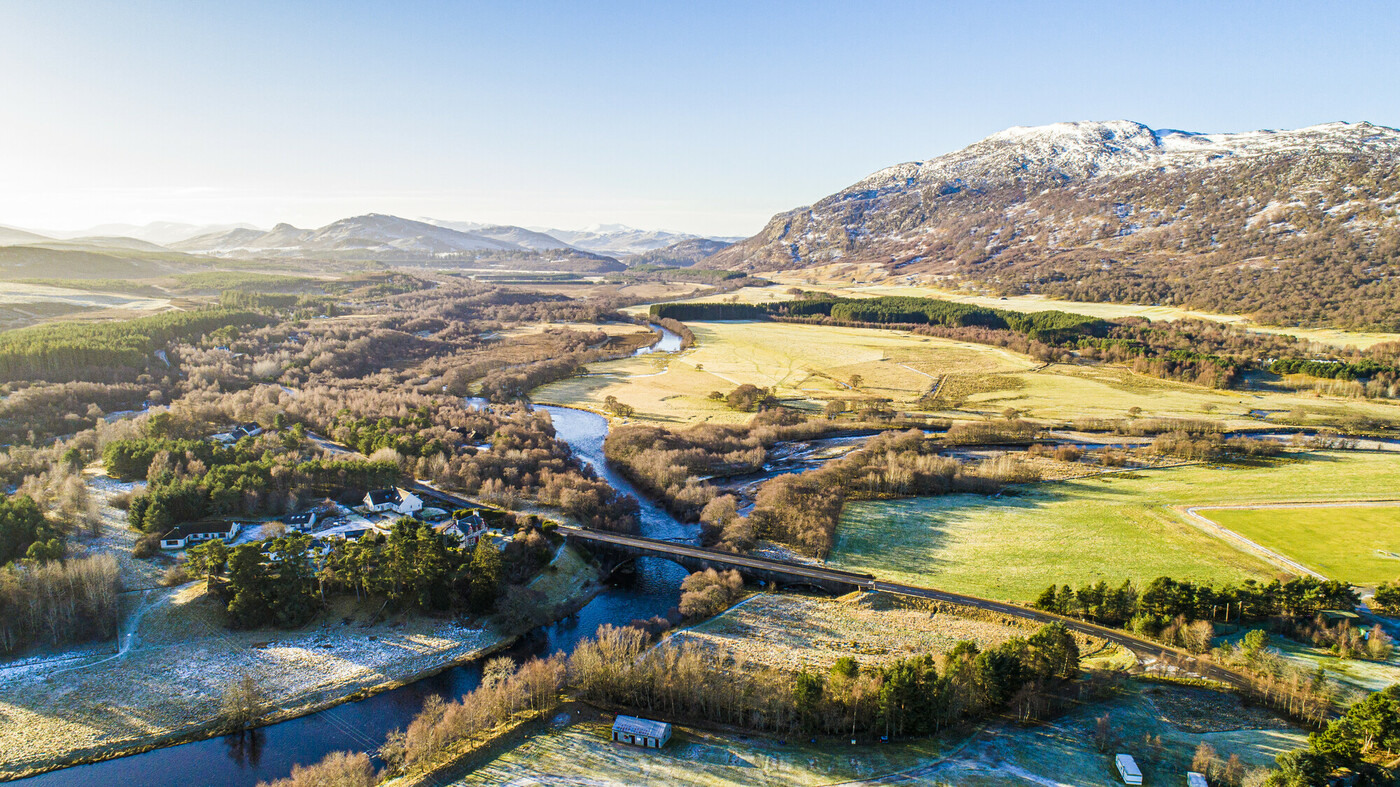
The application site is located to the west of Spittal of Glenshee, accessed via an existing track network off the minor road serving Dalmunzie Castle Hotel. The site lies to the far south of the hotel on the opposite side of the Shee Water which runs alongside the hotel road. The Shee Water is a tributary of the River Tay Special Area of Conservation (SAC) which is designated for river, sea and brook lamprey, otter, clear water lakes or lochs, and Atlantic salmon interests.
The proposed development site runs from a field below some sheep pens to the south of the hotel track, southwards along the Allt Coire a’ Ghearraig watercourse to the primary intake, then onto a secondary intake further southwest on an unnamed watercourse. The area is southwards sloping upland rough grazing and moorland which climbs southwards towards Ben Earb and Meall a’Coire Bhuidhe. The grid connection cable will run northwards across a golf course area associated with the hotel and over the Lochsie Burn to connect to the hotel. The main track serving the site runs through forestry westwards from its junction onto the hotel access road.
There are a number of core paths in the area including the hotel road (Core Path MTBL/101) which then loops round north to continue as core path 142 (Glenlochsie). It then connects onto core path 100 (Glen Taitneach) on the lower slopes of Ben Gulabin on the north side of the Shee Water. The forestry track heading from Spittal of Glenshee to Glen Lochsie is also used recreationally as an access route.
There are listed buildings at Spittal of Glenshee itself some distance to the east (church, graveyard and bridge) and areas of archaeological interest as recorded in the Historic Environment Records including townships in the immediate area of the site.
The Cairngorms Massif Special Protection Area (SPA) lies a short distance to the south of the proposed new intakes. It is designated for its golden eagle interests. This SPA also lies to the far north on the other side of the River Shee and connecting up at Glen Lochsie, with the Forest of Clunie SPA located some 800 metres to the southwest.
Proposal
- The drawings and documents associated with this application are listed below and are available on the Cairngorms National Park Authority website unless noted otherwise: 2025/0300/DET | Installation of a hydro-electric scheme and associated works | Land 650 Metres South West Of Dalmunzie Castle Hotel Spittal Of Glenshee Blairgowrie PH10 7QG
| Title | Drawing Number | Date on Plan* | Date Received |
|---|---|---|---|
| Plan — Location Plan — Development Boundary Plan 1 | 283 – 06-DWG03-REV01 | 24/11/25 | |
| Plan — Location Plan — Development Boundary Plan 2 | 283 – 06-DWG03-REV03 | 24/11/25 | |
| Plan — Existing Site Plan | 283 – 06-DWG16-REV01 | 24/11/25 | |
| Plan — Penstock Section | 283 – 06-DWG12-REV01 | 24/11/25 | |
| Plan — Primary Intake 1 — Elevation | 283 – 06-DWG05-REV02 | 24/11/25 | |
| Plan — Primary Intake 1 Plan | 283 – 06-DWG11-REV01 | 24/11/25 | |
| Plan — Development Site Plan 1 | 283 – 06-DWG08-I-REV01 | 24/11/25 | |
| Plan — Development Site Plan 2 | 283 – 06-DWG08-H-REV01 | 24/11/25 | |
| Plan — Development Site Plan 3 | 283 – 06-DWG08-G-REV01 | 24/11/25 | |
| Plan — Development Site Plan 4 | 283 – 06-DWG08-F-REV01 | 24/11/25 | |
| Plan — Development Site Plan 5 | 283 – 06-DW-G08-E-REV01 | 24/11/25 | |
| Plan — Development Site Plan 6 | 283 – 06-DW-G08-D-REV01 | 24/11/25 | |
| Plan — Development Site Plan 7 | 283 – 06-DWG08-C-REV01 | 24/11/25 | |
| Plan — Development Site Plan 8 | 283 – 06-DWG08-B-REV01 | 24/11/25 | |
| Plan — Development Site Plan 9 | 283 – 06-DWG08-A-REV01 | 24/11/25 | |
| Plan — Rural Location Plan | 283 – 06-DWG15-REV02 | 24/11/25 | |
| Plan — Secondary Intake Elevation | 283 – 06-DWG04-REV02 | 24/11/25 | |
| Plan — Transfer Pipe Section | 283 – 06-DWG13-REV02 | 24/11/25 | |
| Plan — Turbine House & Outfall Arrangements | 283 – 06-DWG10-REV01 | 24/11/25 | |
| Plan — Turbine House Elevations | 283 – 06-DWG09-REV01 | 24/11/25 | |
| Plan — Core Paths | 283 – 06-DWG18-REV01 | 29/01/26 | |
| Plan — Archaeological Features | 283 – 06-DWG17-REV01 | 29/01/26 | |
| Plan — Cable Route | 283 – 06-DWG19 REV01 | 26/02/26 | |
| Other — Access Statement | 283 – 06-PTN04-REV 01 | 27/01/26 | 29/01/26 |
| Other — Archaeological Statement | 283 – 06-PTN03-REV 01 | 27/01/26 | 29/01/26 |
| Other — Landscape and Visual Appraisal | 283 – 06-PTN02-REV 01 | 21/01/26 | 29/01/26 |
| Other — Biodiversity Statement | 283 – 06-PTN01-REV 01 | 21/01/26 | 29/01/26 |
| Other — Protected Species Report | 24/11/25 | ||
| Other — Pollution Prevention Plan | 01/09/25 | 24/11/25 | |
| Other — Fish Habitat Survey | 24/11/25 | ||
| Other — Design Statement | 01/10/25 | 24/11/25 | |
| Other — Construction Method Statement | 01/10/25 | 24/11/25 |
*Where no specific day of month has been provided on the plan, the system defaults to the 1st of the month.
The development proposes a 30kw twin intake run of river micro hydroelectric scheme to provide electricity for Dalmunzie Castle Hotel so offsetting energy use at the castle and reducing its carbon footprint, with any surplus sold back to the grid.
The proposal involves a number of components including two intakes, penstock to transfer water, generator house and grid connection cable. Plans of the proposed development are attached as Appendix 1. The applicant’s supporting information advises that the location of intakes has been chosen to maximise available head of water and because the gradient is favourable for the movement of water through the transfer pipe. The location of the turbine house was chosen to maximise available head and as beyond this point the gradient of the watercourse decreases and there is a greater potential for good fish habitat.
The primary intake is proposed on the Allt Coire a’ Gerraig burn some distance south of Dalmunzie Castle Hotel. It will be located just below an existing ford type crossing of the watercourse. The proposed intake will be contained within the existing bank profile with no changes to ground level proposed or any need for rock breaking with weir structures pinned to bedrock. The proposed design is a Coanda steel box structure mounted to a poured concrete weir. A hands-off flow orifice will be fitted which will ensure that sufficient water bypasses the intake to ensure that there is always flow down the burn.
The secondary intake will be located further southeast on an unnamed watercourse. It will be a simple log stop design (using timber sleepers) with a buried 250mm twin wall transfer pipe to divert the required flow to the primary intake.
The water will then go into a 225mm HDPE buried penstock (pressurised cable) which will run for 780 metres on the north side of the watercourse leading down to the turbine house. The penstock will have a constant fall to minimise sediment build up and air entrapment. It will run down the hill to the turbine house with a tailrace back into the burn with all water then returned to the burn. The proposed turbine house will be located below an embankment with sheep pens and shed located at the top of the slope. It will measure some 4 metres by 4 metres with timber clad walls and monopitch steel roof.
An electrical buried cable will then run from the turbine to Dalmunzie Castle Hotel across the golf course with a suspended cable crossing over the Glen Lochsie Burn. This will run for around 570 metres and routed to avoid the location of a medieval township.
A laydown area for works is proposed in the field beside the private road to Dalmunzie Castle Hotel and will measure around 20 metres by 5 metres with no layered hardcore or alterations proposed.
The existing road to Dalmunzie Castle Hotel is to be used for access along with existing forestry tracks with no new accesses required. Due to the small scale of project around six-eight HGV deliveries are expected over the six-eight week predicted construction period.
The applicants have summarised the economic benefits as reducing running costs of the hotel, surplus energy being used to help support the estate, use of local contractors and creation of a part-time skilled post to carry out periodic maintenance. They have also confirmed that a Controlled Activities Regulations (CAR) license has been submitted to Scottish Environment Protection Area (SEPA).
A number of supporting documents have been submitted as follows: a) Construction method statement – this sets out how the work will proceed to minimise environmental impacts and avoid the fish spawning season (October to March) for any in river works. Work is estimated to take around six-eight weeks and details of the programme and mitigation measures for all components are included. b) Design Statement – describing the scheme, site conditions, access, construction and reasons for choice of location / components. c) Pollution Prevention Plan – setting out the various measures to avoid environmental pollution including induction for workers, silt barriers, setting aside of turves and careful storage of materials. d) Protected Species Report – notes that a desktop survey revealed only a single record for red squirrel within 1km of the site, with otter within 5km of the site. The onsite survey revealed no signs of otter or water vole noting that the active nature of the watercourse may reduce its suitability for these species whilst the higher quality habitat on the lower reaches flows through fields used for livestock with limited potential for otter. There were no signs of other protected species such as red squirrel, bats, badgers, pine marten or wildcat. Rabbit were found and a mink trap which indicated that this invasive species has been present. e) Fish Habitat Survey – is set out to assess fish habitat affected by the development and comprised the stretches of river which would be subject to reduced flows as well as further stretches extending 100 metres upstream and 500 metres downstream, with an assessment of existing instream obstacles to fish migration undertaken too. It concludes that there is unlikely to be any impact on fish populations from the operation of the scheme due to the nature of the watercourse (extensive bedrock channel and general high energy) and obstacles (fords, falls in channel boulders) upstream of the turbine house. The greatest risk would be at construction stage in terms of potential pollution, which may be addressed by following SEPA guidance and licensing requirements. f) Archaeological Supporting Statement – explains how the development is designed to avoid impacts on known archaeological features with the cable route across the golf course avoiding the medieval township in this area and mitigation measures proposed. g) Landscape and Visual Assessment – includes visualisations to demonstrate how the proposed development will fit into the landscape. It concludes that there will be no significant impact upon the special landscape qualities of the National Park. h) Access Statement – explains how use of core and recreational paths will be managed during construction. i) Biodiversity Statement – sets out the proposals for planting on either side of the watercourse below the turbine house.
History
- There is no planning history on the site itself.
Habitats Regulations Appraisal
A Habitats Regulations Appraisal (HRA) has been undertaken to consider the potential effects of the development upon the conservation objectives of European sites. The HRA document is attached as Appendix 2. The European sites in this case are the River Tay Special Area of Conservation (SAC) designated for clear water lakes and lochs, sea river and brook lamprey, Atlantic salmon and otter interests, and the Cairngorms Massif Special Protection Area (SPA) designated for its golden eagle interests. The Forest of Clunie SPA also lies to the southwest, designated for its hen harrier, osprey, short eared owl and merlin interests.
The HRA identified that there could be likely significant effects in relation to the River Tay SAC in terms of short-term effects arising during construction including potential release of sediments or pollution impacting on habitats and also disturbance and impacts on prey species in relation to otter. Likely significant effects were also identified for the Forest of Clunie SPA relating to short term disturbance for owl, merlin and hen harrier foraging in the breeding season. Similarly, there may be likely significant effects for the Cairngorms Massif SPA in relation to golden eagle as the upland grassland and forestry in the area may be used by foraging Golden Eagle with signs of this on site. An appropriate assessment of the implications for the designated sites in terms of their conservation objectives was therefore undertaken.
In relation to the River Tay SAC the HRA concluded that there is potential for indirect impacts on lamprey and Atlantic salmon interests due to the connectivity of the site to the Shee Water and the suitability of the watercourse below the turbine house for salmonoid fry and parr. It is considered that these impacts can be satisfactorily mitigated by the implementation of the applicant’s Construction Method Statement and Pollution Prevention Plan (which follows good practice and makes provision for sediment barriers to prevent sediment entering the watercourse) and by timing of works to avoid the key Atlantic salmon spawning season (mid-October to end of February). With regard to otter interests, the applicants’ Protected Species Survey found no signs of otter with the habitat assessed as unlikely to be suitable for holts or couches. The lower stretches of the watercourse could be suitable for foraging otter, and they may be temporarily inhibited from foraging during the construction period. However, it is considered that as otter have very large home ranges temporary construction work is unlikely to have a significant impact, whilst the pollution control measures proposed should ensure no impacts on their prey species. It is also recommended that a pre-construction check for otter is undertaken. These measures can be secured by appropriate planning conditions.
In relation to the Cairngorms Massif SPA as the development lies outwith the SPA there will not be a direct impact on habitats supporting golden eagle. However, parts of the proposed development are within 20 metres of the SPA. As the core foraging distance for Golden Eagle is 6km it is unlikely that they will be solely dependent on the development site. However, golden eagle are sensitive to disturbance within 1 km of nest sites during the breeding season (February to end of August), so if construction work was carried out during this period there may be short term disturbance to eagle. Once installed the proposed development will not require an active human presence so there will not be a significant increase in human activity long term. It is recommended that timing construction activity to avoid the Golden Eagle breeding season will ensure that there is not a significant impact on the population whereby the conservation objective will be met.
Finally, with regard to the Forest of Clunie SPA, it is noted that the population of hen harriers in the Forest of Clunie is one of the largest in the UK. As the site lies outwith the SPA there will not be a direct impact upon habitats supporting hen harriers, although parts of the development are within 800 metres of the SPA and well within the 2km core foraging distance for hen harrier, with a high density of vole burrows (a key prey species for harrier) in the heathland surrounding the Allt Coire a Ghearaig watercourse. However, as there are extensive areas of such habitat available it is not considered that the hen harrier would be solely dependent on land at the development site whereby there should not be a significant impact. A similar conclusion was reached for short eared owl and merlin. Overall, it is concluded that whilst there may be temporary indirect impacts during the construction phase there will not be a significant increase in human activity during the operational stage or loss of potential foraging habitat and therefore no significant long-term disturbance. Measures proposed in relation to timing of works to avoid the Golden Eagle breeding season will also ensure the conservation objectives of the Forest of Clunie SPA are met.
On this basis, it is concluded that the conservation objectives of the designated sites will be met and there will not be an adverse effect on integrity of the designated sites, subject to mitigation relating to implementation of pollution prevention plan and construction management statement; timing of works to avoid bird breeding season; pre-construction protected species survey; and timing of works to avoid Atlantic Salmon spawning season. NatureScot have been consulted on the HRA and have confirmed agreement with these conclusions.
Development plan context
Policies
| National policy | National Planning Framework 4 (NPF4) Scotland 2045 (Policies relevant to the assessment of this application are marked with a cross (x)) | |
|---|---|---|
| Policy 1 | Tackling the climate and nature crises | X |
| Policy 2 | Climate mitigation and adaptation | X |
| Policy 3 | Biodiversity | X |
| Policy 4 | Natural places | X |
| Policy 5 | Soils | X |
| Policy 6 | Forestry, woodland and trees | X |
| Policy 7 | Historic assets and places | X |
| Policy 8 | Green belts | |
| Policy 9 | Brownfield, vacant and derelict land, and empty buildings | |
| Policy 11 | Energy | X |
| Policy 12 | Zero waste | X |
| Policy 13 | Sustainable transport | X |
| Policy 14 | Design, quality and place | X |
| Policy 15 | Local living and 20 minute neighbourhoods | |
| Policy 16 | Quality homes | |
| Policy 1 |