
Item 6 - committee report - Kyllachy wind farm - 2025/0240/PAC
Cairngorms National Park Authority Item 6 Planning Committee 12 December 2025 Ughdarras Pàirc Nàiseanta a’ Mhonaidh Ruaidh Page 1 of 18
Windfarm committee report
Development proposed:
Kyllachy Wind Farm – application under Section 36 of the Electricity Act 1989 for the construction and operation of a windfarm and energy storage facility within the Planning Authority of the Highland Council, of 13 wind turbines, with a maximum blade tip height of 180m, Battery Energy Storage System (BESS) and associated infrastructure.
Consultation from:
Scottish Government Energy Consents Unit
Reference:
ECU00005153 (CNPA ref. 2025/0240/PAC)
Applicant:
Wind Estate (UK) Limited
Date consulted:
16 September 2025
Recommendation:
No Objection
Case officer:
Emma Bryce, Planning Manager (Development Management)
Cairngorms National Park Authority Item 6 Planning Committee 12 December 2025 Ughdarras Pàirc Nàiseanta a’ Mhonaidh Ruaidh Page 2 of 18
[Map Image]
This map has been produced to aid in the statutory process of dealing with planning applications. The map is to help identify the site and its surroundings and to aid Planning Officers, Committee Members and the Public in the determination of the proposal. Maps shown in the Planning Committee Report can only be used for the purposes of the Planning Committee. Any other use risks infringing Crown Copyright and may lead to prosecution or civil proceedings. Maps produced within this Planning Committee Report can only be reproduced with the express permission of the Cairngorms National Park Authority and other Copyright holders. This permission must be granted in advance.
Cairngorms National Park Authority Item 6 Planning Committee 12 December 2025 Ughdarras Pàirc Nàiseanta a’ Mhonaidh Ruaidh Page 3 of 18
Purpose of report
The purpose of this report is to inform the committee decision and subsequent consultation response to the Scottish Government Energy Consents Unit (ECU) on an application submitted under Section 36 of the Electricity Act 1989 for a proposed windfarm located to the northwest of the Cairngorms National Park. The Scottish Government are the determining authority for this application as the output is more than 50MW. The application is accompanied by an Environmental Report (EIAR), which presents the findings of the applicant’s Environmental Impact Assessment (EIA).
The planning issues to be considered are confined to the effects of the proposed windfarm on the landscape character and Special Landscape Qualities (SLQs) of the National Park. All other matters, such as ecology, noise, general amenity, etc, are assessed by the decision maker (Scottish Ministers) with advice from statutory consultees.
Under the current working agreement on roles in landscape casework between NatureScot and the Cairngorms National Park Authority, NatureScot lead on the provision of advice on the effects on the SLQs caused by proposals outwith the Cairngorms National Park. Their advice has been used to inform this report.
Site description and proposed development
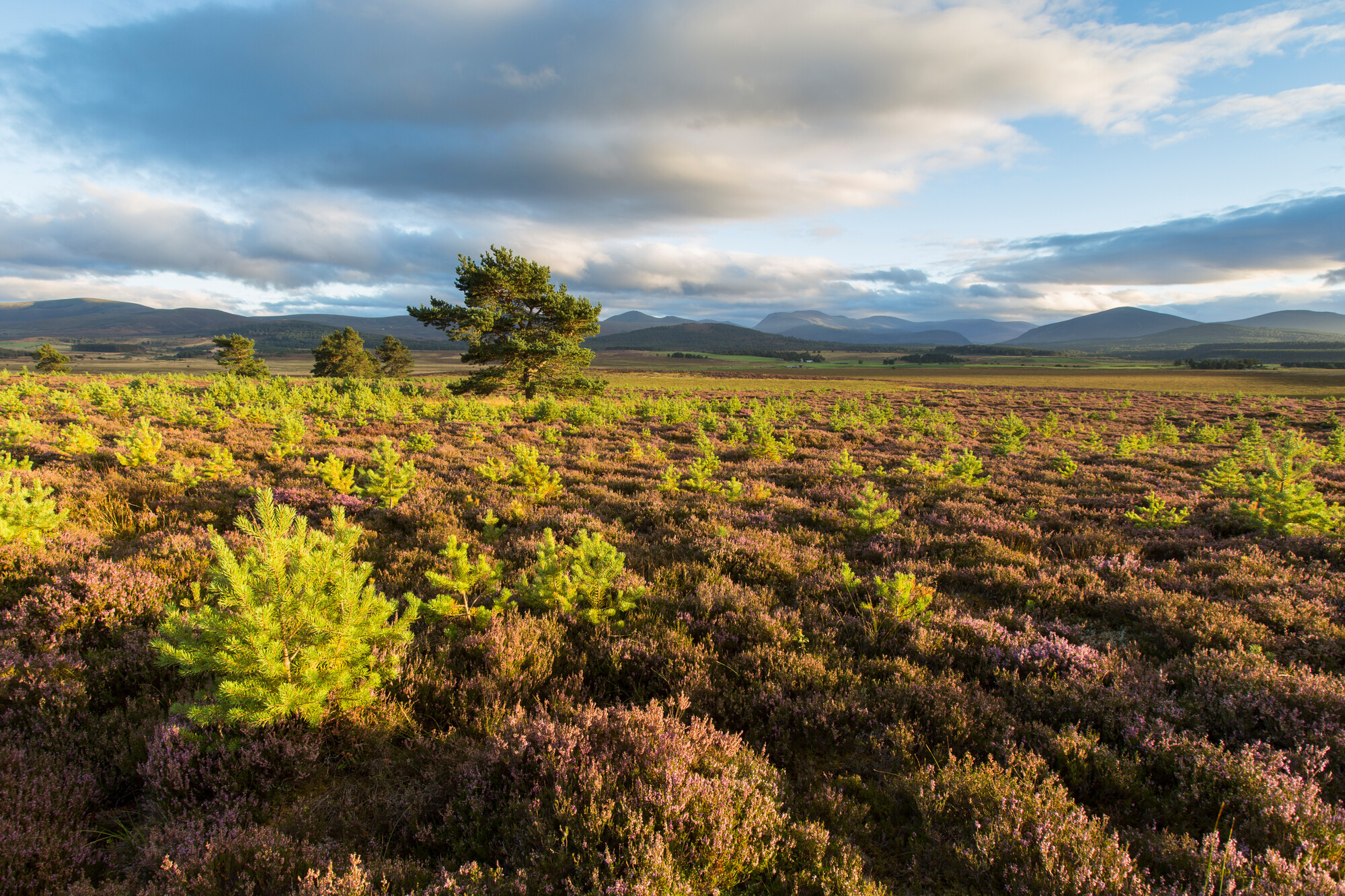
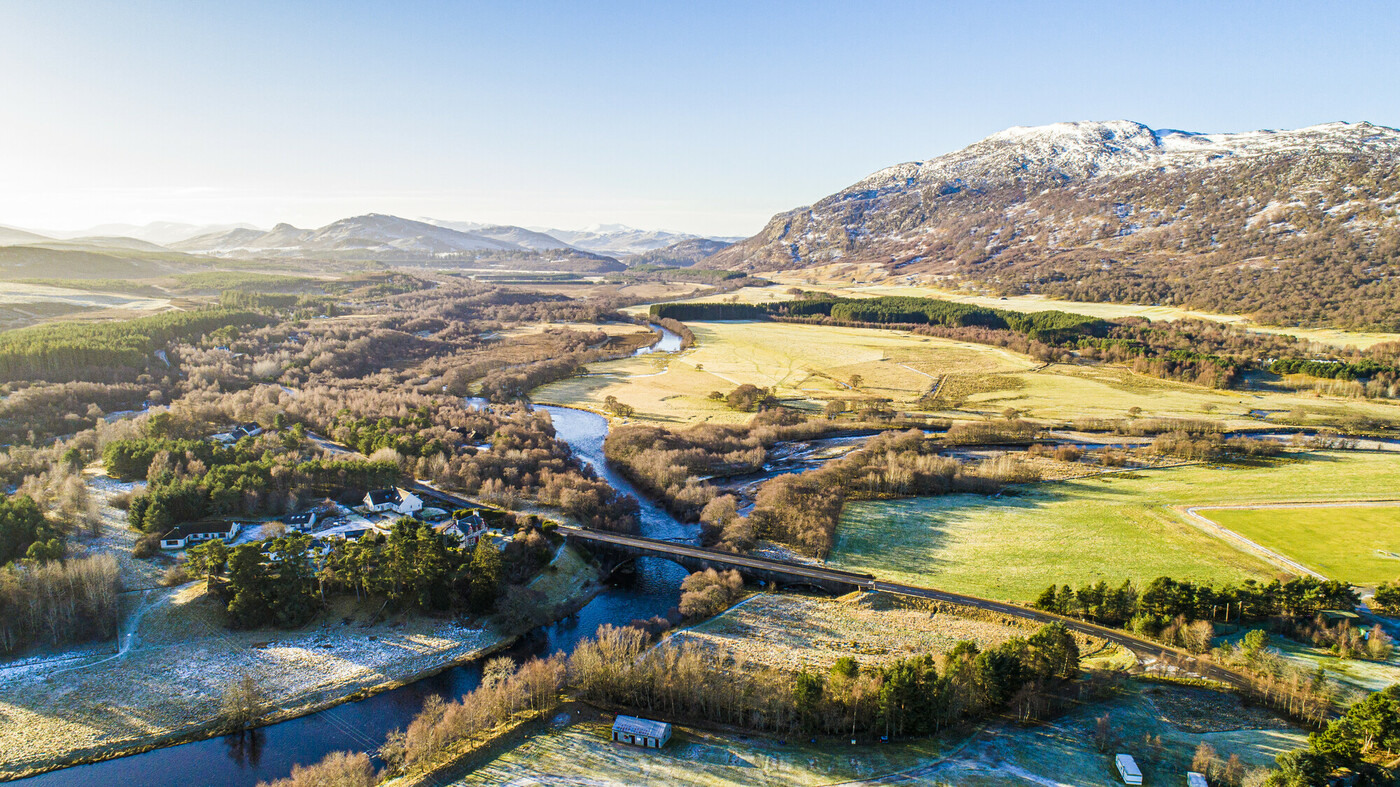
The site is located within the Monadhliath on an elevated open moorland within the Kyllachy Estate and Dalmargarry Estate, approximately 2.8km southwest of Tomatin. The A9 is situated approximately 1.1km to the east of the site. To the west, the nearest wind farm is Farr Wind Farm, consisting of 40 wind turbines of up to 102m tip height. Glen Kyllachy (consented in 2013) is also located to the west of the proposed development which consists of 20 wind turbines of up to 110m tip height. The site lies in close proximity to the National Park, with the nearest turbine approximately 5.5km from the Park boundary.
The proposed development would comprise 13 turbines with a maximum height of 180m to the tip of the blade in an upright position. Given the height of the proposed wind turbines, visible avaiation lighting is required. The associated infrastructure includes aviation obstacle lighting fitted to some turbines; turbine hardstandings;
Cairngorms National Park Authority Item 6 Planning Committee 12 December 2025 Ughdarras Pàirc Nàiseanta a’ Mhonaidh Ruaidh Page 4 of 18
access tracks and passing places; construction compound; electrical substation; borrow pits; drainage works; watercourse crossings; underground cables; and battery energy storage system (BESS). It is expected that the proposed windfarm would have an estimated total installed capacity of 78MW.
Theoretical visibility of the proposed windfarm from within the National Park is shown by the applicant’s EIAR figure 5.7 (Appendix 1). When considering cumulative visual effects, the applicant’s Figure 5.12 Cumulative Basemap (Appendix 2) shows the proposed windfarm within the context of operational, consented, in planning and in scoping windfarms within a 45km study area. The blue areas show operational windfarms and, in particular, the proximity of the proposed windfarm to the adjacent operational Glen Kyllachy Wind Farm. Cumulative assessment has not been supported by cumulative Zones of Theoretical Visibility (ZTVs) including operational, consented or in-planning development for this proposal.
Visualisations from four viewpoints were provided in the applicant’s EIAR to demonstrate the predicted level of visibility that would be had from within / on the boundary of the National Park – refer to Appendix 1 (Figure 5.7 Blade Tip ZTV with Viewpoints) for the locations:
- VP13: Carn nam Bain-tighearna
- VP15: Carn Glas-choire
- VP16: Geal Charn Mor
- VP20: Cairngorm
Committee members should familiarise themselves with the above visualisations online before the meeting. The visualisations associated with each view point are available to the public by searching the application documents on the Energy Consents Unit website for the relevant figures within the EIAR – Volume 2b, Chapter 5.
Cairngorms National Park Authority Item 6 Planning Committee 12 December 2025 Ughdarras Pàirc Nàiseanta a’ Mhonaidh Ruaidh Page 5 of 18
Relevant planning history
- July 2024 – the Park Authority responded to a scoping consultation from ECU for the current application.
Planning policy context
- The proposed development is located wholly outwith the National Park and therefore the Cairngorms National Park Local Development Plan policies do not apply. However, an assessment of the proposal must be made in accordance with National Planning Framework 4 (NPF4) and have regard to the National Park Partnership Plan (NPPP).
National policy
National Planning Framework 4 (NPF4) sets out national planning policies that reflect Scottish Ministers’ priorities for the development and use of land, as well as for operation of the planning system. It also identifies a series of ‘national developments’. The content of NPF4 forms the national element of the statutory development plan. Decisions on planning applications (and Section 36 applications) are to be made in accordance with the development plan, and as such NPF4.
Policy specifically relating to National Parks and development management can be found in NPF4 Policy 4: Natural Places and Policy 11: Energy. In general terms Policy 4 a) cites that development proposals which by virtue of type, location or scale will have an unacceptable impact on the natural environment, will not be supported.
NPF4 Policy 4 c) specifically applies to a National Park and states that “development proposals that will affect a National Park… will only be supported where:
- The objectives of designation and the overall integrity of the area will not be compromised; or
Cairngorms National Park Authority Item 6 Planning Committee 12 December 2025 Ughdarras Pàirc Nàiseanta a’ Mhonaidh Ruaidh Page 6 of 18
2. Any significant adverse effects on the qualities for which the area has been
designated are clearly outweighed by social, environmental or economic benefits of national importance.”
NPF4 Policy 4 c) clarifies that the policy test applies where development proposals may affect a nationally designated landscape and so can be applied to development proposals outwith the National Park boundary but potentially affecting it.
Of relevance to the generation of wind energy development nationally and therefore to the proposed development, NPF4 National Development 3 ‘Strategic Renewable Electricity Generation and Transmission Infrastructure’ confirms that this class of national development supports renewable electricity generation, repowering and expansion of the electricity grid. It incorporates three types of development, including on and offshore electricity generation, including electricity storage, from renewables exceeding 50 megawatts capacity. The Kyllachy Wind Farm proposal falls within the scope of National Development 3.
NPF4 Policy 11: Energy clarifies that “b) Development proposals for wind farms in National Parks…will not be supported; and d) Development proposals that impact on international or national designations will be assessed in relation to Policy 4”.
Strategic policy
The Cairngorms National Park Partnership Plan (NPPP) 2022 – 2027 is required under section 11 of the National Parks (Scotland) Act 2000. It is the management plan for the Cairngorms National Park approved by Scottish Ministers. The NPPP sets out how all those with a responsibility for the National Park will coordinate their work to tackle the most important issues. There is a duty for decision makers to have regard to the NPPP, a requirement set out in Section 14 of the Act. As such, the NPPP is a material consideration in planning decisions.
The NPPP identifies that the landscapes of the National Park are valued by many and underpin the area’s economy. It contains policies to safeguard landscape
Cairngorms National Park Authority Item 6 Planning Committee 12 December 2025 Ughdarras Pàirc Nàiseanta a’ Mhonaidh Ruaidh Page 7 of 18
interests. Of relevance to windfarm development proposals are policies A4 and C2 α).
- Policy A4 seeks to conserve and enhance the SLQs of the National Park. Policy C2 a) seeks to support development of a low carbon economy and increase renewable energy generation where this is compatible with conserving the SLQs. In relation to windfarm development, the policy states that “large scale wind turbines are not compatible with the landscape character or special landscape qualities of the National Park. They are inappropriate within the National Park or in areas outside the National Park where they adversely affect its landscape character or special landscape qualities”.
Consultations
NatureScot advice
In accordance with the NatureScot / Cairngorms National Park Authority casework agreement, NatureScot have provided the Park Authority with advice in relation to the effects on the National Park of the proposed windfarm, both alone and cumulatively with other existing and consented windfarms in the surrounding area see Appendix 3. This advice focusses on the effects of the proposed windfarm on the SLQs of the Cairngorms National Park and is summarised below.
The windfarm would be sited on an elevated moorland to the northeast of the Monadhliath outside the northwestern boundary of the Cairngorms National Park and just west of the A9. The Monadhliath are a long range of rolling moorland hills and plateaux with no distinct summits or patterns, extending to between 550 and 850 AOD. These hills provide a backdrop from key slopes and summits from the National Park. The open nature of this landscape affords a high level of intervisibility across the hills. In terms of the baseline conditions, there are several operational and consented windfarms within the area. These are mostly in five clusters, the majority of which are located in visually discreet, lower lying basins. Dunmaglass Wind Farm is the exception, located on a more elevated location. Glen Kyllachy and Farr are the closest operational windfarms, and given the proximity of the proposed windfarm to these, it may appear as an extension although it is not technically one.
Cairngorms National Park Authority Item 6 Planning Committee 12 December 2025 Ughdarras Pàirc Nàiseanta a’ Mhonaidh Ruaidh Page 8 of 18
To the east of the A9, Tom nan Clach Wind Farm lies approximately 5.8km from the Park boundary and is the closest operational one to the Park. Given its height (125m to blade tip) and surrounding landform this appears as a relatively compact feature in the wider landscape. To the west of the A9 within the Monadhliath, existing wind farms have a limited influence on the National Park appearing as relatively distant and compact features in the wider landscape. From higher elevations within the Park where operational wind farms are visible, existing wind farms are perceived as distant features. Generally, operational and consented wind farms have a relatively limited influence both individually and cumulatively on the SLQs of the Park due to their distance, heights (all below 150m to blade tip), lack of turbine lighting and interspersed pattern of development.
The site for the consented Ourack Wind Farm lies approximately 30km to the east of the proposed development and would feature aviation lighting. None of the existing or consented windfarms within 20km of the proposed windfarm include visible aviation warning lights and there are no other existing or consented wind farms with lit turbines within this area.
NatureScot has focussed their assessment of effects on the areas of the National Park which they consider would be most affected by the proposal – the northwest rim of the Park (Study Area 1) and the northwestern area of the Cairngorms massif (Study Area 2). The relevant SLQs for these study areas are described and assessed below:
Study Area 1
*   SLQ28 – Wildness
*   SLQ32 – Dark Skies
- SLQ 28 – Wildness notes that ‘Other areas of the Park are less remote, but the preponderance of near natural vegetation, together with distinctive wildlife and the general lack of development, can still give a perception of the dominance of nature. This includes the managed grouse moors, and the ancient, managed woods and plantations’.
Cairngorms National Park Authority Item 6 Planning Committee 12 December 2025 Ughdarras Pàirc Nàiseanta a’ Mhonaidh Ruaidh Page 9 of 18
The ElA concludes that from certain viewpoints “the character of the landscape is one of sparsely inhabited wilderness, marked by a general absence of built development, reinforcing its sense of naturalness and remoteness…In addition to the A9, the turbines at Glen Kyllachy and Farr appear on the horizon in the distance. Overall, the baseline is defined by a strong sense of elevation, openness, and landscape continuity, with high perceptual qualities linked to the area’s remoteness and naturalistic land cover.” The existing Tom nan Clach windfarm is sited to the north of the Strathdearn Hills, however is partially screened by landform and with turbines extending to only 125m to blade tip it appears as a relatively compact feature in the wider moorland landscape. Overall, there is an overarching dominance of nature in this large-scale landscape and a moderately high perception of remoteness, the Wildness SLQ is well expressed.
The proposed development would be seen partially in front of and extending to the south of the operational Farr Wind Farm (100m to blade tip) and Glen Kyllachy Wind Farm (110m to blade tip) from the Strathdearn Hills. The proposed turbines would appear substantially larger than the existing wind farms given their location in front of Farr and Kyllachy, and they would be closer to the Park, bringing windfarm development into the middle distance views from the Strathdearn Hills and eroding the current dominance of nature by creating an obvious man-made focal point in views along the edge of the Park.
The effects from the southern part of the study area would be similar to those described above, with the proposal appearing much larger and closer than the existing Farr and Glen Kyllachy turbines and resulting in significant adverse effects on the Wildness SLQ. These effects would reduce across the hills towards the southern end of the study area, as with increasing distance the proposal would form a less prominent change to the uplands and relate more cohesively with the existing pattern of development. It is noted however that the proposed layout could benefit from re-siting or omitting turbines to reduce stacking.
The strength of this SLQ would increase with the reduction in natural light as features which currently weaken it, such as (unlit) wind farms, are no longer noticeable and the susceptibility of the SLQ to this proposal would heighten. As daylight fades the key characteristics which underpin the Wildness SLQ change
Cairngorms National Park Authority Item 6 Planning Committee 12 December 2025 Ughdarras Pàirc Nàiseanta a’ Mhonaidh Ruaidh Page 10 of 18
altering the baseline. The introduction of aviation lighting would reduce the current sense of tranquillity and sense of wildness from these parts of the Park to a degree that is considered significant.
It is noted that a reduced lighting scheme has been submitted for approval by the Civil Aviation Authority (CAA), proposing a reduction of lit hubs to 6, and removing lighting on all towers. It is noted that effects would be somewhat less extensive with the proposed mitigation but would remain significant on SLQ 28.
To conclude, there would be significant daytime and night-time effects on the Wildness SLQ from the Monadhliath and Strathdearn Hills.
SLQ 32 – Dark Skies notes ‘At night, even the complete absence of colour, a pitch- black sky bespeckled only with the light of stars, is a distinctive feature as dark skies become increasingly rare in Britain’.
Field work was undertaken during the hours of daylight and after dusk to inform an understanding of the baseline landscape character. As light fades, the strength of this quality increases particularly where light sources are only notable from A95 and A9 corridors, occasional lights from scattered buildings and intermittent headlights. As light from settlements are contained to low lying areas Strathspey, the Monadhliath and Strathdearn Hills have a very dark baseline and the SLQ Dark skies is well expressed across these hills. None of the existing or consented wind farms within 20 km of the Proposed Development have visible aviation warning lights and there are no other existing or consented wind farms with lit turbines within this area. The consented Ourack Wind Farm (approximately 23km to the northeast) will introduce turbine lighting to some elevated locations within the Park, however these would have a limited effect on the experience of dark skies within the study area. This quality is well expressed across the study area and susceptible to change.
The proposed development would add a new layer of obvious bright red lights to the uplands incongruous with the current night-time baseline and would erode the underpinning characteristics of the SLQ ‘the complete absence of colour’ and ‘a pitch-black sky bespeckled only with the light of the stars’. It is concluded that
Cairngorms National Park Authority Item 6 Planning Committee 12 December 2025 Ughdarras Pàirc Nàiseanta a’ Mhonaidh Ruaidh Page 11 of 18
there would be significant adverse effects on the Dark skies SLQ across the study area.
- It is again noted that a reduced lighting scheme has been submitted for approval by the CAA, proposing a reduction of lit hubs to 6 and removing lighting on all towers. It is noted that effects with the proposed mitigation would be somewhat less extensive but would remain significant.
Study Area 2
* SLQ30 – Grand panoramas and framed views
This SLQ notes ‘… Views range from broad pastoral straths of green, over rolling hills of brown heather moor, with woodland at lower levels; and far, distant exposed, wild mountain terrain. The assemblage of landscape features is aesthetically pleasing with views often framed by vegetation and landform, and the eye led to an inviting arrangement of hill slopes and glens’.
This SLQ is strongly expressed across this study area. The Cairngorms central massif encompasses some of Scotland’s highest peaks, and from the north- western reaches inward views look over dramatic jagged granite forms, and outward views extend over Strathspey beyond the Monadhliath and Strathdearn Hills. The area is characterised by corries, valleys and ridges which offer changing views north and west. The Lairig Ghru is a sheer, narrow mountain pass that splits Braeriach and the Cairntoul from Cairn Gorm and Ben Macdui. Its steep sides channel views in a north-west/south-east direction, severely limiting sight of outer landscapes. On slopes below the peaks (below 800m approximately) far reaching views are not yet available, and the dramatic interior of the massif is not yet revealed, focussing attention on the immediate Strathspey landscape instead; this view is framed from the north-west facing corries of Braeriach and Cairn Gorm overlooking Strathspey.
Beyond the Park boundary (which is not discernible from the study area) the open rolling moorland continues west into the Monadhliath and north into Dava Moor, where some existing wind farms are sited. However, due to their scale (all <125m)
Cairngorms National Park Authority Item 6 Planning Committee 12 December 2025 Ughdarras Pàirc Nàiseanta a’ Mhonaidh Ruaidh Page 12 of 18
and distance from the Cairngorms massif (beyond 25km), they do not generally appear as prominent features, and do not significantly detract from the experience of this SLQ.
The proposed windfarm would be viewed from the study area at distances of over 25km (with the exception of Craiggowrie) and would appear in relation to the existing Farr and Glen Kyllachy Wind Farms. This would result in a more concentrated cluster of turbines and from some areas would sightly increase the horizontal spread of development in the northern Monadliath. Though the proposed turbines would be larger than the existing developments, this would not represent a magnitude of change that would be considered to significantly detract from the experience of the Grand Panoramas and framed views SLQ.
A reduced turbine height is recommended to mitigate significant effects on SLQ 32 Dark skies, and SLQ 28 Wildness. Although the effects on SLQ 30 Grand panoramas and framed views are not considered to be significant, a reduced turbine height could minimise adverse effects on this SLQ and result in a more successful design fit with existing wind development.
In terms of cumulative effects, where the proposed development would be seen from within the Park the proposed turbines would be seen in relation to the operational cluster of Farr and Glen Kyllachy, largely fitting with the pattern of development across the Monadhliath, albeit being notably larger than the operational turbines.
There are a number of in-planning wind farm development proposals around the north-west boundary of the Park which include turbines over 150m and, if consented, would require aviation lighting. With the increasing likelihood of taller and lit turbines in close proximity to the Park, there is potential for future significant adverse night-time effects on the Dark Skies SLQ which could affect the overall integrity of this designation.
To reduce the anticipated significant adverse daytime and night-time effects on SLQ 28 Wildness and SLQ 32 Dark skies of the Cairngorms National Park, the
Cairngorms National Park Authority Item 6 Planning Committee 12 December 2025 Ughdarras Pàirc Nàiseanta a’ Mhonaidh Ruaidh Page 13 of 18
applicant is advised to explore turbines under 150m to blade tip height to remove the need for aviation lighting.
- In conclusion, NatureScot consider the proposed wind farm would result in significant adverse effects on SLQ 28 Wildness during daytime and extending into effects after dark. As a result of the proposed aviation lighting there would also be significant adverse effects on SLQ 32 Dark skies. However, they consider that the collective significance of the effects on the SLQs of the National Park are not of a degree that they damage the unity or soundness of the National Park and therefore they would not affect its integrity. NatureScot consider significant effects could be mitigated through a reduction in turbine height, removing the need for aviation lighting.
Appraisal
The policies of NPF4 and the NPPP set out how proposals outwith the boundary of the National Park should be considered in terms of effects on the National Park.
NPF4 Policy 11: Energy clarifies that “b) Development proposals for wind farms in National Parks… will not be supported; and d) Development proposals that impact on international or national designations will be assessed in relation to Policy 4”.
NPF4 Policy 4 a) cites that development proposals which by virtue of type, location or scale will have an unacceptable impact on the natural environment, will not be supported. NPF4 Policy 4 c) specifically applies to a National Park and states that “development proposals that will affect a National Park… will only be supported where: i) the objectives of designation and the overall integrity of the area will not be compromised; or ii) any significant adverse effects on the qualities for which the area has been designated are clearly outweighed by social, environmental or economic benefits of national importance”.
Policy C2 a) of the NPPP sets out a test for considering effects on the landscapes of the National Park, in that large scale wind turbines are inappropriate outside the National Park where they ‘adversely affect its landscape character or special landscape qualities’.
Cairngorms National Park Authority Item 6 Planning Committee 12 December 2025 Ughdarras Pàirc Nàiseanta a’ Mhonaidh Ruaidh Page 14 of 18
The proposed windfarm is located within the northeast Monadhliath, on an elevated moorland relatively close to the National Park boundary. As summarised in the advice from NatureScot, the introduction of the windfarm in this location would result in significant adverse effects on SLQ 28 Wildness during daytime and extending into effects after dark. As a result of the proposed aviation lighting there would also be significant adverse effects on SLQ 32 Dark skies. In line with the NatureScot advice, it is considered however that the collective significance of the effects on these SLQs of the National Park are not of a degree that they damage the unity or soundness of the National Park and therefore they would not affect its integrity.
It is therefore concluded that the proposed windfarm meets the requirements of NPF4 Policies 4 and 11. Notwithstanding, it is considered that significant effects could be mitigated through a reduction in turbine height, which would remove the requirement for aviation lighting.
It is therefore recommended that the National Park Authority should not object to the proposed Kyllachy Wind Farm, subject to the applicant being advised to investigate the proposed mitigation measures of reducing the height of the proposed turbines to remove the need for aviation lighting.
Recommendation
That members of the committee confirm that Cairngorms National Park Authority does not object to the application for the proposed Kyllachy Wind Farm, subject to the applicant being advised to investigate mitigation measures to reduce the height of the proposed turbines to remove the need for aviation lighting.
Cairngorms National Park Authority Item 6 Planning Committee 12 December 2025 Ughdarras Pàirc Nàiseanta a’ Mhonaidh Ruaidh Page 15 of 18
Appendix 1 – Kyllachy Wind Farm: Proposed windfarm ZTV
Cairngorms National Park Authority Item 6 Planning Committee 12 December 2025 Ughdarras Pàirc Nàiseanta a’ Mhonaidh Ruaidh Page 16 of 18
[Map Image]
Cairngorms National Park Authority Item 6 Planning Committee 12 December 2025 Ughdarras Pàirc Nàiseanta a’ Mhonaidh Ruaidh Page 17 of 18
Appendix 2 — Cumulative Basemap
Cairngorms National Park Authority Item 6 Planning Committee 12 December 2025 Ughdarras Pàirc Nàiseanta a’ Mhonaidh Ruaidh Page 18 of 18
[Map Image]