
Item 9 Dorenell Extension Windfarm Committee Report
Cairngorms National Park Authority Item 9 Planning Committee 13 March 2026 Page 1 of 15
Windfarm committee report
Development proposed:
Dorenell Wind Farm extension – application under Section 36 of the Electricity Act 1989 for the construction and operation of an extension to the existing windfarm and energy storage facility within the Planning Authority of the Moray Council, of up to 67 (three-bladed) wind turbines, with a range of maximum tip heights from 149.9 m to 250 m and associated infrastructure, and includes Battery Energy Storage (BESS) and associated infrastructure.
Consultation from:
Scottish Government Energy Consents Unit
Reference:
ECU00004862 (CNPA ref. 2025/0202/PAC)
Applicant:
Dorenell Windfarm Extension Limited
Date consulted:
14 August 2025
Recommendation:
Object
Case officer:
Emma Bryce, Planning Manager (Development Management)
Cairngorms National Park Authority Item 9 Planning Committee 13 March 2026 Page 2 of 15
Map: Site Location
This map has been produced to aid in the statutory process of dealing with planning applications. The map is to help identify the site and its surroundings and to aid Planning Officers, Committee Members and the Public in the determination of the proposal. Maps shown in the Planning Committee Report can only be used for the purposes of the Planning Committee. Any other use risks infringing Crown Copyright and may lead to prosecution or civil proceedings. Maps produced within this Planning Committee Report can only be reproduced with the express permission of the Cairngorms National Park Authority and other Copyright holders. This permission must be granted in advance.
Cairngorms National Park Authority Item 9 Planning Committee 13 March 2026 Page 3 of 15
Purpose of report
- The purpose of this report is to inform the committee decision and subsequent consultation response to the Scottish Government Energy Consents Unit (ECU) on an application submitted under Section 36 of the Electricity Act 1989 for a proposed extension to the Dorenell Windfarm located to the northeast of the Cairngorms National Park. The Scottish Government are the determining authority for this application as the output is more than 50MW. The application is accompanied by an Environmental Report (EIAR), which presents the findings of the applicant’s Environmental Impact Assessment (EIA).
- The planning issues to be considered are confined to the effects of the proposed windfarm on the landscape character and Special Landscape Qualities (SLQs) of the National Park. All other matters, such as ecology, noise, general amenity etc are assessed by the decision maker (Scottish Ministers) with advice from statutory consultees.
- Under the current working agreement on roles in landscape casework between NatureScot and the Cairngorms National Park Authority, NatureScot lead on the provision of advice on the effects on the SLQs caused by proposals outwith the Cairngorms National Park. Their advice has been used to inform this report.
Site description and proposed development
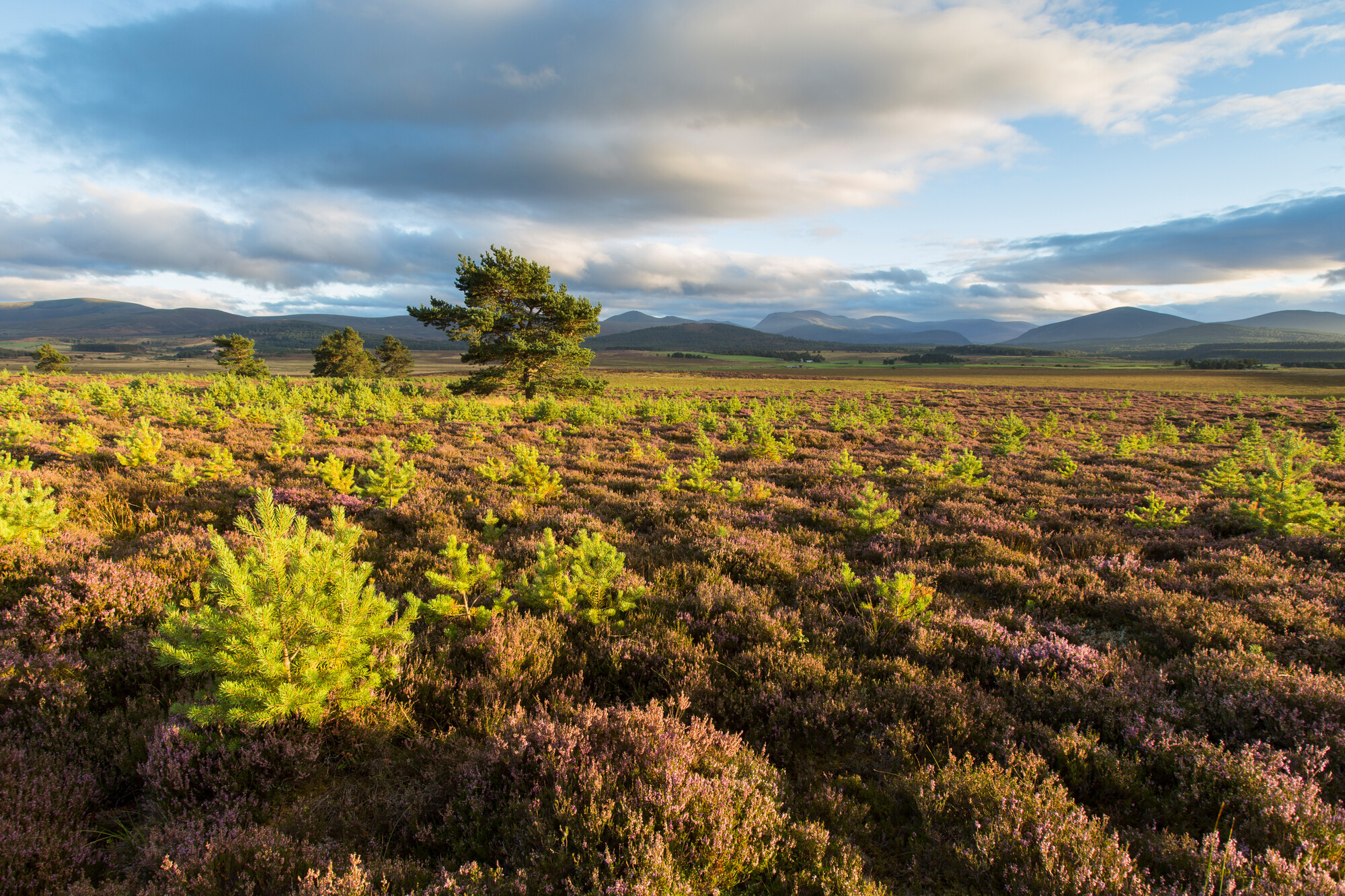
- The site and its surroundings are predominantly exposed heather moorland within the hills of Blackwater Forest. The site covers an area of approximately 3,948 hectares lying approximately 10km south of Dufftown within the Cabrach and Glenfiddich Estates. The site is located between the existing Dorenell Wind Farm lying to the west, which comprises 59 turbines of a maximum height of 126m, and undeveloped moorland and the A941 to the east, with the National Park boundary approximately 300 metres to the south. Tributaries of the River Deveron run through the site.
- The proposed development would comprise 67 turbines with a maximum height of 149.9m to 250m to the tip of the blade in an upright position. 17 turbines will have aviation lighting. The closest turbines would be sited approximately 0.5km from the Park’s boundary. The associated infrastructure includes junction works at two
Cairngorms National Park Authority Item 9 Planning Committee 13 March 2026 Page 4 of 15
locations along the A941 providing site access, access tracks and watercourse crossings, crane and turbine hardstandings, an onsite control building and substation compound, a battery energy storage facility, underground cabling, an anemometer mast of up to 110m, temporary construction compounds, laydown area, batching plant and potential excavations / borrow workings.
- Theoretical visibility of the proposed windfarm from within the National Park is shown by the applicant’s EIAR figure 5.2a (Appendix 1). When considering cumulative visual effects, the applicant’s Figure 5.3c Cumulative Zones of Theoretical Visibility (ZTV) (Appendix 2) demonstrates the visibility of the proposed windfarm and the existing Dorenell Wind Farm located to the west of the site. The pale blue areas show the increase in visibility of wind turbines with the introduction of the proposed Dorenell Wind Farm extension and the purple areas cumulatively with the existing Dorenell Wind Farm.
- Visualisations from 17 viewpoints have been provided in the applicant’s EIAR to demonstrate the predicted level of visibility that would be had from within / on the boundary of the National Park – refer to Appendix 1 (Figure 5.2a Blade Tip ZTV with Viewpoints) for the locations: a) VP1: Creag an Sgor b) VP3: Little Geal Charn c) VP6: Minor Road near Badenyon d) VP7: Minor road between Coull of Newe and Glen Buchat e) VP9: Glenbuchat Castle f) VP10: Carn Mor in the Ladder Hills g) VP11: Ben Newe h) VP12: Community Hall, Braes of Glenlivet i) VP13a: Tom Trumpernear College of Scalan j) VP13b: Tom Trumper Summit k) VP16: Carn Daimh, Speyside Way l) VP17: Tomintoul m) VP19: Cairnagour Hill n) VP20: Creagan a Chaise in the Hills of Cromdale o) VP23: Ben Avon p) VP24: Cairngorm
Cairngorms National Park Authority Item 9 Planning Committee 13 March 2026 Page 5 of 15
q) VP25: Lochnagar
- Committee members should familiarise themselves with the above visualisations online before the meeting. The visualisations associated with each view point are available to the public by searching the application documents on the Energy Consents Unit website for the relevant figures within the EIAR — Volume 3, Figure 5.11 to Figure 5.36.
Relevant planning history
- August 2023 – the Park Authority responded to a scoping consultation from ECU for the current application.
Planning policy context
- The proposed development is located wholly outwith the National Park and therefore the Cairngorms National Park Local Development Plan policies do not apply. However, an assessment of the proposal must be made in accordance with National Planning Framework 4 (NPF4) and have regard to the National Park Partnership Plan (NPPP).
National policy
- National Planning Framework 4 (NPF4) sets out national planning policies that reflect Scottish Ministers’ priorities for the development and use of land, as well as for operation of the planning system. It also identifies a series of ‘national developments’. The content of NPF4 forms the national element of the statutory development plan, which also includes the relevant Local Development Plan. Decisions on planning applications (and Section 36 applications) are to be made in accordance with the development plan, and as such NPF4.
- Policy specifically relating to National Parks and development management can be found in NPF4 Policy 4: Natural Places and Policy 11: Energy. In general terms Policy 4 a) cites that development proposals which by virtue of type, location or scale will have an unacceptable impact on the natural environment, will not be supported.
Cairngorms National Park Authority Item 9 Planning Committee 13 March 2026 Page 6 of 15
- NPF4 Policy 4 c) specifically applies to a National Park and states that “development proposals that will affect a National Park will only be supported where: i. The objectives of designation and the overall integrity of the area will not be compromised; or ii. Any significant adverse effects on the qualities for which the area has been designated are clearly outweighed by social, environmental or economic benefits of national importance.”
- NPF4 Policy 4 c) makes clear that the policy test applies where development proposals may affect a nationally designated landscape and so can be applied to development proposals outwith the National Park boundary but potentially affecting it.
- Of relevance to the generation of wind energy development nationally and therefore to the proposed development, NPF4 National Development 3 ‘Strategic Renewable Electricity Generation and Transmission Infrastructure’ confirms that this class of national development supports renewable electricity generation, repowering and expansion of the electricity grid. It incorporates three types of development, including on and offshore electricity generation, including electricity storage, from renewables exceeding 50 megawatts capacity. The Dorenell Wind Farm extension proposal falls within the scope of National Development 3.
- NPF4 Policy 11: Energy further clarifies that “b) Development proposals for wind farms in National Parks…will not be supported; and d) Development proposals that impact on international or national designations will be assessed in relation to Policy 4”.
Strategic policy
- The Cairngorms National Park Partnership Plan (NPPP) 2022 – 2027 is required under section 11 of the National Parks (Scotland) Act 2000. It is the management plan for the Cairngorms National Park approved by Scottish Ministers. The NPPP sets out how all those with a responsibility for the National Park will coordinate their work to tackle the most important issues. There is a duty for decision makers
Cairngorms National Park Authority Item 9 Planning Committee 13 March 2026 Page 7 of 15
to have regard to the NPPP, a requirement set out in Section 14 of the Act. As such, the NPPP is a material consideration in planning decisions.
- The NPPP identifies that the landscapes of the National Park are valued by many and underpin the area’s economy. It contains policies to safeguard landscape interests. Of relevance to windfarm development proposals are policies A4 and C2 a).
- Policy A4 seeks to conserve and enhance the SLQs of the National Park. Policy C2 a) seeks to support development of a low carbon economy and increase renewable energy generation where this is compatible with conserving the SLQs. In relation to windfarm development, the policy states that “large scale wind turbines are not compatible with the landscape character or special landscape qualities of the National Park. They are inappropriate within the National Park or in areas outside the National Park where they adversely affect its landscape character or special landscape qualities”.
Consultations
NatureScot advice
- In accordance with the NatureScot / Cairngorms National Park Authority casework agreement, NatureScot have provided the Park Authority with advice in relation to the effects on the National Park of the proposed windfarm, both alone and cumulatively with other existing and consented windfarms in the surrounding area – see Appendix 3. This advice focusses on the effects of the proposed windfarm on the SLQs of the Cairngorms National Park and is summarised below.
- The proposed extension to the Dorenell Wind Farm would be sited on the east and north facing slopes of the Cabrach basin area in the Moray Council area just outside the northeastern boundary of the Cairngorms National Park. The existing Dorenell Wind Farm, which comprises 59 turbines extending to 126m blade tip height, lies immediately to the northwest. The proposal includes turbines of varying blade tip heights. There would be 19 turbines extending to 250m, with only 2 turbines below 150m. Although there is no detailed design rationale for the layout, it appears that some smaller turbines have been sited closer to the Park boundary.
Cairngorms National Park Authority Item 9 Planning Committee 13 March 2026 Page 8 of 15
Although the development of the proposal has gone through several design iterations the current proposed large array of very large turbines and ancillary infrastructure will be a significant intrusion from more elevated views located within the north-eastern margins of the National Park. It is considered that the design strategy adopted for the proposal does not go far enough in its objective of restricting visibility of wind turbines from low-lying areas, glens and valleys within the Cairngorms National Park and would also not alleviate severe intrusion from more elevated views from the uplands lying on the north-eastern edges of the Park.
- NatureScot advised on what SLQs should be considered in the Landscape and Visual Impact Assessment (LVIA) that accompanied the application. The SLQs affected are summarised below: a) SLQ2 — Vastness of space, scale and height b) SLQ10 — The Surrounding Hills c) SLQ28 — Wildness
- These SLQs relate to the character and qualities of the extensive open and rolling moorland-covered hills in the north-eastern part of the National Park that lie in close proximity to the proposed windfarm extension. Upland landscapes extend northwards into Moray beyond the boundary of the Park. The uplands to the north of the Park boundary have a more plateau-like landform with the operational Dorenell, Kildrummy and Clashindarroch wind farms located here. These slightly diminish the openness and expansiveness of these uplands lying outside the Park and give them a more developed character than the adjacent uplands lying within the Park. The proposed development would introduce an extensive array of substantially larger wind turbines lying much closer to the Park boundary. It would significantly and adversely affect the character and setting of The Surrounding Hills and would diminishing the sense of wildness and wide open space experienced from these uplands on the north-eastern boundary of the Park.
- While there would be some screening of the full extent of the proposed windfarm development from lower views within the nearby glens of the Park, from the upper slopes, higher ridges and summits close to the northern boundary of the Park the very close proximity of very large wind turbines would be overwhelming and would
Cairngorms National Park Authority Item 9 Planning Committee 13 March 2026 Page 9 of 15
not preserve a sense of space and openness or be perceived as being set back from the Park’s boundaries. Their presence will increase visual sensitivity from walking routes within this area.
- The existing wind farms which are clearly seen in views north of the National Park from the Surrounding Hills reduce the magnitude of change that would occur on these SLQs to some degree. However, the proximity and scale of development proposed would result in a significant exacerbation of existing negative effects on these SLQs in relation to the character and perceptual qualities associated with part of the Surrounding Hills lying on the northern eastern edge of the Park. Redesign of the Proposed Development could alleviate but not fully mitigate effects on the SLQs within these adjacent uplands. a) SLQ3 — Strong juxtaposition of contrasting landscapes b) SLQ4 — A Landscape of layers from inhabited strath to remote uninhabited upland c) SLQ6 — Landscapes both cultural and natural
- These SLQs principally relate to the settled glens of Glenbuchat and the Braes of Glenlivet where the proposed development would be seen on the skyline of containing hills at distances of around 2km to 8km. Other SLQs that have some relevance to this part of the National Park include SLQ30 — Grand panoramas and framed views, SLQ32 — Dark skies and SLQ33 — Attractive and contrasting textures. SLQ38 — The wistfulness of abandoned settlements and SLQ39 — Focal cultural landmarks of castles, distilleries and bridges also have some relevance to these settled glens.
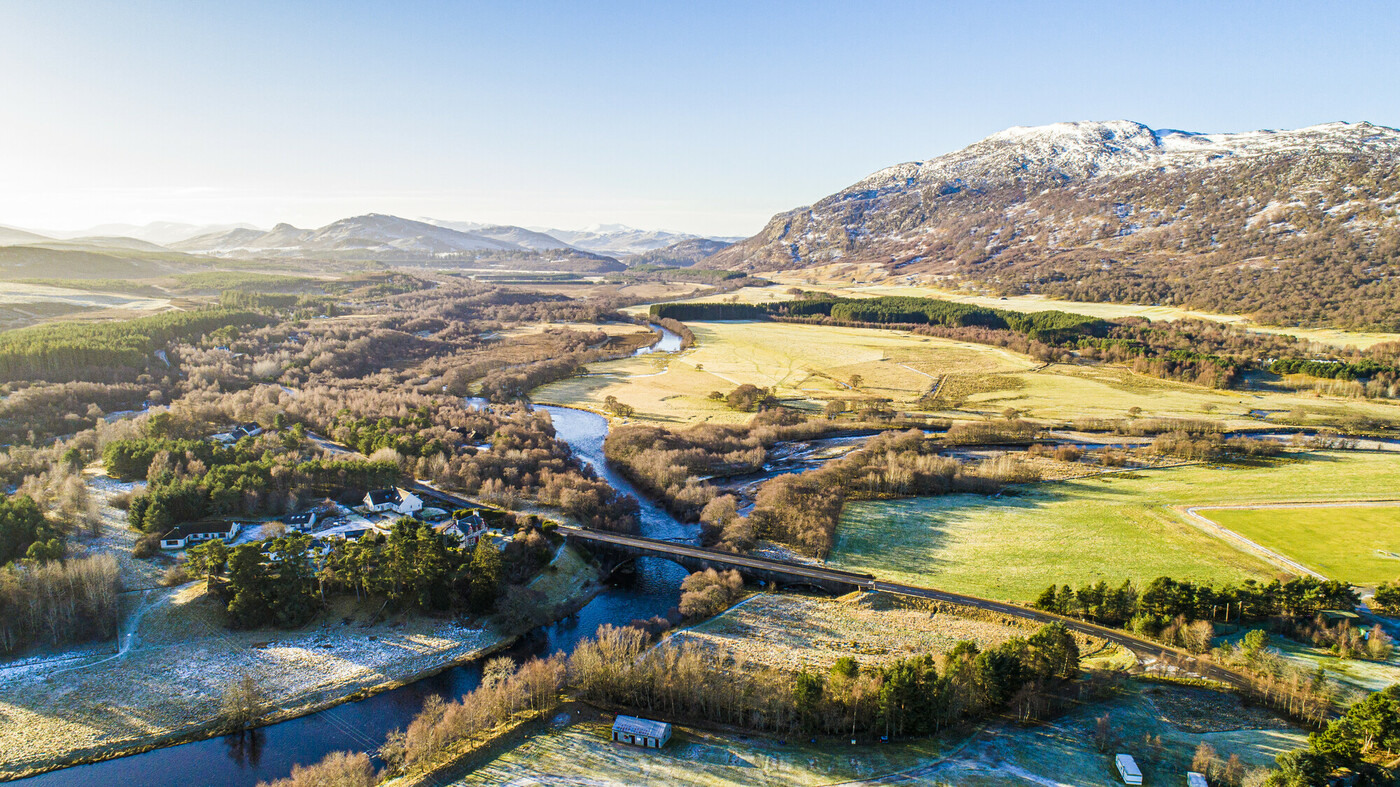
- Glenbuchat and the Braes of Glenlivet area are strongly contained by the surrounding hills, lying on the north-eastern edge of the Park. Both these landscapes have a secluded and tranquil character given the absence of through roads. The pastoral landscapes on the settled floor and lower slopes of these glens are scenically complemented by the open moorland-clad slopes of the smoothly rolling hills which contain them and form the northern edge of the National Park. Both areas are sparsely settled with mainly small 19th century farmsteads, residential dwellings and historic landmark buildings instilling a sense of timelessness. Little large-scale infrastructure is seen from within the settled floor
Cairngorms National Park Authority Item 9 Planning Committee 13 March 2026 Page 10 of 15
and lower slopes of the glen / basin (a small number of the operational Dorenell wind turbines are evident in views from parts of these landscapes but do not strongly influence character).
- The proposed windfarm extension would significantly affect the cultural and perceptual qualities associated with these hidden glens. Large scale infrastructure would be seen in relative proximity on the skyline of the containing uplands. The magnitude of change associated with the proposed development would greatly exceed the effect of existing visibility of the very few operational Dorenell wind turbines seen in some parts of these landscapes. The smooth rolling hills would be interrupted by moving turbines, albeit seen on less visually prominent dips in the upland skyline, but nonetheless still intrusive and introducing modern large-scale infrastructure into the scene. The SLQs associated with these glens are most commonly experienced from roads, settlement and walking routes within the floor and lower slopes of these strongly contained glen / basin landscapes where small scale buildings, enclosed fields and the scenic contrast between farmland and the open upland backdrop is most strongly felt. More elevated views from nearby hills and ridges span across these quiet, little developed glen / basins but also tend to focus on wider views within which the distant Cairngorms massif is a particular attraction.
- The aesthetic qualities of SLQ3 — Strong juxtaposition of contrasting landscapes and SLQ4 — A landscape of layers, from inhabited strath to remote, uninhabited upland would be diminished by the presence of much more visible wind turbines (both closer and larger), detracting from the simplicity of the skyline of smooth, rolling hills and the contrasting backdrop it provides to small scale fields and settlement. The contrasts between the inhabited lower slopes and glen / basin floors and the remote undeveloped surrounding hills in terms of the SLQ4 would also be adversely affected. The hidden secretive character and distinctive cultural associations of these landscapes would be significantly diminished by the introduction of prominent wind turbines seen on the skyline of hills which presently provide strong visual containment to development outside the Park. It is considered that effects on these SLQs exhibited within Glenbuchat and the Braes of Glenlivet would be significant and adverse. Redesign of the Proposed Development could mitigate these effects.
Cairngorms National Park Authority Item 9 Planning Committee 13 March 2026 Page 11 of 15
- To conclude, there would be a significant adverse effect on some of the SLQs associated with these hills including the sense of wildness and openness experienced from promoted walking routes. These hills are already influenced to some degree by the operational Dorenell and Kildrummy wind farms and while the proposed development would substantially increase and significantly exacerbate existing adverse effects on landscape character and views, it is considered these effects would not be of a level of severity that would lead to a loss of integrity to the designated area in terms of effects on SLQs.
- It is considered that the magnitude of significant adverse effects on SLQs will be greater across Glenbuchat and the Braes of Glenlivet. These include significant adverse effects on the cultural and perceptual qualities associated with these hidden, tranquil and seemingly timeless settled glens and the diminishment of the scenic juxtaposition of smooth rolling hills with settled farmland which is principally experienced from within the floor and lower slopes of these landscapes. It is considered that the degree of intrusion of the proposed development would lead to a loss of integrity of the designated area because of the magnitude of change that would occur to the SLQs exhibited in these parts of the National Park.
- The scale of this proposed development and its proximity to the Cairngorms National Park boundary would result in significant adverse landscape and visual effects on the Park and on some of the SLQs evident in this north-eastern part of the designated area. It is considered that redesign of the proposed development could mitigate effects from the Glenbuchat and Braes of Glenlivet area. Although redesign of the proposed development could alleviate significant adverse effects from nearby hills these would be unlikely to be reduced to a non-significant effect.
- In terms of NPF4 Policy 4 c) which addresses development affecting National Parks, it is considered that this development would have a significant adverse effect on views from the Cairngorms National Park, on its character and on some of the SLQs of the Park. It is considered that the significant adverse effects on SLQs relating to the cultural and landscape qualities of Glenbuchat and the Braes of Glenlivet would be sufficiently severe to affect the integrity of the Cairngorms National Park.
Cairngorms National Park Authority Item 9 Planning Committee 13 March 2026 Page 12 of 15
- It is advised that the proposal may therefore not meet Policy 4 c) of NPF4 due to the extensive nature of effects on the Glenbuchat and the Braes of Glenlivet areas within the Park.
- It is advised that redesigning the proposal following these recommendations would mitigate the effects on the SLQs: a) Removal of turbines 35, 51, 55 and 57 to reduce prominence from VP7 and VP11 b) Removal or relocation of turbine 80 so it is not visible from VP6 c) Removal, relocation and / or a reduction in size of turbines 23 and 26 to reduce prominence from VP12 d) Removal of at least six wind turbines visible above hub height from VP9 including turbine 48
- It is also recommended that the Applicant should consider the use of radar activated lighting to further mitigate visible aviation lighting.
Appraisal
- The policies of NPF4 and the NPPP set out how proposals outwith the boundary of the National Park should be considered in terms of effects on the National Park.
- NPF4 Policy 11: Energy clarifies that “b) Development proposals for wind farms in National Parks… will not be supported; and d) Development proposals that impact on international or national designations will be assessed in relation to Policy 4”.
- NPF4 Policy 4 a) cites that development proposals which by virtue of type, location or scale will have an unacceptable impact on the natural environment, will not be supported. Policy 4 c) states that development proposals that will affect a National Park will only be supported where: i) the objectives of designation and the overall integrity of the area will not be compromised; or ii) any significant adverse effects on the qualities for which the area has been designated are clearly outweighed by social, environmental or economic benefits of national importance.
Cairngorms National Park Authority Item 9 Planning Committee 13 March 2026 Page 13 of 15
- Policy C2 a) of the NPPP sets out a test for considering effects on the landscapes of the National Park, in that large scale wind turbines are inappropriate outside the National Park where they ‘adversely affect its landscape character or special landscape qualities’. If a proposal fails policy C2 a), it would also be in conflict with NPPP policy A4, which seeks to conserve and enhance the SLQs of the National Park.
- The proposed wind farm would be located on the east and north-facing slopes of the Cabrach basin area in the Moray Council area in close proximity to the National Park boundary. It would introduce an extensive array of much larger wind turbines which would be highly visible from both low lying areas and more elevated views, in particular from the Glens of Glenbuchat and Braes of Glenlivet. Consequently, it would significantly and adversely affect the character and setting of The Surrounding Hills (SLQ10) including a diminishment of the sense of Wildness (SLQ28) and Vastness of space (SLQ2) experienced from these uplands on the north-eastern boundary of the Park. The introduction of these larger and much more visible wind turbines would detract from the simple skyline of smooth, rolling hills and the contrasting backdrop this provides to small scale fields and settlements, which in turn would reduce the aesthetic qualities of SLQ3 (strong juxtaposition of contrasting landscapes) and SLQ4 (landscape of layers).
- The proposal would have significant adverse effects on the SLQs of the Cairngorms National Park such that the objectives of the designation and overall integrity would be compromised. The proposed development therefore fails to meet the requirements of NPPP policies C2 a) and A4, and NPF4 Policies 4 and 11. It is therefore recommended that the National Park Authority should object to the proposed Dorenell Wind Farm extension.
Recommendation
That members of the committee confirm that Cairngorms National Park Authority OBJECT to the application for the proposed Dorenell Wind Farm Extension.
Cairngorms National Park Authority Item 9 Planning Committee 13 March 2026 Page 14 of 15
Appendix 1 – Dorenell Wind Farm Extension: Proposed windfarm ZTV and Viewpoints
Map: Proposed windfarm ZTV and Viewpoints (Appendix 1)
Cairngorms National Park Authority Item 9 Planning Committee 13 March 2026 Page 15 of 15
Appendix 2 — Clune Wind Farm: Cumulative ZTV Operational Dorenell Wind Farm
Map: Cumulative ZTV Operational Dorenell Wind Farm (Appendix 2)