
Planning Committee meeting - Item 5: appendix 3 - 14 November 2025
Cairngorms National Park Authority Item 5 Appendix 3 Ughdarras Pàirc Nàiseanta a’ Mhonaidh Ruaidh 14 November 2025 Page 1 of 4
Agenda item 5
Appendix 3
2025/0104/DET
Tromie diversion project summary
RSPB SCOTLAND Cairngorms Connect RSPB Insh Marshes National Nature Reserve — River Tromie Realignment: Non-Technical Project Summary. This summary provides a brief overview of the current issue being addressed, the solution proposed, the options that have been considered and the benefits that are expected as a result. This realignment is designed to reconnect the river with the wider floodplain and to reduce the risk of the river breaking to the right across improved agricultural land, threatening neighbouring property and access infrastructure.
Introduction:
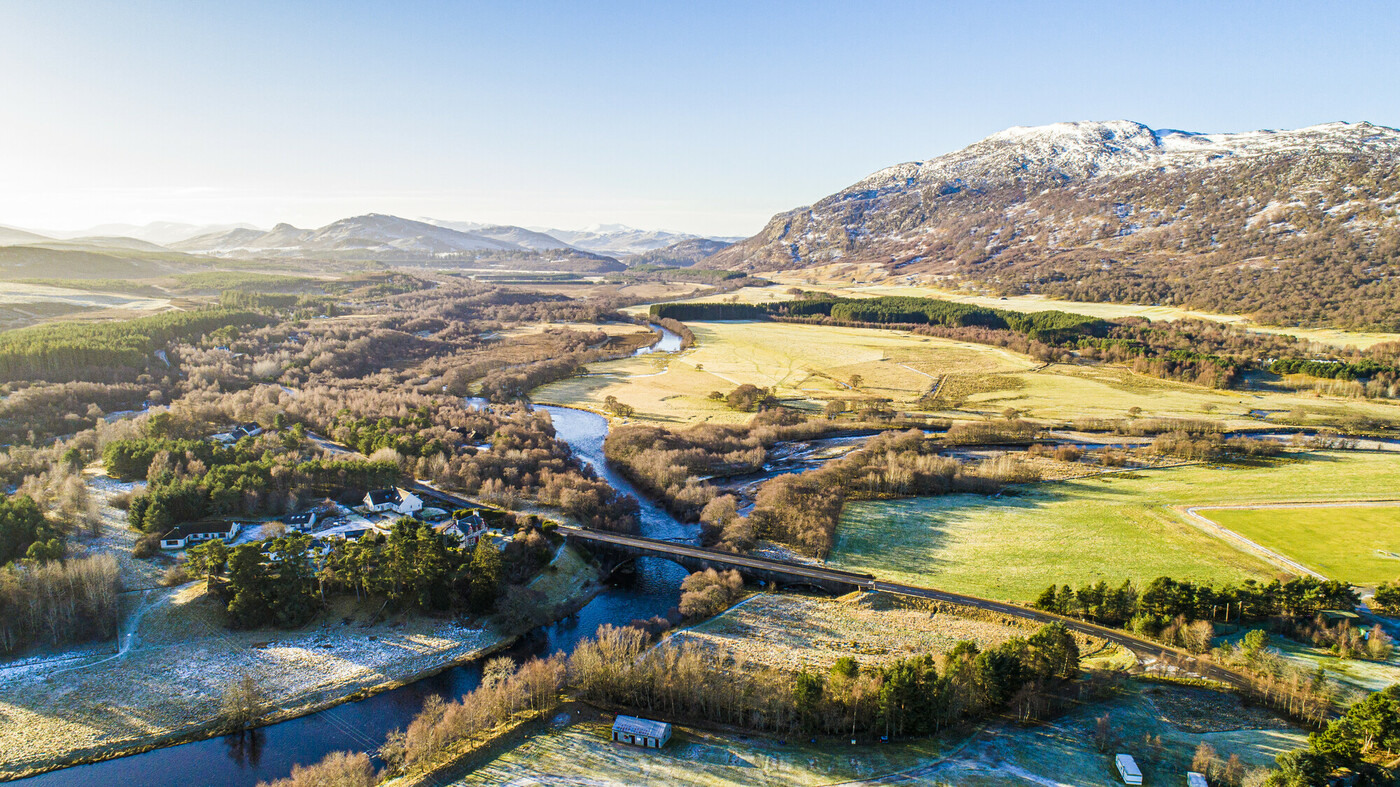
Insh Marshes is one of the largest and most naturally functioning flood plain systems in the UK. It is internationally important for wildlife and is highly designated (SSSI, SAC, SPA and Ramsar site) for the birds, mammals, fish, invertebrates, plants, woodland and wetland habitats found there, attracting over 15,000 visitors to the area annually. The River Tromie flows across Insh Marshes to join the River Spey between Invertromie farm and the Dell of Killiehuntly.
The Marshes have a long history of agricultural use as shown in the National Library of Scotland side-by-side map extract below, showing General Roy’s Map on the left from circa 1750 and the first edition OS map from the late 19th Century on the right. The Roy map shows the more natural courses of the Tromie and the Spey prior to the period of land improvement, with a longer, more meandering course. In the 1st Edition OS map, the embankments have been constructed, and the course of the rivers has been straightened to improve conditions for hay cutting and grazing.
The issue:
Over time, the river naturally transports sands, gravels and cobbles downstream when the energy in the watercourse is high, e.g. during spates. In a natural burn or river system, this material is then deposited in lower lying/low energy areas, spreading out across floodplains to form alluvial fans and natural levees. On the Tromie, the river embankments have reduced the connectivity with the flood plain and sediment is now deposited within the channel on the flatter sections. This has raised the bed of the Tromie in several locations to a point where the river is breaking out of the main channel through the right bank and is having a significant effect on improved agricultural ground on the Dell of Killiehuntly. Approximately 12ha of land is currently affected by a constant overland flow, reducing the area available to the tenant Farmer who now uses the field for silage production.
If the right bank fails completely and all of the river water flows across the Dell of Killiehuntly fields, then a larger area of improved ground will be permanently affected, neighbouring ground at Old Milton and below Insh village will be at greater risk of regular flooding, and existing culverts on access tracks and at Coull would be at risk, being too small to accommodate a large increase in flow and are likely to be overwhelmed. Natural levees and man-made embankments prevent the Tromie from rejoining the Spey until it reaches Loch Insh. A breach to the right would also interupt the salmon passage and reduce the area of transition mire habitat, creating more standing water across the fens which results in a less diverse swamp habitat.
The Solution:
The proposed new channel will encourage the river to move to the left, onto the unimproved pasture and wetland communities on the lower Invertromie Farm field. Approximately 3ha of this land will be affected, although 2ha of this area is already covered by mire and swamp habitats that have developed over the last 10 – 15 years.
It is important to note that this is not a hard engineered realignment of the river into a new constrained route, but is the formation of an undersize channel which will take the majority of the standard summer flow. In higher flows, the river will flow freely down both the new and the current channels, but will overtop the banks of the new channel more regularly, reconnecting with the flood plain easily, slowing the waters passage over the ground and depositing sediment on the wetland area. This is an approach that encourages natural processes, is more sustainable as it does not require maintenance and preserves the connection to the Spey for the passage and spawning of salmon and trout. The interaction of the Tromie and the Spey makes the last 350m of the new channel to the confluence a low-energy environment, which also limits erosion.
The management of livestock on the Reserve in response to changes in river levels is already a well-established practice, with seasonality of grazing reducing risk and stock
being moved to higher and drier ground if flood warnings are issued. The new channel will be more dynamic than an embanked channel, so permanent fencing will be less suited to this situation and that can be replaced with satellite controlled No-Fence style collars or temporary electric fencing.
Options Considered:
Historically, the build-up of sediment would have been dug out periodically to keep the river constrained within the embankments, protecting the fields from summer floods. The negative impacts of repeated dredging are well understood now, with it resulting in habitat loss for fish and invertebrates, heightened downstream flood risk, increased turbidity and is only a temporary solution. The frequency of spate events is forecast to increase with climate change, meaning that the transportation and deposition of sediment will become more regular. Dredging may be appropriate in some specific cases, e.g. close proximity to infrastructure, but is not a sustainable or desirable option to undertake in this case.
The Consultant, Dynamic Rivers, modelled 7 different options employing limited interventions to manage the river on the left and right sides, but all of these options had significant negative impacts on one or more of the neighbours, agricultural land or designated habitats or species.
Further computer modelling of the proposal has shown no negative impact on designated habitats and species, it has no effect on the flooding régime of the Spey and does not increase the flood risk to the Invertromie Steadings.
Benefits:
The proposal will:
- Help to reduce the impact of current flooding on 12ha of improved agricultural land on the Dell of Killiehuntly.
- Help to reduce the risk of the Tromie breaking through the right bank, which would affect neighbours land and access infrastructure. This would also have a negative effect on fish passage and large areas of rare wetland habitats and species on the Dell, Insh and Coull fens.
- Create a more sustainable and diverse river system which is allowed to develop through natural processes.
- Retain fish passage to the Spey and have a net gain on the rare transition mire habitat.
- It will not increase flood risk locally, or impact on archaeological heritage.
Steve Blow: September 2025.