
Capercaillie Emergency Plan scientific advisory group meeting notes - October 2026
Scientific Advisory Group — Capercaillie Emergency Plan Meeting note Thursday 29 October, 1pm — 3pm | Park Authority Office, Grantown-on-Spey and Teams
Attendees
- Alice Broome: Senior Scientist — Priority species / habitats, Forest Research
- Carolyn Robertson: Cairngorms Nature Manager, Park Authority
- Chris Sutherland: Reader of Statistics, University of St Andrews
- Dave Parish: Terrestrial Ornithologist, NatureScot
- Helen Senn: Head of Conservation and Science Programmes, RZSS
- Holly Niven: Research Assistant, University of Glasgow
- Jason Matthiopoulos: Head of Ecology and Environmental Change, University of Glasgow
- Kath Leys: Head of Biodiversity and Geodiversity, NatureScot (Chair)
- Kathy Fletcher: Senior Scientist Scottish Upland Research, GWCT
- Steven Ewing: Senior Conservation Scientist, RSPB
Apologies
- Xavier Lambin: Professor of Ecology, University of Aberdeen
1. Capercaillie Integrated Population Model development
Holly provided an update on the latest development of the Capercaillie Integrated Population Model (CIPM) and feedback from a survey completed by group members to help prioritise developments. The group discussed the value of involving more stakeholders in the model’s development, while managing expectations about what can be realistically delivered. A proposed stakeholder day in February/March 2027 could provide an opportunity for this.
Increasing opportunities to link the CIPM with CaperMap to present model outputs spatially were discussed. Members of the group also expressed interest in exploring further how extreme events and the risk of population extinction are represented within the model and agreed that a follow-up discussion would be valuable.
Holly presented example graphs with lek-specific population trajectories. These model outputs could help track how populations respond to management interventions in different areas and identify where future management efforts should be focused.
Following discussion at the previous meeting about the timing of the next National Survey, modelling results were shared indicating that undertaking the survey in 2029⁄30, rather than earlier would result in the lowest level of uncertainty by allowing for a longer period of data collection.
Productivity data are included in the model, and the group discussed the transition in productivity monitoring methods from pointer dog counts to camera traps. It was noted that an ongoing study by GWCT, conducted as part of the Emergency Plan, shows the two approaches are producing broadly comparable results. The current two-year period of overlap will allow for cross-calibration between methods and help maintain continuity in the data. This has been demonstrated by similar changes in monitoring methods for other species.
2. Review the draft Research and Monitoring Plan
The group provided feedback on the latest draft of the Research and Monitoring Plan, which had been updated following discussions at the previous meeting and comments received since. The revised draft also included information from the Cairngorms Nature Index (CNI).
The group raised the following points:
- Knowledge gaps: Gaps in understanding of invertebrates as a prey base for capercaillie, and the potential impacts of disease, should be reflected in the relevant table in the plan.
- Cairngorms Nature Index: The plan should align with the Cairngorms Nature Index. A discussion was had about the CNI reference condition for capercaillie, including the suitability of using Finland as a comparison given potential difference in future climate projections. There was interest in exploring how the CIPM could help inform a more dynamic reference condition that accounts for environmental change. The group discussed the importance of recognising different stages of population recovery, from achieving a minimum viable population, through stability, towards a more natural population level consistent with good ecological condition. It was also suggested that historical data used to establish the CNI reference condition could help improve the model’s ability to estimate past population trends and reduce uncertainty.
- Funding: High-level figures in the funding table could be broken down to support operational budget planning and provide greater clarity about how funding would be used.
- Communications and engagement: The proposed stakeholder event in February/March 2027 was identified as a potential opportunity to launch the plan, explain its purpose and bring its content to life, helping to build understanding and avoid misinterpretation. A communications plan is also being developed to support publication. It was noted that the inclusion of a glossary in the plan would help to make it more accessible and avoid misunderstandings.
3. Roundtable updates
Updates were shared on delivery of the Emergency Plan. Progress highlighted included:
- Woodland grazing: Approximately 270 cattle are now grazing across 11 sites, influencing over 6,000 hectares of capercaillie habitat. Baseline surveys using the Woodland Herbivore Impact Assessment methodology have been undertaken at several sites.
- Robocutting: Hundreds of hectares of dense heather have been robocut across multiple landholdings, with further work underway. Baseline vegetation surveys have been undertaken at several sites.
- Forest bog restoration: Work is planned for the spring to identify priority sites to restore during 2027⁄28, complementing Peatland ACTION funding.
- Diversionary feeding: Delivered across 19 sites in 2026, with productivity results available in January 2027 to inform the next breeding season.
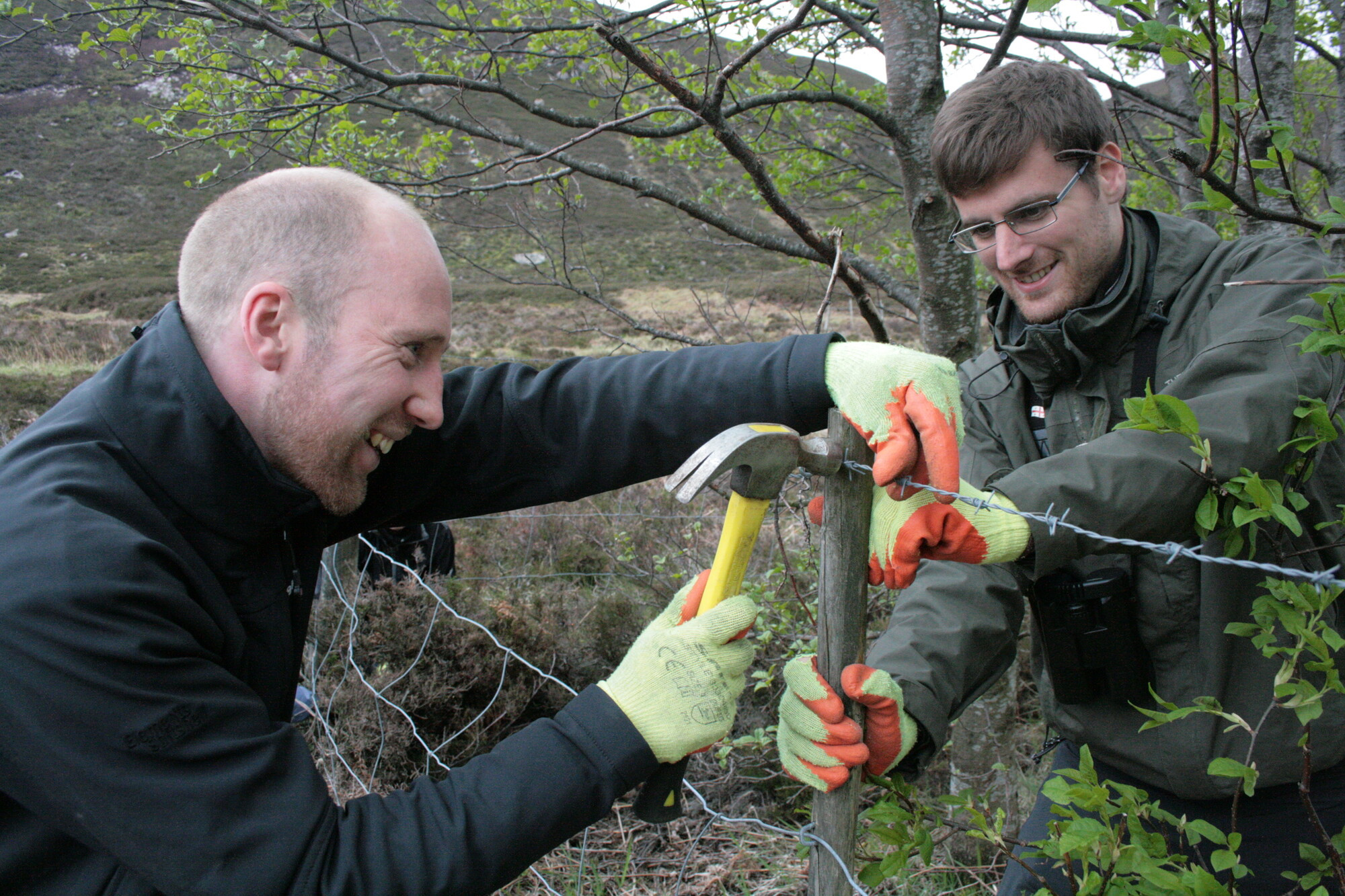
- Deer fence removal: Over 12km removed within 5km of active leks in the last six months, with a further 5km identified for removal before the next breeding season. Approximately 120km remains. Accelerated removal is a priority, with progress tracked through the fence inventory.
- Vole surveys: Vole Sign Index and live trapping surveys are complete for 2026, with a ‘vole day’ planned for January 2027 to share findings, bring together land managers with a growing interest in vole monitoring and explore opportunities to coordinate efforts and expand survey coverage.
- Stakeholder engagement: A capercaillie stakeholder day is proposed for February/March 2027 to share progress and productivity results and develop good practice guidance for habitat interventions, including robocutting and woodland grazing.
- CaperMap: Work continues to secure remaining datasets. Early access for Holly and RSPB staff would support CIPM development and habitat suitability modelling.
- Invertebrate data: Macro-moth records and invertebrate trapping data from Ron Summers’ capercaillie study have been identified, potentially informing understanding of invertebrate biomass and future monitoring.
- Predator research: A study on capercaillie responses to predators (and recreation) is nearing completion. NatureScot’s pine marten survey has been published, with repeat surveys subject to funding. Existing Predator Project data may also be useful.
- Habitat suitability modelling: Initial work by the RSPB is progressing, with opportunities to align it with the CIPM.
- Monitoring habitat interventions: The final report from the large-scale field-layer disturbance trial in RSPB Abernethy is expected in 2027. It was suggested that the group could contribute to the development of survey methodologies for grazing and robocutting, identifying opportunities to strengthen monitoring and support delivery, including through student involvement.
4. Capercaillie population reinforcement feasibility
Ahead of a joint meeting with the Programme Board to discuss the findings and recommendations of the Capercaillie Reinforcement Feasibility Study, the group considered the study. Both phases have now been published and circulated to stakeholders. It was noted that some stakeholders have expressed an interest in pursuing reinforcement. Subject to further discussion with the Programme Board, the group considered how best to respond to this interest, including the importance of understanding and managing potential risks, particularly around disease, and identifying opportunities for monitoring and learning should proposals progress.
Actions
- Carolyn to arrange a follow-up discussion to explore how the CIPM models disaster scenarios.
- Carolyn to update the draft Research and Monitoring Plan in response to the feedback shared.
- Carolyn to share a draft communications plan for the Research and Monitoring Plan.
- Carolyn to invite Adam, the Park Authority’s Cairngorms Nature Index lead, to present the woodland ecosystem component of the Nature Index at the group’s next meeting.
- Carolyn to include a review of monitoring methodologies for woodland grazing and robocutting at the group’s next meeting.