
Capercaillie Lek Count Report 2026
Capercaillie Lek Count Report 2026
Contents Introduction …………………………………………………………………………………………………….. 1 How lek surveys are conducted ………………………………………………………………………….. 2 2026 summary results ……………………………………………………………………………………… 2 Key observations from the 2026 lek surveys ……………………………………………………….. 3 Minimum number of males counted at lek sites in Scotland 2018 — 2026 ………………… 4 Minimum number of males counted at lek sites in Special Protection Areas 2015 — 2026 …. 5 Conclusion ……………………………………………………………………………………………………. 10
Introduction
Lek counts are used to monitor capercaillie numbers in Scotland and have been carried out across the species’ range since 2002. The surveys involve licensed surveyors, coordinated by the RSPB Capercaillie Advisory Officer, counting the number of male capercaillie (cocks) attending known lek sites where the birds gather to breed.
The results represent the minimum number of cock birds recorded, rather than an overall population estimate, as capercaillie do not attend leks every morning. This means some birds will inevitably be missed, so the counts provide only a partial dataset.
A total of 184 lekking males were recorded In 2026, an increase of 41 birds compared with 2025. While the results do not provide a full population estimate, they offer a helpful insight into population trends and help inform local capercaillie management.
The Capercaillie National Survey, which has been repeated every six years since the early 1990s, surveys capercaillie across their range in Scotland and is used to inform national population estimates. Results from the most recent survey can be found through this link: Further declines of the Western Capercaillie Tetrao urogallus in Scotland as shown by the 2021 – 2022 winter survey
How lek surveys are conducted
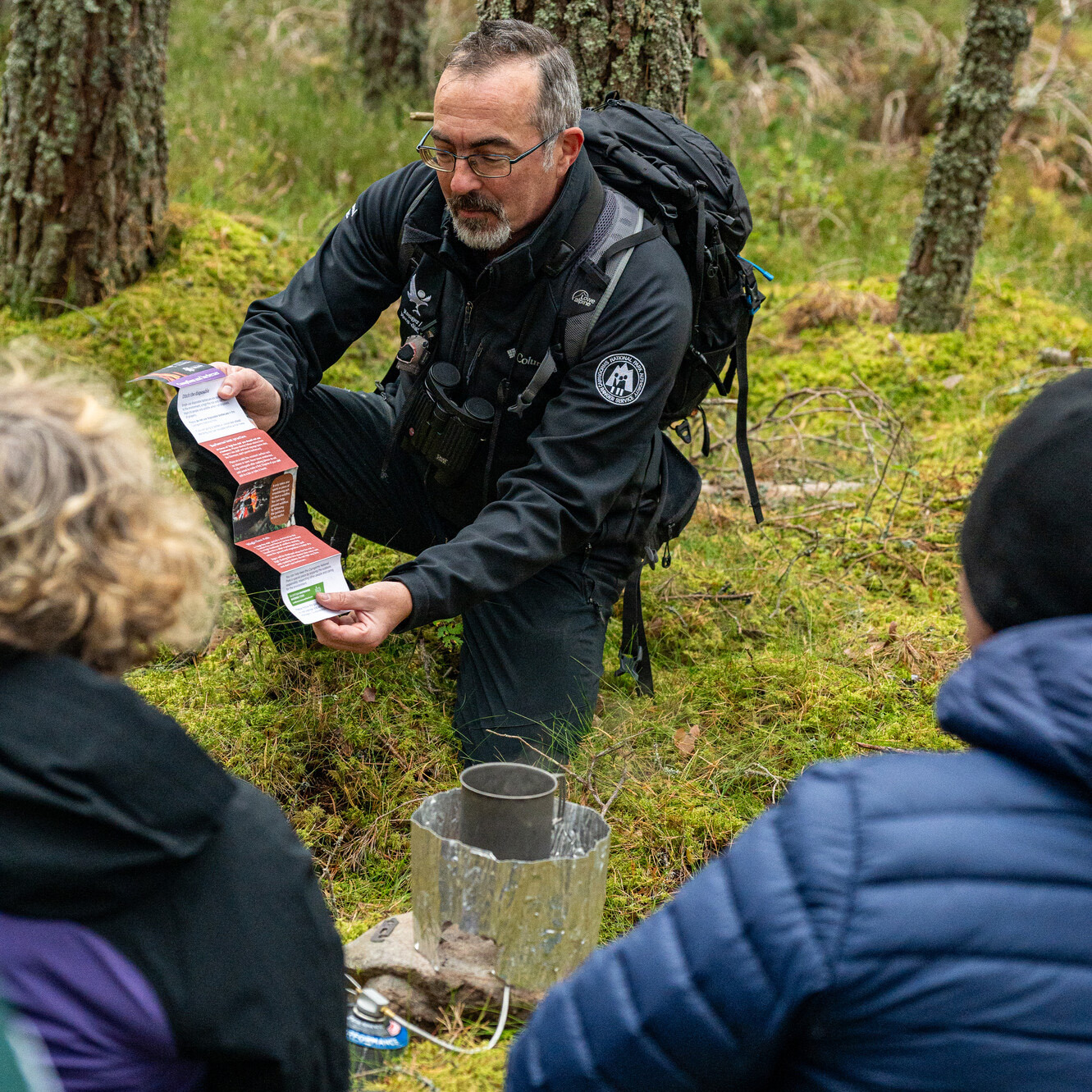
As capercaillie are a legally protected species under the Wildlife and Countryside Act 1981, lek surveys are carried out under a Schedule 1 licence issued by NatureScot. Surveyors are trained and follow a strict protocol designed to gather accurate data while minimising the risk of disturbance.
Lek locations can shift over time, so capercaillie forests are often “cold searched”, with surveyors carrying out daytime walk-throughs to check potential lek sites for signs of activity and identify hotspots. These are then followed up with early morning lek surveys, beginning from around 4am, which take place from mid-April to early May.
Lek counts involve surveyors counting lekking cocks from hides, which are entered the evening before and occupied overnight to minimise disturbance. The number of visits to each lek is kept to a minimum and leks are generally only surveyed once to reduce disturbance. At lek sites attended by only a single bird, where individuals can be more mobile, surveyors carry out an early morning walk-through survey rather than counting from a hide.
In recent years, a small number of lek sites have also been monitored using cameras. This year, a thermal imaging drone was trialled at three active lek sites in Strathspey. The drone was operated under licence and produced mixed results. More information is available for land managers interested in learning more about the trial.
2026 summary results
- A total of 184 lekking males were counted.
- This is an increase of 41 lekking males compared to 2025 and the highest number of lekking males recorded since 2018.
- A total of 170 lekking males were recorded in the Cairngorms National Park. This is an increase of 39 compared to 2025.
- Female capercaillie (hens) are more difficult to count, as they move in and out of lek sites and tend to remain close to the ground. However, at least 1 hen was recorded at most lek sites and the most hens seen at one time was 5.
- In Deeside, 5 lekking males were recorded. This matches the figure recorded in 2025 and represents the lowest count on record.
- In Morayshire, 2 lekking males with a hen were recorded.
- There was no evidence of capercaillie in Perthshire.
- No lek sites in Donside were surveyed.
Key observations from the 2026 lek surveys
- Conditions at the start of the survey period were mixed, with rain and wind causing some lek counts in more exposed areas to be cancelled or repeated. However, weather conditions improved around the peak of lekking activity from 20 April onwards, providing good conditions for counting.
- Survey effort remained consistent with 2025 across the lek sites that were monitored.
- Counting on most landholdings began earlier than in 2025, typically from around 15 April. Last year, some areas did not begin counts until 18 April.
- The largest lek recorded 16 cocks in attendance and two leks recorded 15 cocks. All three lek sites are in Strathspey and adjacent to large areas of bog woodland.
- The largest increases in lekking male numbers were recorded in Strathspey forests, where management has focused on habitat improvement through cattle grazing, cutting the field layer using robotic flails, reducing the impacts of predation and disturbance, and removing deer fences within 1km of active lek sites.
- Cock birds began lekking from around 4am, with activity declining around 6am. On some lek sites, activity increased again around 7am with the arrival of hens and continued through to mid-morning.
- Hens attended leks earlier this year, from around 15 April rather than 19 – 20 April and continued attending through to 30 April. As a result, the overall period of lekking activity was longer in 2026 than in 2025.
- In 2025, three cocks were recorded displaying on well-used paths in Strathspey. These birds returned to display in the same areas this year. A new lek site in Abernethy which formed in 2025 remained occupied by two of the cocks known to frequent well-used paths, alongside hens and two additional cocks this year. To protect this lek from disturbance, signs were deployed again this year asking people not to use the paths closest to the lek before 8.30am until 15 May. The signs were developed by the Cairngorms National Park Authority and NatureScot and formed part of the wider Lek It Be campaign which aims to ensure capercaillie are not disturbed during the lekking period.
- During April, capercaillie sightings and signs were reported to the RSPB from areas previously thought to be extinct for capercaillie, ranging from upper Deeside to north Morayshire. This is encouraging for the range and distribution of capercaillie, and these areas will be surveyed after the breeding season.
Minimum number of males counted at lek sites in Scotland 2018 — 2026
| 2018 | 2019 | 2021 | 2022 | 2023 | 2024 | 2025 | 2026 | |
|---|---|---|---|---|---|---|---|---|
| Moray and Nairn | 9 | 4 | 4 | 2 | 1 | 0 | 1 | 2 |
| Strathspey | 165 | 155 | 127 | 132 | 147 | 136 | 126 | 165 |
| Easter Ross | 9 | 9 | 10 | 8 | 14 | 7 | 11 | 12 |
| Deeside and Donside | 12 | 11 | 7 | 5 | 5 | 10 | 5 | 5 |
| Perthshire | 1 | 1 | 1 | 2 | 1 | 0 | 0 | 0 |
| Total number of males counted | 196 | 180 | 149 | 149 | 168 | 153 | 143 | 184 |
(Chart: Minimum number of males counted at lek sites in Scotland 2018 – 2026, showing trends for Moray & Nairn, Strathspey, Easter Ross, Deeside & Donside, Perthshire, and Total.)
Data from 2020 is not included as most lek sites were not counted due to Covid-19 restrictions. In 2019, the methodology changed to only counting birds seen at lek sites, instead of also including signs seen, e.g. feathers, droppings.
Minimum number of males counted at lek sites in Special Protection Areas
The primary purpose of a Special Protection Area (SPA) is to protect and safeguard habitats for Annex I bird species, ensuring they have safe areas for breeding, feeding and resting. Sites supporting more than 1% of the breeding capercaillie population were designated as SPAs between 1990 and 2006. There are 11 capercaillie SPAs in Scotland (see following graphs). Loch Lomond, Glen Tanar, and Darnaway and Lethen SPAa no longer hold active capercaillie lek sites, although capercaillie are still recorded periodically at the latter two sites. Capercaillie became extinct in Loch Lomond in 2008.
(Chart: Abernethy SPA — Minimum number of lekking males in the SPA, 2015 – 2026) (Chart: Anagach SPA — Minimum number of lekking males in the SPA, 2015 – 2026) (Chart: Ballochbuie SPA — Minimum number of lekking males in the SPA, 2015 – 2026) (Chart: Cairngorms SPA — Minimum number of lekking males in the SPA, 2015 – 2026) (Chart: Craigmore SPA — Minimum number of lekking males in the SPA, 2015 – 2026) (Chart: Darnaway and Lethen SPA — Minimum number of lekking males in the SPA, 2015 – 2026) (Chart: Glen Tanar SPA — Minimum number of lekking males in the SPA, 2015 – 2026) (Chart: Kinveachy SPA — Minimum number of lekking males in the SPA, 2015 – 2026) (Chart: Morangie SPA — Minimum number of lekking males in the SPA, 2015 – 2026) (Chart: Novar SPA — Minimum number of lekking males in the SPA, 2015 – 2026)
Conclusion
The increase in the total number of lekking males recorded in Scotland in 2026 was not entirely unexpected, following favourable weather conditions and the delivery of conservation measures over previous breeding seasons. Brood data collected through a network of camera traps in recent years, and reliable sightings have also provided encouraging insights into productivity.
Peripheral populations do, however, remain in an increasingly precarious position. There were no signs of capercaillie in Perthshire or Donside, and only two cock birds were recorded in Morayshire. The loss of capercaillie from Morayshire would represent a further contraction in the species’ range and increase the vulnerability of the Scottish population overall. In addition, the Deeside population appears to be declining or, at best, remaining static.
The RSPB Capercaillie Advisory Officer wishes to thank all the lek counters, volunteers, land managers, the Park Authority and NatureScot for their assistance undertaking lek counts and providing the data for this report.