
Draft Formal Board Minutes - 27 March 2026
Cairngorms National Park Authority Ughdarras Pàirc Nàiseanta a’ Mhonaidh Ruaidh
Draft minutes of the Formal Board meeting
Held at Cairngorms National Park Authority office, Grantown-on-Spey
In person
27 March 2026 at 9.30am
Present in person
- Sandy Bremner (Convener)
- Jackie Brierton
- Kenny Deans
- Hannah Grist
- John Kirk
- Lauren MacCallum
- Fiona McLean
- Duncan Miller
- Eleanor Mackintosh (Deputy Convener)
- Peter Cosgrove
- Paul Gibb
- Russell Jones
- Bill Lobban
- Ian McLaren
- Steve Micklewright
- Derek Ross
In attendance
- Grant Moir, Chief Executive Officer (until 11.00 am)
- David Cameron, Deputy Chief Executive Officer and Director of Corporate Services
- Andy Ford, Director of Nature and Climate Change
- Gavin Miles, Director of Planning and Place
- Colin Simpson, Head of Visitor Services and Active Travel
- Kate Christie, Head of Organisational Development
- Eilidh Todd, Communities and Rural Development Manager
- Mariaan Pita, Executive Support Manager
- Oliver Davies, Head of Communications and Engagement
- Vicky Hilton, Outdoor Access Officer
- Alix Harkness, Clerk to the Board
Apologies
- Geva Blackett
- Michael Williamson
- Ann Ross
Welcome and introduction
- Sandy Bremner, the Board Convener, welcomed everyone to the meeting. He praised and expressed huge gratitude to Eleanor Mackintosh, Deputy Convener for stepping in to cover him while he had been recovering from an operation. He advised that the CEO would be leaving at 11.00am to attend a funeral. Apologies were noted.
Matters arising not covered elsewhere
- There were no matters arising.
- The Convener gave an update on the actions arising from the meeting as detailed in the table below.
| Action | Status |
|---|---|
| Action Points from meeting on 22 November 2024: | |
| Paper 1 — CEO Report | |
| At para 6b | |
| i. Review the Planning call-in protocol and discuss at a future planning committee. | Completed |
| Action Points from meeting on 28 March 2025: | |
| Paper 2 — 2025⁄26 Budget and Operational Plan | |
| Information on the number of ecological barriers that are being removed on catchments to be sought and circulated to the Board and thought to be given to putting this into a staff members forward work plan. | In hand |
| Action Points from meeting on 28 November 2025: | |
| Paper 1 — CEO Report | |
| At para 8 | |
| i. Press and Journal columns written by Malcolm Smith, Agricultural Officer to be circulated to the Board prepublication. | Completed |
| ii. CEO to seek an update on the development of a Cairngorms National Park app and circulate this to the Board. | In hand |
| Paper 3 — Active Cairngorms | |
| At para 16 | |
| ii. Risk Register to be updated to include commentary on each rating. | Completed |
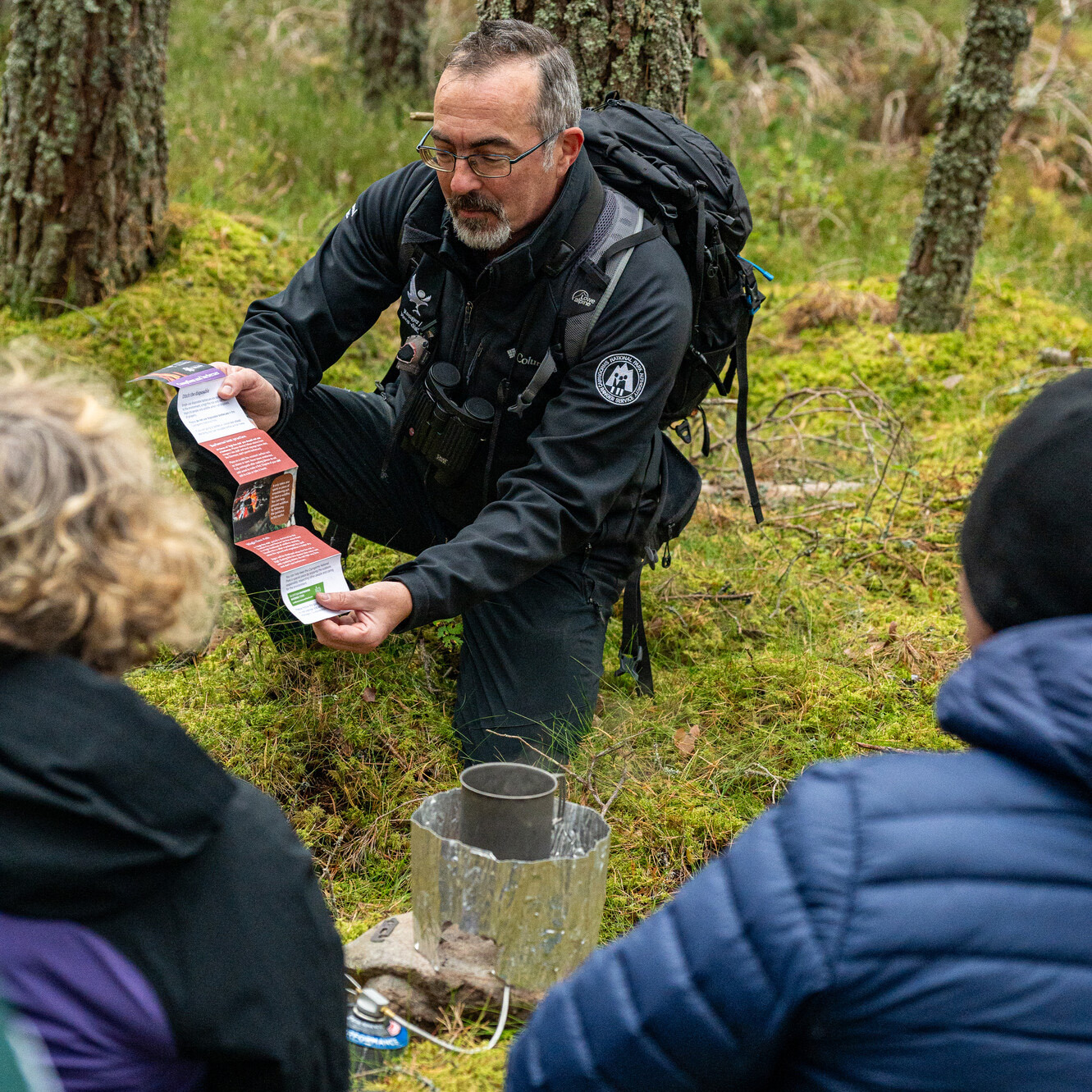
| iii. Fire bylaw guidance to be adapted for a session with the Board proving practical guidance out and about in communities for when the bylaw comes into force. | Completed |
| iv. Head of Visitor Services and Active Travel to keep the Board abreast with developments with Transport Scotland on installing signage on their train carriages and at train stations. | In hand |
| Paper 6 — Cairngorms 2030 Communities Fund – risk register | |
| At para 31 | |
| i. Add risk and mitigation for panel members. | Completed |
| ii. Adjust wording to reflect the distinction between current stage risk (criteria development and community reaction) and future stage risk (consequences of funding decisions). Include a process to distil options into a workable scale and criteria, balancing openness with practicality. | |
| iii. Deputy CEO and Director of Corporate Services to consider how to incorporate a safeguard clause, possibly through key decision-making milestones or the risk register, ensuring the project does not proceed if it is not working as envisaged. | |
| iv. Add a risk that if the panel lacks the right mix of skills, the project will be paused. | |
| Update: All actions completed and incorporated into revised risk register presented to March 2026 board meeting. |
Declarations of interest
- There were no declarations of interest.
CEO Report (Paper 1)
- Grant Moir, CEO, introduced the paper which was to highlight to Board Members the main strategic areas of work that are being directed by the Management Team. These are areas where significant staff resources are being directed to deliver, with partners, the aspirations of the National Park Partnership Plan. He offered special thanks to Roger Clegg who stepped down as Chair of the Cairngorms Trust. Roger had been Chair since the creation of the Trust and previously the Local Action Group. The CEO welcomed Karen Derrick into that role.
- The Board considered the detail in the Paper and discussions took place around the following: a) A member queried what work had been carried out with local authorities in relation to the fire bylaws. CEO advised that ongoing work was taking place with local councils, including development of permanent roadside signage. Several councils are also considering their own fire management measures. It was noted that the Moray Fire Summit took place approximately a month prior, where Moray Council agreed to observe how the Cairngorms fire management bylaw is implemented over the summer before deciding in the autumn whether to pursue a similar approach. b) Members asked for an update on branding of the fire bylaw and whether messaging would be consistent across Scotland. CEO advised that two levels of communication were in operation: a local campaign led by the National Park Authority ensuring visitors understand the bylaw and their responsibilities, and a national campaign recently launched by Scottish Fire and Rescue Services (SFRS) alongside the National Wildfire Action Plan. c) CEO also provided the reassurance that all national visitor-management messaging is coordinated through the National Visitor Management Group, which includes NatureScot, VisitScotland, both National Parks and other key agencies. The Park Authority had presented its communications approach to this group, and all partner materials have been shared. VisitScotland will include the fire bylaw messaging in its national content relating to the two National Parks, ensuring consistency. d) A member asked how communications in respect of the bylaw was being amplified. Head of Communications and Engagement advised that the digital advertising campaign, live since 16 March 2026, had reached 808,000 individuals to date. e) Efforts include geographical and demographic targeting, specific outreach to 18 – 23-year-olds via Snapchat, and planned partnerships with influencers to reach audiences not typically engaged through core or partner channels. The Board Convener added that a full, comprehensive and impressive report on the communications of the fire bylaw had been discussed at the Performance Committee earlier that week. f) A member praised the work undertaken on the fire bylaw communications campaign and invited the team to make use of the Board’s wider network for campaign amplification. g) A member expressed appreciation for the organisation’s wellbeing initiatives, highlighting in particular the recently introduced endometriosis policy. h) A member queried why the improved path section between Inveruglass and Insh stops short of completing the full link. Was the intention to complete the full route, or was further work planned? Head of Visitor Services and Active Travel advised that this project covered only one section of the route. The improved part had previously been in particularly poor condition, whereas the sections on either side were already in reasonable shape, so the work did not extend beyond the targeted area. Member went on to ask if the remaining section would be reviewed for potential future improvement. Head of Visitor Services and Active Travel confirmed that he would look into the matter in more detail to assess whether the remaining section requires additional work and whether further improvements should be considered, and report back. i) A member asked if Board Members could be provided with a script to use when engaging with people who may be lighting fires in the National Park? CEO advised that a formal script would not be appropriate. The Park Authority was not seeking to enforce the bylaw through Board member intervention. However, key messages which were on the Park Authority’s website could be provided to Board members, so they understand how to refer to the bylaw when speaking to the public informally. j) A member asked if all relevant Park Authority officers have received training on how to engage with people lighting fires? CEO confirmed that all rangers have received training, including conflict-resolution guidance, as part of the bylaw implementation. Training was also being provided for estate staff and partners as needed. k) A member asked If there was official guidance on how to speak to the public about fires? CEO confirmed that the Land Manager guidance, available on the Park Authority website provides advice on how to engage with individuals over fire-related issues. It was agreed to circulate the link to the guidance to the member. l) A member asked If the communities fund panel members would have individual cairngorms emails? CEO advised that they would not, and that people would not be getting in contact with them. He added that there was a paper on today’s agenda covering this topic and suggested this be raised and discussed as part of that paper. m) A member asked how much flexibility does the Park Authority have over its procurement criteria and how can procurement support local economic development? Deputy CEO and Director of Corporate Services advised that the Park Authority must operate within Scottish Government procurement regulations but uses its Procurement Strategy to incorporate local priorities such as Fair Work First and opportunities for local businesses. Procurement can be structured in appropriate lots to widen access, and the strategy would likely be updated in light of the Community Wealth Building Bill. n) A member asked if the Board would be having an opportunity to discuss the Community Wealth Building Bill in the future? CEO confirmed that a future informal board session on this had been scheduled as part of the NPPP development. o) A member queried when would they know how successful the Capercaillie Emergency Plan had been, how successful diversionary feeding was and was it sustainable? Director of Nature and Climate Change advised that this was only year one of a five-year plan, so full results were not yet available. He explained that additional lek counts are about to begin, which would provide further data. He went on to advise that diversionary feeding shows strong evidence of effectiveness, with several recent papers supporting its impact within the National Park. Most estates with capercaillie are already undertaking diversionary feeding, and more data will be available as monitoring continues. p) A member asked if predator control was part of the Capercaillie Emergency Plan and for an update on the pine marten survey. Director of Nature and Climate Change confirmed that the plan included an action to investigate the efficacy of different predator management approaches in relation to breeding productivity. This work will be taken forward this year. He added that NatureScot had recently completed a 10 year review of capercaillie SPAs, and that data would be shared once available. q) Member asked if there would be further investigation into predator control methods. Director of Nature and Climate Change confirmed that the study would compare areas using lethal predator control, using diversionary feeding, and assess the productivity outcomes associated with each method.
Kate Christie left room at 9.56 am
- The Board noted the paper. The Convener thanked the CEO and all staff on behalf of the Board.
- Action Points Arising: i. Head of Visitor Services and Active Travel to review the remaining unimproved section of the path between Inveruglass and Insh, assess whether further improvements are required, and report back on whether additional work should be considered. ii. CEO to circulate the link to the Land Management Guidance in respect of the fire bylaw to the member (Paul Gibb). iii. Director of Nature and Climate Change to circulate the data captured in NatureScot’s 10-year review of Capercaillie SPA’s when available.
Cairngorms National Park Authority 2026⁄27 budget (Paper 2)
- The Convener stated that this was the largest budget for the National Park in its history. It would allow the Park Authority to continue the delivery of the Park Plan and the Corporate Plan. And there was a significant update to the paper regarding the Nature Restoration Fund.
- Grant Moir, CEO highlighted a few points: a) The budget this year was made up of roughly 50% core funding from the Scottish Government, 50% from other sources and recognition that it was a good place to be in terms of being able to attract further funding. b) He announced that since the writing of the paper, the Nature Restoration funding has been confirmed.
- David Cameron, Deputy CEO and Director of Corporate Services introduced the paper which sets out the Park Authority’s proposed budget for the 2026⁄27 financial year. It provides the Board with the opportunity to consider the overall budget position, together with the impact of any key assumptions made in establishing budget estimates.
- The Board considered the detail in the Paper and discussions took place around the following: a) Board Convener commented that it was a healthy position to be in. b) Board Deputy Convener raised concerns from local businesses regarding current levels of support, particularly via GrowBiz and the Cairngorms Business Partnership (CBP), and sought clarification on funding within the Skills and Training budget and whether additional support could be provided in-year. Officers advised that funding for GrowBiz and CBP remains broadly consistent with previous years. Business support is also provided through other Operational Plan strands, including Community Led Local Development funding, the Climate Adaptation Fund, and procurement support to help local businesses access Park Authority contracts. Discussions are ongoing with GrowBiz to explore securing additional external funding to extend support. c) A member asked about the potential short-term impact of inflationary pressures on delivery, particularly rising costs for staffing and resources, and the Authority’s capacity to absorb these within existing budgets. Deputy CEO and Director of Corporate Services advised that there is significant economic uncertainty and that a 1% increase in inflation equated to approximately £10k in additional running costs. Inflation currently sits at around 3%, aligning with planned staff pay awards under the existing three-year settlement, with additional awards already made in response to cost-of-living pressures. If inflation were to rise further, pay and other budget pressures would be reviewed. As resources are fixed, increased costs may require reprioritisation, with some areas reduced to ensure core commitments are fully funded. Budgets will continue to be actively monitored through the Resources Committee, with significant changes reported to the Board as required. d) A member highlighted that there is a wide range of external support available to businesses, including assistance from HIE, Scottish Enterprise, Business Gateway, Highland Opportunity, Skills Development Scotland, and the Workforce North programme. While support is available, it can be complex for businesses to navigate and understand eligibility. e) A member commented that access to support can vary by business type, with retail businesses often facing particular challenges. Director of Planning and Place advised the Cairngorms Business Partnership (CBP), as the Chamber of Commerce, has a key role in communicating available support to its members and the wider business community. Board Convener confirmed that this issue would be raised at an upcoming meeting with the CBP Chair and Chief Executive. f) A member sought clarification on the split within the Skills and Training budget between GrowBiz and Countryside Learning, noting the value of Countryside Learning activity for young people and skills retention within the National Park. He also highlighted a perceived gap in support for people taking the next step from skills development into starting new businesses. Director of Planning and Place advised that support for start-ups was already provided through a range of mechanisms, including Community Led Local Development funding via the Cairngorms Trust, Business Gateway grants, and work underway to explore additional loan-based funding for early-stage start-ups. He noted the importance of balancing activity with school capacity when delivering education-based initiatives. CEO added that GrowBiz has significant engagement with start-ups, with 28% of supported clients classed as start-ups and 36% of activity in 2025⁄26 focused on start-up businesses within the National Park. CEO noted the complexity of the wider business support landscape and the importance of ensuring CNPA funding is targeted, complementary and focused particularly on micro-businesses where national schemes are less active. It was agreed that there was a need to ensure clarity on how skills, training and business support funding is targeted, with a continued focus on micro-businesses and start-ups, and to avoid duplication with other national and regional support programmes. g) A member who is Chair of the Economic Steering Group noted that the majority of businesses and start-ups within the National Park are micro-businesses (typically fewer than five employees), where support from national agencies is more limited. She highlighted the importance of GrowBiz and CBP in addressing this gap and suggested that greater insight into start-up activity by sector would help inform future Board decisions. She also reiterated the importance of improving access to finance, such as loan or grant schemes, to enable small businesses to grow. Suggestion was made to include a short summary of business start-up activity and sectors within the Chief Executive’s report, drawing on existing GrowBiz data. h) Members also emphasised the value of greater transparency on funding allocations to GrowBiz and CBP and suggested that understanding what additional outcomes could be achieved with modest increases in funding would be helpful. Director of Planning and Place advised that grant discussions with delivery partners are ongoing, including exploration of how support could be improved or adapted, with a particular focus on micro-businesses. i) A member highlighted ongoing challenges for start-ups in accessing traditional bank finance and reiterated interest in small-scale loan or access-to-finance schemes.
- The Board noted the paper and agreed to the recommendations: a) Approve the Cairngorms National Park Authority’s budget and operational plan for 2026⁄27 as set out in this paper. b) Consider the impact of the budget and operational plan on the strategic risk register and any amendments arising.
- Action Points Arising: i. Deputy CEO and Director of Corporate Services to continue close monitoring of inflationary impacts on staffing, procurement and delivery costs, and report any significant budget implications through the Resources Committee and to the Board. ii. Board Convener and CEO to engage with CBP to improve coordination and communication of available external business support, and to explore clearer signposting tailored to different business sizes and sectors.
Cairngorms 2030 Communities Fund – risk register (Paper 3)
- Eilidh Todd, Communities and Development Manager introduced the paper which updates Board members on the progress of a £1 million Cairngorms 2030 (C2030) Communities Fund, which will be co-designed by a wide range of the communities of the Cairngorms National Park, and to review the project risk register.
- The Board considered the detail in the Paper and discussions took place around the following: a) A member welcomed the successful recruitment of the panel and the comprehensive approach to risk management. Comments focused on Risk 7 (transparency and influence) and Risk 12 (panel retention), emphasising the importance of clear communication throughout the process on the role of panellists, how influence is managed, and how transparency is maintained without attributing decisions to individuals. The need to reflect these mitigations more clearly in the risk register was highlighted. Deputy CEO and Director of Corporate Services confirmed that the panel itself had raised similar concerns and is committed to transparency. Communities and Rural Development Manager advised that they were finalising demographic information to share an anonymised snapshot of the panel and would issue further communications shortly to the Board. It was agreed that mitigations around transparency of process and clarity of roles would need to be strengthened in the risk register. b) A member also noted that panel retention risks extend beyond logistics to include trust in the process, facilitation of discussions, and management of dominant voices, and that these factors should be reflected in mitigations. c) Members discussed engagement with communities, including communications around the fund launch, explanation of decision-making processes, and the role of the panel in sharing outcomes. Head of Communications and Engagement confirmed that engagement and communications were being developed in partnership with Involve, with further discussions scheduled with the panel. d) A member sought clarification into the situation where outcomes from the panel may differ from traditional approaches and that this reflects the Authority’s risk appetite in delivering genuine participatory democracy. Deputy CEO and Director of Corporate Services acknowledged this and confirmed that risk appetite would be more explicitly articulated in future reporting. CEO reaffirmed that, while decision-making is devolved, the Authority remains the accountable body for public funds and proposals must align with Cairngorms 2030 themes and public finance requirements.
The Board: a) Reviewed the risk register, identified any gaps and agreed the overall approach to this piece of work.
Action Points Arising: i. Officers to update the risk register to strengthen mitigations on transparency, communication and panel retention, including process trust and facilitation dynamics. ii. Officers to reflect the Authority’s risk appetite for participatory democracy explicitly in future Board reporting.
The meeting paused at 10.45 am for a comfort break. Grant Moir, CEO left the meeting. Oliver Davies left the meeting. Eilidh Todd left the meeting. Vicky Hilton and Mariaan Pita joined the meeting at 11.03am The meeting reconvened at 11.04am
Core Paths Plan Review – formal consultation (Paper 4)
- Colin Simpson, Head of Visitor Services and Active Travel introduced the paper explaining that, under the Land Reform (Scotland) Act 2003, the Park Authority is required to review its Core Paths Plan, following a ministerial direction. The existing plan, adopted in 2015, must be updated to ensure continued reasonable public access across the National Park. The report set out proposed changes and sought Board approval to publish a draft Core Paths Plan for the statutory 12-week public consultation.
- The Board Convener advised that there would be an informal Board business session in August to discuss the details and the final core path plan would come back for formal approval by the Board after the consultations.
- The Board considered the detail in the Paper and discussions took place around the following: b) A member raised concerns regarding the condition and maintenance of some core paths