
Item 5 Appendix2 HRA SlugainBurnRestoration 20260160DET
Cairngorms National Park Authority Ughdarras Pàirc Nàiseanta a’ Mhonaidh Ruaidh
Item 5 Appendix 2 09 October 2026 Page 1 of 34
Agenda item 5
Appendix 2
2026/0160/DET
Habitats regulations appraisal
HABITATS REGULATIONS APPRAISAL
| 2026/0160/DET | |
|---|---|
| Planning reference and proposal information | Slugain Burn Restoration Project: River channel realignment, habitat restoration, road realignment, revised river crossing and installation of culvert Land 1.4km South-west of Inverlaidnan Station Road, Dalnahaitnach, Carrbridge, Highland |
| Appraised by | Scott Shanks, Ecological Advice Officer |
| Date | 06 July 2026 |
| Checked by | Kirsty North NatureScot Operations Officer |
| Date | 15 July 2026 |
page 1 of 33
INFORMATION
| European site details |
|---|
| Name of European site(s) potentially affected |
| 1) River Spey SAC (proposal is partly within site) 2) Kinveachy Forest SPA¹ (proposal is partly within site) 3) Kinveachy Forest SAC (proposal is partly within site) 4) Abernethy Forest SPA¹,² 5) Anagach Woods SPA¹,² 6) Cairngorms SPA¹,² 7) Craigmore Wood SPA¹,² |
| ¹ It is recognised that effects on capercaillie at any one of the Badenoch and Strathspey capercaillie SPAs or associated woodlands shown on the map in Annex I has the potential to affect the wider capercaillie metapopulation of Badenoch and Strathspey. While other capercaillie SPAs are considered in this HRA, attention has been focused in this HRA on the capercaillie woods likely to be used regularly for recreation by users of the proposed development site, which in this case is Kinveachy Forest SPA (including Wood I- Kinveachy Forest) (see Annex2- Detailed Capercaillie Assessment). ² Consideration of indirect effects on the qualifying interests of these European sites has been focused on capercaillie. |
| Qualifying interest(s) |
| 1) River Spey SAC Otter Atlantic salmon Sea lamprey Freshwater pearl mussel (FWPM) 2) Kinveachy Forest SPA Capercaillie (breeding) Scottish crossbill 3) Kinveachy Forest SAC Caledonian forest Bog woodland 4) Abernethy Forest SPA Capercaillie (breeding) Scottish crossbill Osprey |
page 2 of 33
5) Anagach Woods SPA Capercaillie (breeding)
6) Cairngorms SPA Capercaillie (breeding) Golden eagle Dotterel Merlin Peregrine Scottish crossbill Osprey
7) Craigmore Wood SPA Capercaillie (breeding)
Conservation objectives for qualifying interests
1) River Spey SAC Conservation Objective 2. To ensure that the integrity of the River Spey SAC is restored by meeting objectives 2a, 2b, 2c for each qualifying feature (and 2d for freshwater pearl mussel): 2b. Restore the distribution of freshwater pearl mussel throughout the site 2c. Restore the habitats supporting freshwater pearl mussel within the site and availability of food 2d. Restore the distribution and viability of freshwater pearl mussel host species and their supporting habitats 2a. Restore the population of freshwater pearl mussel as a viable component of the site 2b. Maintain the distribution of sea lamprey throughout the site 2c. Maintain the habitats supporting sea lamprey within the site and availability of food 2a. Maintain the population of sea lamprey as a viable component of the site 2b. Restore the distribution of Atlantic salmon throughout the site 2c. Restore the habitats supporting Atlantic salmon within the site and availability of food 2a. Restore the population of Atlantic salmon, including range of genetic types, as a viable component of the site 2b. Maintain the distribution of otter throughout the site 2c. Maintain the habitats supporting otter within the site and availability of food 2a. Maintain the population of otter as a viable component of the site Conservation Objective 1. To ensure that the qualifying features of the River Spey SAC are in favourable condition and make an appropriate contribution to achieving favourable conservation status.
page 3 of 33
2) Kinveachy Forest SPA To avoid deterioration of the habitats of the qualifying species (Capercaillie (breeding) and Scottish Crossbill), or significant disturbance to the qualifying species, thus ensuring that the integrity of the site is maintained; and To ensure for the qualifying species that the following are maintained in the long term: Population of the species as a viable component of the site Distribution of the species within site Distribution and extent of habitats supporting the species Structure, function and supporting processes of habitats supporting the species No significant disturbance of the species
3) Kinveachy Forest SAC Conservation Objective 1. To ensure that the qualifying features of Kinveachy Forest are in favourable condition and make an appropriate contribution to achieving favourable conservation status Conservation Objective 2. To ensure that the integrity of Kinveachy Forest is restored by meeting objectives 2a, 2b and 2c for each qualifying feature. 2a. Maintain the extent and distribution of Caledonian forest within the site 2b. Restore the structure, function and supporting processes of Caledonian forest 2c. Maintain the distribution and viability of typical species of Caledonian forest 2a. Maintain the extent and distribution of Bog woodland within the site 2b. Restore the structure, function and supporting processes of Bog woodland 2c. Maintain the distribution and viability of typical species of Bog woodland
4) Abernethy Forest SPA ‑To avoid deterioration of the habitats of the qualifying species: Capercaillie (breeding), Osprey, Scottish Crossbill, or significant disturbance to the qualifying species, thus ensuring that the integrity of the site is maintained; and To ensure for the qualifying species that the following are maintained in the long term: Population of the species as a viable component of the site Distribution of the species within site Distribution and extent of habitats supporting the species Structure, function and supporting processes of habitats supporting the species No significant disturbance of the species
5) Anagach Woods SPA
page 4 of 33
To avoid deterioration of the habitats of the qualifying species: Capercaillie (breeding), or significant disturbance to the qualifying species, thus ensuring that the integrity of the site is maintained; and To ensure for the qualifying species that the following are maintained in the long term:
- Population of the species as a viable component of the site
- Distribution of the species within site
- Distribution and extent of habitats supporting the species
- Structure, function and supporting processes of habitats supporting the species
- No significant disturbance of the species
6) Cairngorms SPA To avoid deterioration of the habitats of the qualifying species: Golden eagle, Dotterel, Merlin, Peregrine, Scottish crossbill, Osprey, Capercaillie (breeding), or significant disturbance to the qualifying species, thus ensuring that the integrity of the site is maintained; and To ensure for the qualifying species that the following are maintained in the long term:
- Population of the species as a viable component of the site
- Distribution of the species within site
- Distribution and extent of habitats supporting the species
- Structure, function and supporting processes of habitats supporting the species
- No significant disturbance of the species
7) Craigmore Wood SPA To avoid deterioration of the habitats of the qualifying species: Capercaillie (breeding) or significant disturbance to the qualifying species, thus ensuring that the integrity of the site is maintained; and To ensure for the qualifying species that the following are maintained in the long term:
- Population of the species as a viable component of the site
- Distribution of the species within site
- Distribution and extent of habitats supporting the species
- Structure, function and supporting processes of habitats supporting the species
- No significant disturbance of the species
page 5 of 33
APPRAISAL
STAGE 1: What is the plan or project?
Relevant summary details of proposal (including location, timing, methods, etc)
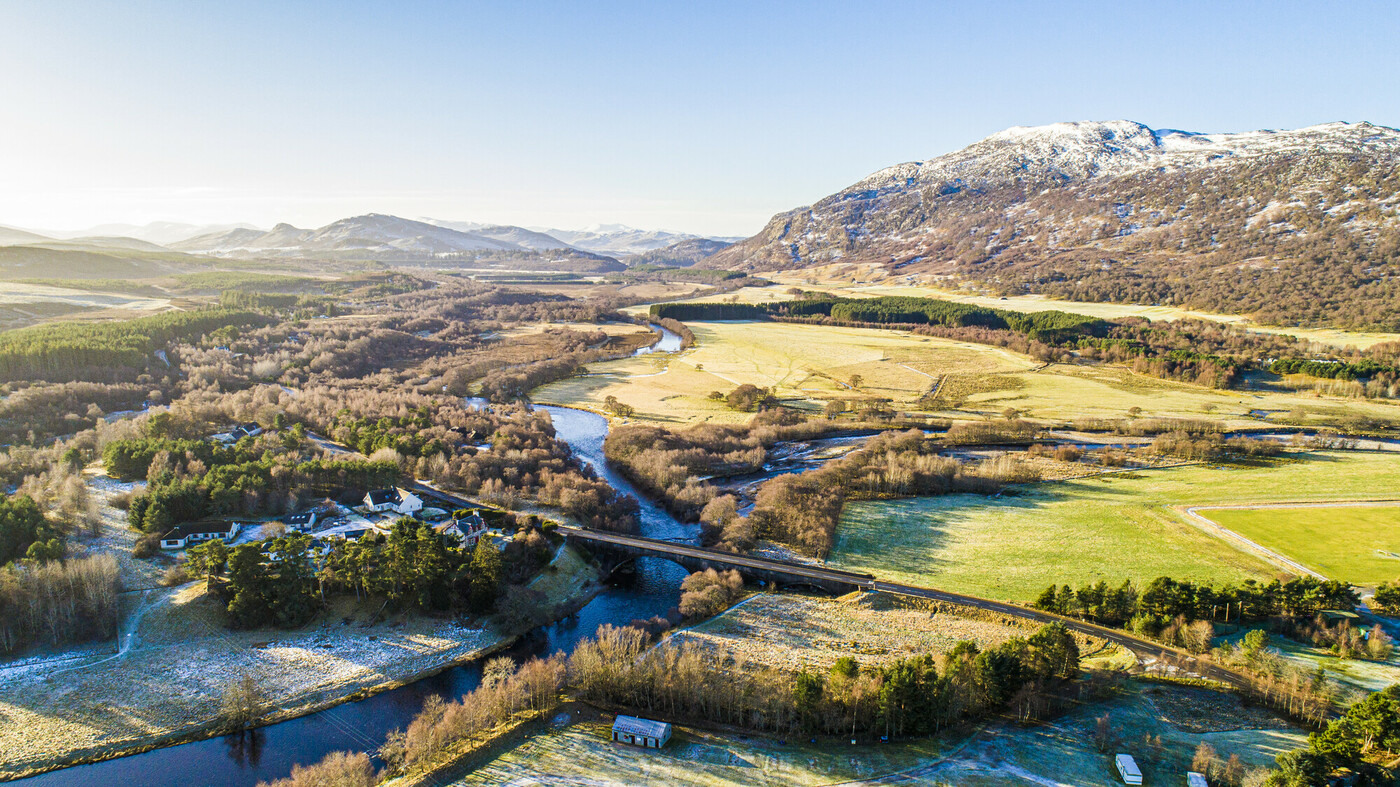
The Slugain Burn restoration project aims to restore natural river processes, improve and create habitats and create a low-maintenance and resilient watercourse. The proposal will also replace an old bridge with a new crossing able to withstand future flooding and climate change impacts. The proposed site is within the River Spey SAC and the Kinveachy Forest SPA and SAC. The proposal aims to improve and lengthen the Slugain Burn where it crosses the Dalnahaitnach floodplain from approximately 200 m of canalised, perched and embanked watercourse to approximately 1.5km long channel with natural geomorphic processes allowed to evolve. This will create a diversity of habitats within the channel and deliver better floodplain connectivity. This will be achieved by diverting the Slugain Burn into a new channel to connect with an existing ditch that then connects to the River Dulnain. The current road will be realigned with a new crossing, which is required to facilitate the burn’s new course. The diverted burn will be allowed to evolve naturally across the floodplain and therefore is likely to be more preferential to juvenile salmon than the current canalized section and will create more suitable habitat for foraging otters.
The proposed construction timings will be to avoid the breeding bird season (February to end of August) and key Atlantic salmon spawning season (Mid-October to end of February).
STAGE 2: Is the plan or project directly connected with or necessary for the management of the European site for nature conservation?
1) River Spey SAC Yes, the Slugain Burn is a designated tributary of the River Spey SAC. Therefore, realignment works along this historically straightened section of the Slugain Burn will directly impact the River Spey SAC. The proposal aims to reinstate natural dynamic processes along the watercourse, enhance habitat provision and diversity both in the river and the floodplain, as well as contributing to natural flood risk management and improving climate change resilience. Therefore, it could be argued that this river realignment work is necessary for nature conservation and should improve suitable habitat diversity and potentially increase the distribution of qualifying interests (Atlantic salmon, freshwater pearl mussel, sea lamprey and otter) within the site.
i) Has the effect on all qualifying interests been considered? Yes, effects on Atlantic salmon, freshwater pearl mussel (FWPM), sea lamprey and otter, the qualifying interests (QIs) of the River Spey SAC, have been considered during the development of this river restoration and habitat improvement proposal. Existing habitat condition and the extent of the QIs, as well as their conservation objectives were used to inform the restoration design and proposed construction
page 6 of 33
works (i.e. methodology and timing) to mitigate against impacts on these species. The potential impacts, design measures and mitigation measures undertaken and residual impacts on the QIs are further discussed in Stage 4.
ii) Is the proposal part of a fully assessed and agreed management plan Yes. This proposal forms part of the Cairngorms 2030 programme of long-term projects lead by the CNPA working with over 80 partners which aims to deliver transformational change to tackle the twin nature and climate emergencies. The project will support delivery of objectives of the River Spey Catchment Management Plan 2023 – 2030 (Spey-Catchment-Management-Plan.pdf) and will also deliver key freshwater objectives of the Cairngorms National Park Partnership Plan (Ref: A9. Freshwater systems – Cairngorms National Park Partnership Plan). The proposal aims to reinstate natural dynamic processes along the watercourse, enhance habitat provision and diversity both in the river and the floodplain, as well as contributing to natural flood risk management and improving climate change resilience. This will help to achieve the Conservation Objectives of the SAC’s qualifying interests i.e. to improve the habitat provision and restore/expand the distribution of these species within the River Spey. The proposal will also deliver
iii) Is there a clear rationale to justify the connection with the Conservation Objectives? Yes. The Conservation Objectives for all QIs seek to improve the population, distribution, and availability of supporting habitats for these species. The channel realignment and supporting design features are proposed primarily to restore natural river processes and to improve and diversify the existing in-channel habitat present along the canalised lower section of the Slugain Burn, which is largely homogenous. Increasing in-channel morphological diversity has the potential to increase the availability of habitat suited to different stages of the Atlantic salmon life cycle, helping to expand the area of suitable habitat throughout this section of the watercourse. While FWPM are not currently present in either the Slugain Burn or the ditch that become it’s new confluence with the River Dulnain, improving habitat for Atlantic salmon (one of the host species for FWPM glochidia), may help with the population expansion/colonisation of the FWPM into the Slugain Burn. Improved morphological diversity and sediment sorting across the channel caused by the inclusion of large woody structures in the design may also benefit FWPM directly by encouraging the deposition of sand between existing cobbles and boulders, expanding suitable habitat for this species. Sea lamprey are not considered to be present in this area of the catchment, however, the proposed river restoration works will result in an increase in significant increase in length and habitat diversity within the watercourse which may provide more opportunities for breeding sea lamprey than the current canalised lower section of the Slugain Burn. Otter are likely to benefit from the improved and diversified in-channel habitat and better connection of the watercourse with it’s flood plain which will provide increased opportunities for foraging and through the provision of large woody structures, this may increase shelter opportunities.
page 7 of 33
iv) If there is a clear rationale to justify the connection with the Conservation Objectives, will any benefits arising from the proposal outweigh any negative impacts? Yes, steps have been taken during the scoping and design development to mitigate against impacts on the SAC’s qualifying interests. As noted in the response at 2iii) the proposed river restoration works on the Slugain Burn have the potential to improve habitat provision and diversity for QIs, contributing towards improving the condition of the designated site. The final design and construction methodology have been developed with mitigation measures in place to limit negative impacts on the QI. However, during the construction process residual risks remain, such as best practice construction methodologies being ignored or implemented incorrectly, or disturbance of a previously unknown population of FWPM. These mitigation measures and residual risk will be discussed further in Stage 4. An experienced aquatic Ecological Clerk of Works will be on site during construction to ensure that the construction is undertaken with sensitivity to the QIs.
v) Have any alternative methods of implementing the proposal been explored, including building in any relevant mitigation, to demonstrate that this is a the least damaging option? Yes. Cairngorms National Park Authority previously commissioned CВЕС Eco-engineering UK Ltd with input from McGowan Environmental Engineering to undertake a feasibility study and options appraisal for the restoration of the Slugain Burn, and commissioned Moxon Architects to develop a conceptual design of a replacement bridge. The project team selected an option to be taken forward to Outline and Detailed Design stages. This option involved the following actions: • Realign a section of the Slugain Burn upstream of the existing vehicle bridge, along a new channel to the east, to eventually converge with an existing drainage ditch • Relocate the vehicle bridge to span the new channel • Naturalise the new channel and the existing ditch that will convey the Slugain Burn • Remove embankments, the existing highway bridge and infill the existing channel, downstream of the diversion point • Enhance habitats in the channel and floodplain JBA were commissioned by The Highland Council to develop an outline design and detailed design for the chosen option. The relocation of the crossing aims to avoid the current situation where a build-up of deposited sediment at the current bridge requires regular dredging/interventions to avoid flooding of the road and damage to infrastructure. The gradient and design of the watercourse has been designed to follow the Out-of-channel modelling indicated that flood waters would follow what was likely the original course of the lower Slugain before it was straightened. Therefore, the design realigned the river along these flow pathways to be based on the natural processes of water and sediment movement.
page 8 of 33
vi) The ‘Species Protection Plan for the Slugain Burn Restoration Project’ document (uploaded to CNPA Planning Portal 22 May 2026) outlines site-specific mitigation measures that are to be included in a Construction Environmental Management Plan (CEMP) required to ensure that all Conservation Objectives of connected European Sites can be met.
Give a Yes/No conclusion in terms of whether the plan or project is considered to directly connect with or necessary to site management for nature conservation. Yes. The Slugain Burn and river corridor are covered by the River Spey SAC designation. Therefore, realignment of the lower section of the Slugain Burn will directly impact the SAC. However, the proposal aims to reinstate natural geomorphic processes, enhance habitat provision and diversity as well as contributing to natural flood risk management and improving climate change resilience. Therefore, it is deemed that this river restoration work is necessary for nature conservation and should improve suitable habitat diversity and potentially increase distribution for all QIs.
2) Kinveachy Forest SPA No, this project is not directly connected with or necessary for the management of the European site for nature conservation.
3) Kinveachy Forest SAC No, this project is not directly connected with or necessary for the management of the European site for nature conservation.
4) Abernethy Forest SPA No, this project is not directly connected with or necessary for the management of the European site for nature conservation.
5) Anagach Woods SPA No, this project is not directly connected with or necessary for the management of the European site for nature conservation.
6) Cairngorms SPA No, this project is not directly connected with or necessary for the management of the European site for nature conservation.
7) Craigmore Wood SPA No