
Item 8 Biking Downhill Run Lecht Committee Report 20260060DET
Committee report
Development proposed: Install additional mountain biking downhill run on the existing buzzard lift (shown as trail 4) at the Lecht Ski Centre, Corgarff, Strathdon, Aberdeenshire, AB36 8YP
Reference: 2026/0060/DET Applicant: Iain Du Pon, Lecht Ski Centre Date called-in: 23/02/2026 Recommendation: Approve subject to conditions Case officer: Katherine Donnachie, Planning Officer
(Map image showing the proposed trail at Lecht Ski Centre)
This map has been produced to aid in the statutory process of dealing with planning applications. The map is to help identify the site and its surroundings and to aid Planning Officers, Committee Members and the Public in the determination of the proposal. Maps shown in the Planning Committee Report can only be used for the purposes of the Planning Committee. Any other use risks infringing Crown Copyright and may lead to prosecution or civil proceedings. Maps produced within this Planning Committee Report can only be reproduced with the express permission of the Cairngorms National Park Authority and other Copyright holders. This permission must be granted in advance.
Site description, proposal and history
Site description
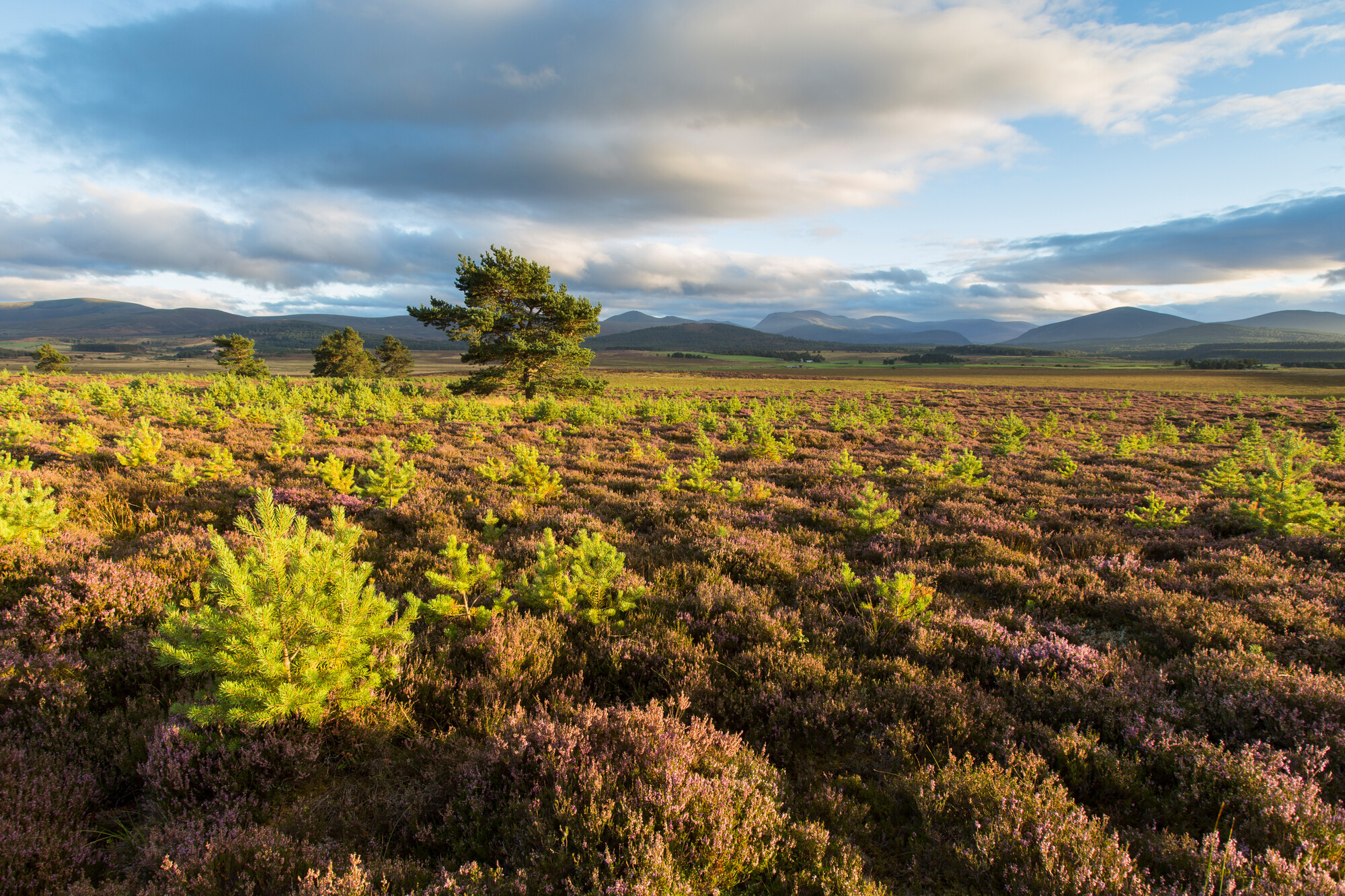
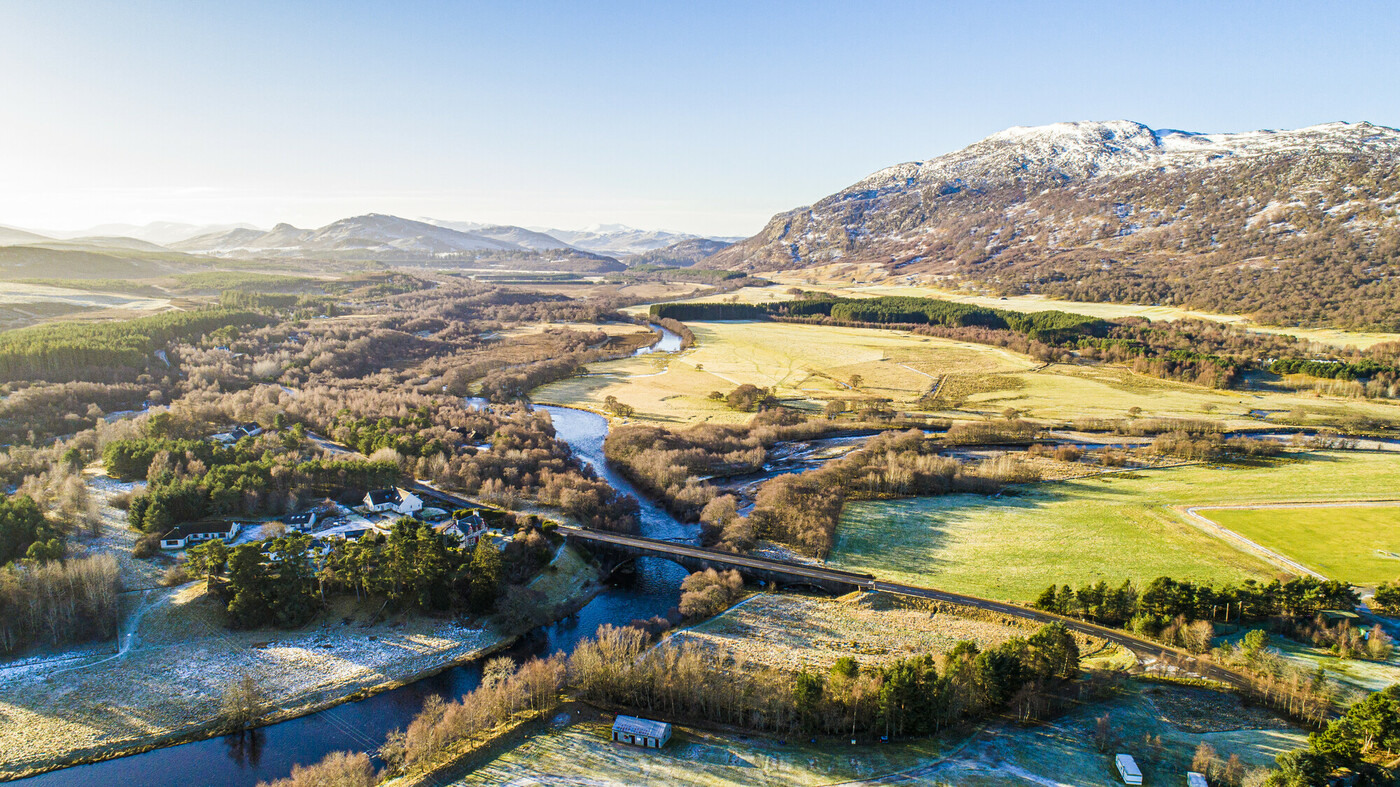
- The application site is located at the Lecht Ski Centre beside the Tomintoul to Cockbridge A939 road. It is part of an existing ski slope on the eastern side of the public road. It comprises sloping moorland running up from the road. There is an access track off the public road which serves an existing long uphill ski tow known as the Buzzard uplift tow. The application site is largely moorland / heathland with some groups of boulders and gullies. On the opposite side (west) of the public road is the ski centre infrastructure comprising main visitor centre / café and large car parks. There are numerous ski tows on this side of the road along with mountain bike trails. There is also a wind turbine supplying energy to the facilities to the south of the main centre.
- The site is surrounded to the north, south and east by further moorland, and the Ladder Hills Special Site of Scientific Interest (SSSI) and Special Protection Area (SPA), designated for European dry heath, alpine and subalpine heath and blanket bogs interests, are located around 20 metres to the east of the development site. The River Spey Special Area of Conservation (SAC) lies some 2.4 km north of the site (Conglass Water tributary), with the Cairngorms Massif SPA lying some 5.6 km to the far southwest.
- There are no listed buildings of architectural or historic significance or archaeological sites in the vicinity, nor any core paths.
Proposal
- The drawings and documents associated with this application are listed below and are available on the Cairngorms National Park Authority website unless noted otherwise: 2026/0060/DET | Install additional mountain biking downhill run on the existing buzzard lift (shown as trail 4) | The Lecht Ski Centre Corgarff Strathdon Aberdeenshire AB36 8YP
| Title | Drawing Number | Date on Plan* | Date Received |
|---|---|---|---|
| Plan — Location Plan | 001A | 12/02/26 | 20/02/26 |
| Plan — Concept Trail Plan | 002 Rev A | 16/01/26 | 20/02/26 |
| Plan — Proposed Trail Plan | 003 Rev A | 14/01/26 | 20/02/26 |
| Plan — Proposed Trail Construction Details | 004 Rev A | 14/01/26 | 20/02/26 |
| Plan — Road Plan — Proposed Plan Showing Safe Crossing for Cyclists | 005A | 25/03/26 | 31/03/26 |
| Other — Planning Statement | 17/03/26 | ||
| Other — Economic Impact Statement | 17/03/26 | ||
| Other — Construction Method Statement | 03/04/26 | ||
| Peat Depth Survey | 784-B080506 Version 1 | 12/05/26 | |
| Preliminary Ecological Appraisal | 784-B080506 Version 1 | 12/05/26 |
*Where no specific day of month has been provided on the plan, the system defaults to the 1st of the month.
- The proposed development seeks to construct a new mountain bike downhill track on the same side of the public road as the existing Buzzard tow. The tow will be used to take riders and their bikes up to the top of the slope using this existing infrastructure which will be adapted to make provision for riders to use it. The trail will start at the top of the tow with a viewpoint area and will run downhill in a zig zag manner to join the existing track at the foot of the ski tow. At this point a level area will be formed to enable cyclists to dismount. A barrier fence will be erected here with closed gate for vehicular access. The existing path / desire line along the edge of the public road will be upgraded to a whin type surface. Cyclists will be directed along this path to a safe crossing point to the car park area.
- The total length of the proposed new trail is 1,030 metres. It will be around 2 metres wide and micro sited to avoid any ecological constraints and to ensure appropriate safety and drainage is achieved. It will be constructed by digging out to form the trail, with locally won material used in construction. Trail edges will be stabilised using stripped turf from the trail route with a turf lined side ditch constructed where necessary, with twin wall pipe under the trail to allow surface water to drain away on the downhill side as required. Sub-base material with larger aggregate at the base will be used, with quarry dust or suitable “as dug” material compacted on top of this. Construction details have been supplied for various parts of the trail including typical trail, berms, floated trail (with geotextile geogrid detailing), rock feature details, piste trail and bench cut trail. Where the trail crosses a ski piste the profile / landscaping will be considered to ensure that snow groomers can cross the trail, with ski staff involved to ensure the detailing is suitable.
- The design of the trail will be similar to those previously constructed and in use on the other (west) side of the main road where there are three trail routes. The current proposal will create a fourth trail. Plans of the proposals are attached as Appendix 1.
- The application is supported by a number of documents as follows: Construction Method Statement – explaining how the trail will be constructed by experienced operatives, with any digging out beside the trail route required to gain materials carefully reinstated. It details how construction stage drainage will be dealt with including use of silt curtains and sediment traps. Details of ecological mitigation during construction are provided including daily pre-works checks, ensuring no excavations are left open and avoiding light spillage. Planning Statement – this explains that the development is part of a wider programme to diversify the Lecht’s offering beyond winter snowsports. It notes that this will complement the existing offering and is intended to consolidate managed recreation at an existing hub rather than dispersing activities into more sensitive locations. The statement sets out how the proposal aligns with Local Development Plan objectives and complies with policies relating to sustainable economic growth, access, and tourism and recreation. It explains how the design of the trail seeks to minimise landscape impacts focussing on a low-profile intervention and following a sensitive alignment. Similarly, it aims to minimise disturbance to the ground and use locally won materials where possible. Economic Impact Statement – this sets out the economic benefits of the proposed development. It explains that it is part of a wider programme to extend and enhance the Lecht’s existing summer mountain bike offering with an uplift served riding experience and support a broader visitor experience. Details of costings are provided along with wider development spend in terms of repairs and maintenance, and contractor spend to support the local economy. It estimates that the trails will be open around 120 days per year and approximately 4 staff will be needed during the summer operations. Demand for the trails is expected to vary, with weekends and school holidays likely to be peak times. Wider economic benefits are identified related to increased spend in the local area (e.g. accommodation, fuel, food and drink etc) together with the ability to retain seasonal staff and the local procurement spend. Preliminary Ecological Appraisal – this includes an extended Habitat Classification Survey to record habitat types and dominant vegetation including any invasive species, and a protected species survey. It concludes that the site comprises priority annex 1 blanket bog and UK biodiversity action plan mountain heath habitats with wet pockets and flushes. No rocky outcrops were found but habitats on site have potential to support resting, commuting and foraging mountain hare, invertebrates, reptiles and amphibians. Ground nesting birds were observed adjacent to the site with self-set Sitka spruce present and considered to be an invasive species in these habitats. It is noted that the site is close to the Ladder Hills SPA and SSSI, whereby sufficient information is required to inform a Habitats Regulation Appraisal by the Planning Authority. The report recommends that an NVC survey confirms the extent of priority habitats. It also recommends the following: a Habitat Management Plan to identify restoration areas for offsetting and enhancing peatland habitats on site; targeted breeding bird surveys; precautionary working methods to avoid harm to mountain hare, amphibians, and other notable species; pre construction checks for reptiles; and implementation of a Construction Environmental Management Plan to reduce noise, dust, pollution and other impacts. The report details mitigation proposals including: use of low pressure machinery to avoid compaction of habitats; care with storage of peat; avoidance of deep peat areas; avoiding ground clearance works during mountain hare breeding season (March to October) and bird breeding season (March to September) or precautionary working measures such as sweep surveys, pre-construction checks and nesting bird checks immediately ahead of works; capping of exposed pipes; avoiding work around dawn and dusk; tool box talks; vegetation clearance under supervision of ecological clerk of works to avoid harm to reptiles; and removal of Sitka spruce for habitat enhancement. Peat Depth Survey – this surveyed peat depths within a 30-metre buffer of the proposed track on a 30 by 30 metre grid basis. The ground was noted as being generally soft organic peat with a surface covering of predominantly heather, grass and moss. The majority of peat exceeding 0.5 metre in depth (deep peat) lies within the 30-metre buffer rather than on the track itself. These locations are isolated at the base of the slope within the frequently trafficked area in the vicinity of the access track and at the south-eastern edge of the survey area. Overall peat quality varies and is considered to be “modified” due the dominance of heather. A drain was noted along the gravel track and land within 30 metres of this is described as “drained”. An area to the southeast of the survey area was categorised as actively eroding with areas of peat hags noted. Similarly, an area at the top of the Buzzard lift was noted as actively eroding due to the continuous surface of bare peat and absence of sphagnum moss. The report concludes than no significant thickness of peat (deeper than 0.5 metres) was encountered along the majority of the trails apart from at the far south-eastern edge and at the base of the slope where the proposed trail ends. Maps summarising this information are included in the report.
History
- There have been numerous planning applications over the years in the area, including various mast related proposals, wind turbine (constructed and operational), and snow factory. Relevant to the current proposal is application 08/123/CP – formation of mountain bike tracks on the opposite (west) side of the public road, approved in July 2008.
Habitats Regulations Appraisal
- A Habitats Regulations Appraisal (HRA) has been undertaken to consider the potential effects of the development upon the conservation objectives of European sites. The HRA is attached as Appendix 2. The European sites in this case are the River Spey Special Area of Conservation (SAC), designated for its Atlantic salmon, freshwater pearl mussel (FWPM), sea lamprey and otter interests, the Cairngorms Massif Special Protection Area (SPA), designated for its golden eagle interests, and the Ladder Hills SAC, designated for its European dry heath, alpine and subalpine heath and blanket bog interests.
- It is considered that there will be no significant effects upon the heath interests of the Ladder Hills SAC as the development is outwith the SAC. However, there may be likely significant effects in relation to the blanket bog interests through drainage of hydrologically connected peatland close to the edge of the SAC (Nature Scot guidance indicates that drainage of blanket bog habitats can have indirect impact on hydrologically connected blanket bog within 30 metres). Whilst there is no work proposed within the Conglass Water (a tributary of the River Spey SAC), there is potential for likely significant effects through indirect impacts upon the otter, FWPM, sea lamprey and Atlantic salmon interests relating to potential for pollution and release of sediment during construction and, in the case of otter, any impacts on prey species. Finally, with regard to the Cairngorms Massif SPA, there is potential for likely significant effects in relation to potential disturbance to foraging golden eagle at the construction stage.
- The HRA concludes that the likely significant effects on the Ladder Hills SAC can be satisfactorily addressed by securing (through planning condition) a development buffer of at least 30 metres from the SAC boundary. Implementation of this buffer will reduce potential effects to a minimal level so that all the conservation objectives can be met.
- With regard to the River Spey SAC, it is concluded that likely significant effects can be satisfactorily addressed by suitable mitigation including timing of works to avoid the key Atlantic salmon spawning season (mid-October to end of February), and the provision and implementation of a pollution prevention plan. These measures can be secured by planning conditions.
- Finally, with regard to the Cairngorms Massif SPA it is noted that the site is just within the core foraging range for breeding golden eagle, with habitat within the site suitable for their prey species (e.g. mountain hare). However, similar habitat is widespread within the Ladder Hills SPA such that golden eagle are unlikely to be solely dependent on the application site. Furthermore, the site is close to the public road and next to existing ski infrastructure where there is an existing level of human disturbance. Accordingly, it is not considered that there will be significant long-term impacts on the distribution and habitats of golden eagle within the SPA and no direct effects or significant indirect effects on breeding golden eagle.
- On this basis, the HRA concludes that the conservation objectives of the designated sites will be met and there will not be an adverse effect on integrity of the designated sites. NatureScot have been consulted on the HRA and have confirmed agreement with these conclusions.
Development plan context
Policies
National Planning Framework 4 (NPF4) Scotland 2045 (Policies relevant to the assessment of this application are marked with a cross (x))
| National policy | ||
|---|---|---|
| Policy 1 | Tackling the climate and nature crises | X |
| Policy 2 | Climate mitigation and adaptation | X |
| Policy 3 | Biodiversity | X |
| Policy 4 | Natural places | X |
| Policy 5 | Soils | X |
| Policy 6 | Forestry, woodland and trees | |
| Policy 7 | Historic assets and places | |
| Policy 8 | Green belts | |
| Policy 9 | Brownfield, vacant and derelict land, and empty buildings | |
| Policy 11 | Energy | |
| Policy 12 | Zero waste | |
| Policy 13 | Sustainable transport | X |
| Policy 14 | Design, quality and place | X |
| Policy 15 | Local living and 20 minute neighbourhoods | |
| Policy 16 | Quality homes | |
| Policy 17 | Rural homes | |
| Policy 18 | Infrastructure first | X |
| Policy 19 | Heating and cooling | |
| Policy 20 | Blue and green infrastructure | |
| Policy 21 | Play, recreation and sport | |
| Policy 22 | Flood risk and water management | X |
| Policy 23 | Health and safety | X |
| Policy 24 | Digital infrastructure | |
| Policy 25 | Community wealth building | X |
| Policy 26 | Business and industry | |
| Policy 27 | City, town, local and commercial centres | |
| Policy 28 | Retail | |
| Policy 29 | Rural development | X |
| Policy 30 | Tourism | X |
| Policy 31 | Culture and creativity | |
| Policy 32 | Aquaculture | |
| Policy 33 | Minerals |
Strategic policy Cairngorms National Park Partnership Plan 2022 – 2027
Cairngorms National Park Local Development Plan (2021) (Policies relevant to the assessment of this application are marked with a cross (x))
| Local plan policy | ||
|---|---|---|
| Policy 1 | New housing development | |
| Policy 2 | Supporting economic growth | X |
| Policy 3 | Design and placemaking | X |
| Policy 4 | Natural heritage | X |
| Policy 5 | Landscape | X |
| Policy 6 | The siting and design of digital communications equipment | |
| Policy 7 | Renewable energy | |
| Policy 8 | Open space, sport and recreation | |
| Policy 9 | Cultural heritage | |
| Policy 10 | Resources | X |
| Policy 11 | Developer obligations |
- All new development proposals require to be assessed in relation to policies contained in the adopted Development Plan which comprises National Planning Framework 4 (NPF4) and the Cairngorms National Park Local Development Plan 2021 (LDP). The full wording of policies can be found at: https://www.gov.scot/publications/national-planning-framework‑4/documents/ and at: https://cairngorms.co.uk/wp-content/uploads/2021/03/CNPA-LDP-2021-web.pdf
Planning guidance
- Supplementary guidance also supports the Local Development Plan and provides more details about how to comply with the policies. Guidance that is relevant to this application is marked with a cross (x).
| Policy | ||
|---|---|---|
| Policy 1 | Housing supplementary guidance | |
| Policy 2 | Supporting economic growth non-statutory guidance | X |
| Policy 3 | Design and placemaking non-statutory guidance | X |
| Policy 4 | Natural heritage non-statutory guidance | X |
| Policy 5 | Landscape non-statutory guidance | X |
| Policy 7 | Renewable energy non-statutory guidance | |
| Policy 8 | Open space, sport and recreation non-statutory guidance | |
| Policy 9 | Cultural heritage non-statutory guidance | |
| Policy 10 | Resources non-statutory guidance | X |
| Policy 11 | Developer obligations supplementary guidance |
Consultations
- A summary of the main issues raised by consultees now follows:
- Moray Council Transport Development Team was consulted and initially raised concerns about safety issues with cyclists crossing the road from the trails to the car park area. Recommendations were made on how to achieve safe crossing and the applicants provided revised plans to address this, including a safe landing area at the foot of the trail and an identified crossing point with connecting path and gated arrangement along the bottom of the track. On receipt of the revised plans the Team has confirmed that they have no objections to the proposal. Suitable planning conditions will be required to ensure that the works are implemented, no water or loose material is permitted to drain onto the public road, and the opening path of the access gates is fully contained within the site.
- Park Authority Outdoor Access Team advise that there are no designated paths in the area, no signs of the area being used for recreation other than the downhill skiing area, and they have no access related concerns.
- Park Authority Ecological Advice Officer initially noted that no ecological surveys had been submitted, so only interim comments could be provided. These comments highlighted that habitat on site is likely to be suitable for mountain hare, adder and common lizard. Accordingly, there may be potential issues for these species. Hibernating reptiles may be also be disturbed during the hibernation season (October to March). The habitat is also likely to be suitable for other breeding birds. Accordingly, mitigation is likely to be required including timing of works to avoid breeding / hibernation seasons and exclusion of potential reptile hibernacula. It was also noted that there may be impacts on priority habitats and species, birds of conservation concern, and carbon rich soils and peatland habitats. With regard to the water environment, it was considered that due to the distance between the site and existing watercourses there is a lower risk of pollution. Finally, with regard to biodiversity enhancements it was considered that details could be required by planning condition.
- Following consideration of these comments, the applicants submitted an Ecological Appraisal (including protected species survey) and Peat Survey as noted earlier. This additional information has been considered by the Park Authority’s Ecological Advice Officer who considers that impacts upon protected species and breeding birds can be mitigated by timing and methods of working. Similarly in terms of the water environment any impacts can also be mitigated by timing of works to avoid salmon spawning season and adherence to best practise as outlined in the Construction Method Statement and SEPA guidance.
- With regard to carbon rich soils and priority peatlands, the officer notes that micro-siting of the tracks is proposed to avoid deep peat and priority habitats. However, information to inform micrositing is only presently available for the “trail construction zone” which crosses areas of deep peat and two areas of blanket bog, including areas within 20 metres of the Ladder Hills SAC, resulting in potential significant impacts on the designated site. Mitigation is therefore required which should include habitat survey work to enable re-routing / micro siting of the trail to avoid these priority areas and any development within 30 metres of the Ladder Hills SAC. This would also be likely to reduce long term path maintenance as tracks through deep peat often sink over time. Where the proposed track cannot avoid priority peatland habitats then compensatory peatland restoration of degraded peatland habitats nearby will be likely to be required. This would equate to an area 10 times the extent of peatland habitat impacted, and should be calculated on the footprint of the trail where it passes through priority peatland habitat plus a 30 metre buffer on either side of trail. A Habitat Management Plan will also be required with details of peat management and if required a compensatory peat restoration plan. (If the applicant is able to realign the route over dry heath and acid grassland and avoid impacts upon deep peat there may not be a requirement for any compensatory peatland restoration. However more habitat and peat depth mapping would be necessary to inform such a change.)
- The Habitat Management Plan should also provide details of biodiversity enhancements which are required to comply with NPF4 Policy 3. This could include native tree or shrub planting or installation of reptile hibernacula. Any off-site enhancement such as riparian native tree planting will require to ensure that areas of deep peat are avoided. Compensatory peatland restoration would not be considered a biodiversity enhancement unless the ratio of restored peatland is greater than 1:10. Planning conditions will be required to cover all these matters.
- Park Authority Landscape Advisor has no concerns about the landscape and visual effects, noting that the development would be located within the curtilage of the ski centre so would be seen in the context of existing ski related infrastructure, tracks and buildings. The advisor considers that the proposal would be barely noticeable from the A939 and surrounding hill ground due to its relatively narrow width and the construction method which proposes to use reserved turf on the path edges so reducing intrusion.
- Glenlivet and Inveravon Community Council was consulted and have not provided any comments at the time of writing.
Representations
- No representations have been received.
Appraisal
- Section 25 of the 1997 Act as amended requires applications to be determined in accordance with the Development Plan. This comprises National Planning Framework 4 (NPF4) and the Cairngorms National Park Local Development Plan 2021 (LDP). Where there is conflict between policies, NPF4 policies take precedence.
- The main planning considerations in this case are: the principle of development; landscape and design; environmental impacts; transport and access; amenity; flooding, drainage and water issues; and sustainability and climate change. These are considered in detail below.
Principle
- In terms of general principles, NPF4 Policy 29: Rural development sets out that development proposals which contribute to the viability, sustainability and diversity of rural communities and the local rural economy will be supported subject to consideration of siting, scale, design and transport issues to ensure it is appropriate to rural character. NPF4 Policy 30: Tourism requires proposals for tourism related development to take into account factors such as the contribution made to the local economy; compatibility with the surrounding area; impacts on communities; opportunities for sustainable travel; accessibility for disabled people; measures to minimise carbon emissions; and opportunities to provide access to the natural environment. NPF4 Policy 25: Community wealth building sets out that development proposals which contribute to local or regional wealth building strategies and are consistent with local economic priorities will be supported, noting that this could include for example ensuring the use of local supply chains and services and local job creation.
- LDP Policy 2: Supporting economic growth similarly supports developments which support or extend the economy where they have no adverse environmental or amenity impacts, are compatible with the existing business activity and support the vitality and viability of the local economy. Policy 2.3 Other tourism and leisure developments supports development which enhances informal leisure and recreation facilities, tourism and leisure based business activities and attractions, and improved opportunities for responsible outdoor access where there are no adverse environmental or amenity impacts and where it makes a positive contribution to the experience of visitors and supports a year round economy.
- The current proposal seeks to provide a mountain bike trail to expand and complement the existing recreational offering at the Lecht which is a well-established ski centre. This will help support the economic viability of the centre by providing year-round opportunities for both local employment and increased visitor use. As outlined in the applicant’s supporting material, this will support the local economy both directly with the summer jobs provided as well as the spin offs in terms of contractors constructing the trail, then the local spend generated by visitors.
- As such, the proposed development readily complies in principle with these general economic development policies, subject to the landscape, environmental and other impacts of the proposal being satisfactory. This will now be considered.