
Item 8 Rural Affairs Committee Outdoor Access Review
Cairngorms National Park Authority
Item 8 Planning Committee
13 November 2026
Page 1 of 4
For decision
Title: Scottish Parliament Rural Affairs Committee short inquiry into the Scottish outdoor access system
Prepared by: Gavin Miles, Director of Planning and Place
Purpose
To update members on the Scottish Parliament Rural Affairs Committee short inquiry into the working of the Scottish outdoor access system progress; on how officers will contribute evidence to the inquiry; and to endorse the main points that the Park Authority considers the Committee could consider in relation to the Scottish Outdoor Access Code.
Recommendations
The Planning Committee is asked to:
a) Note the Rural Affairs Committee’s inquiry and officers’ approach to contributing evidence;
b) Endorse the key themes that officers propose to make to the Committee in that are summarised on paragraph 5.
Background and Strategic context
The Land Reform (Scotland) Act 2003 gives people the right to responsible access to most land and inland water in Scotland. The Scottish Outdoor Access Code (SOAC) was published in February 2007 and sets out guidance on enjoying those rights of access.
The Scottish Parliament Rural Affairs Committee’s remit is to consider and report on matters within the rural affairs portfolio of responsibility of the Cabinet Secretary for Climate and Rural Affairs. The committee is undertaking a short inquiry to understand how well Scotland’s outdoor access system is operating and whether changes are needed to ensure it is fit for the future. The Committee may recommend that changes are needed, but government is not obliged to act on any recommendations it makes.
Page 2 of 4
- The Park Authority is an outdoor access authority under the Land Reform (Scotland) Act 2003 so has extensive experience of managing those functions including promoting the Scottish Outdoor Access Code (SOAC), upholding access rights, the provision, planning and management of core paths and of other access infrastructure, convening a Local Outdoor Access Forum and working with numerous partners to support responsible outdoor access.
Park Authority’s approach to the Committee Inquiry
The Park Authority has been invited to give evidence to the Committee and Colin Simpson, our Head of Visitor Services and Active Travel, will attend the Committee with a number of partners including Loch Lomond and Trossachs National Park Authority and NatureScot on 18 November 2026 to answer questions and provide evidence. The key points we intend to make to the Committee are summarised below:
We consider we have successfully supported the outdoor access system both through using our statutory powers and our discretionary resource and influence. In addition to upholding access rights and managing areas of conflict in outdoor access and supporting land managers and landowners in their management of land and outdoor access, we have invested in infrastructure to allow more people to enjoy outdoor access and in our own and partner ranger services to support the responsible enjoyment of access rights on the ground and within schools. In general terms, we consider the outdoor access system to continue to be fit for purpose and a successfully implemented legislative framework.
Nevertheless, there are a few areas where technology, recreational activities and climate change have changed in ways that were not anticipated when the legislation was prepared or when SOAC was written and are worth drawing the Committee’s attention to in their inquiry:
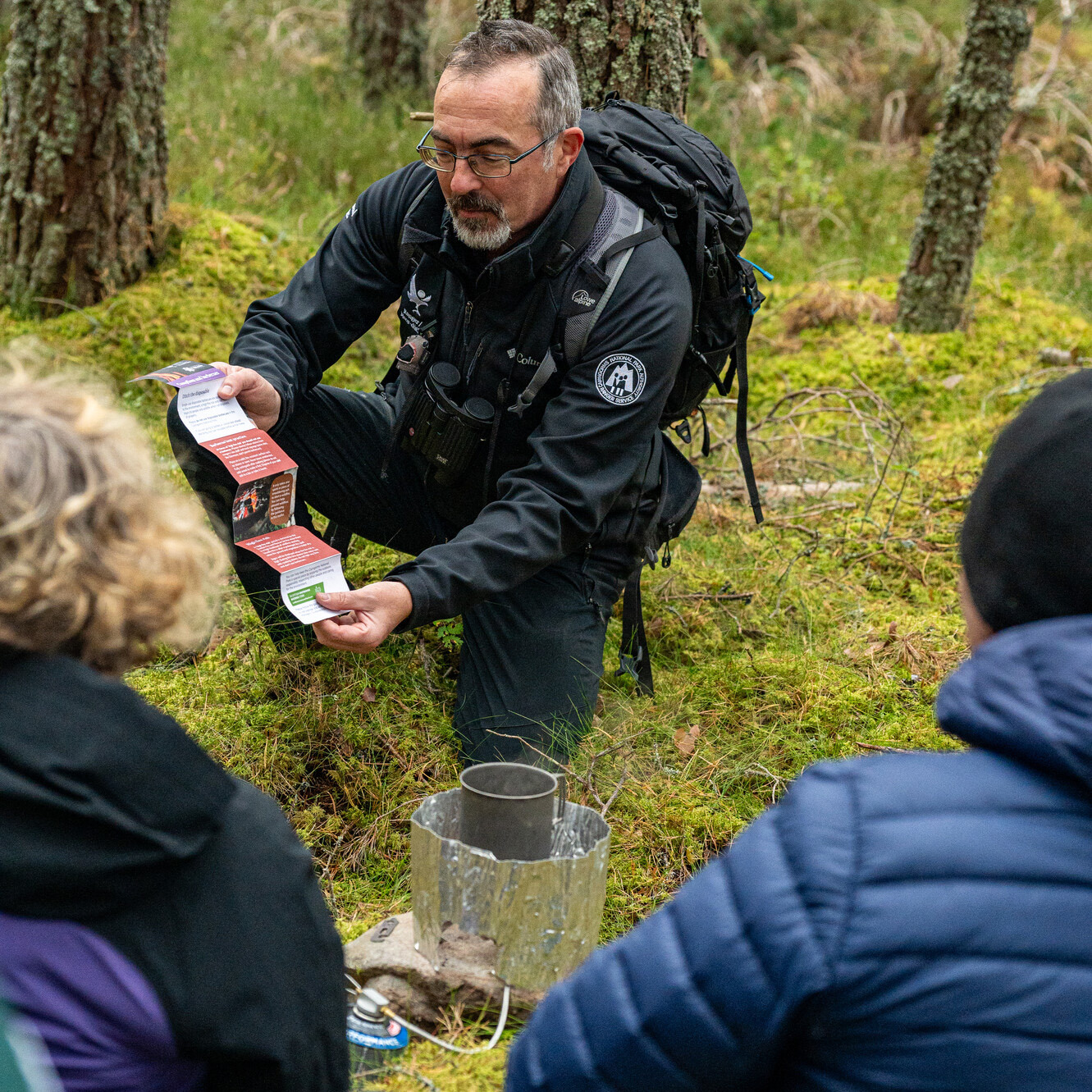
a) Fire. It is a well-established fact that climate change is leading to increased periods of wildfire risk and conditions where wildfires could be more extensive. SOAC gives the right to light a fire. The Cairngorms National Park Authority has introduced a fire management byelaw to ban fires and barbecues between April and September which overrides the SOAC guidance.
Page 3 of 4
It’s implementation in its first year has significantly reduced the numbers of fires encountered by rangers across the National Park. We are aware that at least two neighbouring local authorities are considering introducing similar byelaws. We consider that a more consistent national approach to restricting the rights to light fires would be worthwhile and that SOAC’s advice in relation to fire lighting should be reviewed given the increasing risk and potential consequences of wildfire in Scotland.
b) Informal camping. While wild camping is generally undertaken in a responsible way, there are numerous other forms of informal camping that have increased and can lead to individual or cumulative impacts that people mistake for or imagine to be wild camping. The increased use of campervans and motor homes, roadside and other vehicle-based camping or at accessible visitor locations have had a range of well-established impacts on local areas, communities and nature. While there are some tools beyond the outdoor access system to help manage these issues, SOAC could also provide more clarity on such activities that are not covered by access rights.
c) Technology advances and recreational activities. There are a range of new or changed recreational activities because of advancing technology. Drone technology has advanced over recent years and while aviation legislation covers some aspects of their use, recreational use of drones can give rise to issues of privacy, disturbance to wildlife, impacts on livestock and interference with the enjoyment of others. When SOAC was written “powered model aircraft” was noted as an activity excluded from outdoor access rights, but drones are not mentioned and the absence of guidance in SOAC creates potential for uncertainty for drone users and land managers. Similarly, advances in electronic motor technology mean that bikes, skooters and water craft are all being adapted and used more extensively both within any legal limits (and at times in modified forms) for outdoor recreation that were not anticipated when SOAC was written.
d) Wildlife disturbance from new or changing recreational activities. As one of Scotland’s most nature-rich areas, we have experience of many locations, areas or periods of disturbance of nature by people exercising access rights, sometimes aware of the potential impacts, but often unaware. The nuanced
Page 4 of 4
e) and sometime complicated reality of what is responsible access is not always well understood by the public and can be difficult to explain clearly for any given site or issue.
As an example, when SOAC was written, paddleboarding was a minority activity, but is now a popular and accessible sport that has led to people using many water bodies for recreation, including smaller water bodies in much greater numbers than in the past or over more of the year. At times this has introduced new conflicts between the people participating and species sensitive to disturbance by humans or other users of the water body.
f) While there are tools and options that can help manage those potential conflicts, we consider these issues will continue to grow and be a challenge in future in some parts of Scotland. We recognise this issue is a complex one, particularly as the disturbance effect of recreation are often not due to any individuals acting irresponsibly, but simply due to the numbers of people in specific locations or seasons causing a collective or cumulative effect on nature.
Next Steps
- Colin Simpson will attend the Rural Affairs Committee session on 18 November and reiterate or amplify and expand on the points made above. Officers will also respond to any other specific calls for information or evidence.
Gavin Miles 6 November 2026 gavinmiles@cairngorms.co.uk