
Item6 Appendix2 HRA 20260104DET Old Bridge Inn
Cairngorms National Park Authority Ughdarras Pàirc Nàiseanta a’ Mhonaidh Ruaidh
Item 6 Appendix 2 28 August 2026 Page 1 of 9
Agenda item 6
Appendix 2
2026/0104/DET
Habitats regulations appraisal
HABITATS REGULATIONS APPRAISAL
| Field | Value |
|---|---|
| 2026/0104/DET | |
| Planning reference and proposal information | Installation of raised decking for outdoor eating/drinking; provision of 10 car parking spaces; and provision of picnic tables. Old Bridge Inn, 23 Dalfaber Road, Aviemore Highland |
| Appraised by | Scott Shanks, Ecological Advice Officer (Planning) |
| Date | 29 May 2026 Updated: 11 August 2026 |
| Checked by | Anne Elliott NatureScot Operations Officer |
| Date | 11 August 2026 |
INFORMATION
European site details
Name of European site(s) potentially affected
1) River Spey SAC (within 10m of proposed development)
Qualifying interest(s)
1) River Spey SAC
- Freshwater pearl mussel (FWPM)
- Sea lamprey
- Atlantic salmon
- Otter
Conservation objectives for qualifying interests
1) River Spey SAC
Conservation Objective 2. To ensure that the integrity of the River Spey SAC is restored by meeting objectives 2a, 2b, 2c for each qualifying feature (and 2d for freshwater pearl mussel):
- 2b. Restore the distribution of freshwater pearl mussel throughout the site
- 2c. Restore the habitats supporting freshwater pearl mussel within the site and availability of food
- 2d. Restore the distribution and viability of freshwater pearl mussel host species and their supporting habitats
2a. Restore the population of freshwater pearl mussel as a viable component of the site
2b. Maintain the distribution of sea lamprey throughout the site
- 2c. Maintain the habitats supporting sea lamprey within the site and availability of food
2a. Maintain the population of sea lamprey as a viable component of the site
2b. Restore the distribution of Atlantic salmon throughout the site
- 2c. Restore the habitats supporting Atlantic salmon within the site and availability of food
- 2a. Restore the population of Atlantic salmon, including range of genetic types, as a viable component of the site
- 2b. Maintain the distribution of otter throughout the site
- 2c. Maintain the habitats supporting otter within the site and availability of food
- 2a. Maintain the population of otter as a viable component of the site
Conservation Objective 1. To ensure that the qualifying features of the River Spey SAC are in favourable condition and make an appropriate contribution to achieving favourable conservation status
APPRAISAL
STAGE 1:
What is the plan or project?
Relevant summary details of proposal (including location, timing, methods, etc)
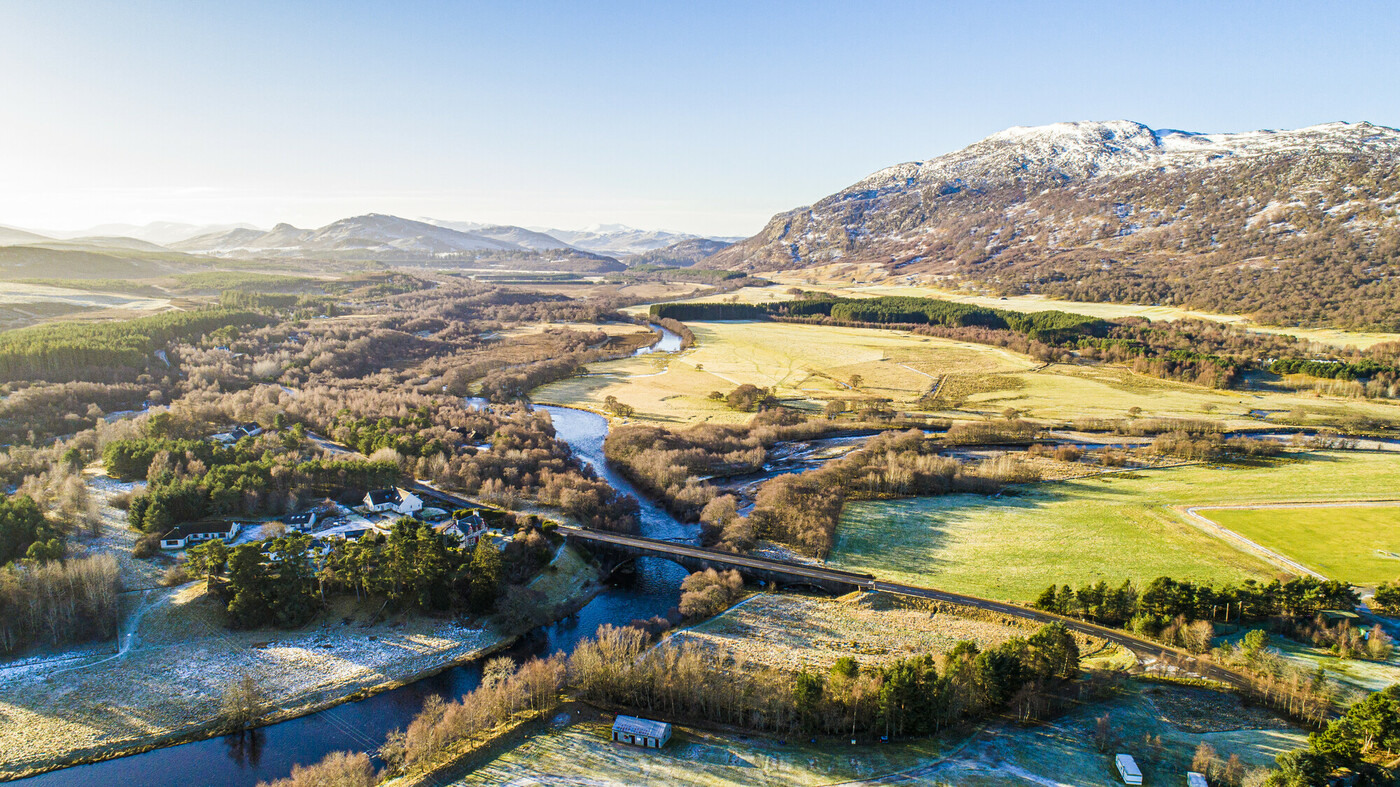
The proposal is for the Installation of raised decking for outdoor eating and drinking; provision of 10 car parking spaces; and provision of picnic tables at the Old Bridge Inn, Dalfaber Road, Aviemore. The proposed development site is on the east side of Dalfaber Road, adjacent to the River Spey.
The development site is currently used for outdoor eating and drinking and is a key access point for paddlers and canoeists entering the River Spey at Aviemore, so has an existing level of recreational activity.
The proposed timing of construction activity for the development will be September — October 2026, lasting approximately 10 days.
STAGE 2:
Is the plan or project directly connected with or necessary for the management of the European site for nature conservation?
1) River Spey SAC – No, this project is not directly connected with or necessary for the management of the European site for nature conservation.
STAGE 3:
Is the plan or project (either alone or in-combination with other plans or projects) likely to have a significant effect on the site(s)?
1) River Spey SAC
Atlantic salmon, Sea lamprey, Freshwater pearl mussel: Yes, LSE from indirect impacts on water quality.
The River Spey SAC is approximately 10m east of the proposed development boundary. Therefore, any pollution events on site during the construction phase could result in negative impacts on qualifying interests through impacts on water quality, or mobilised sediment entering the watercourse and smothering habitat important for spawning Atlantic salmon, juvenile sea lamprey and FWPM.
Otter: Yes, LSE from indirect impacts on water quality and possible disturbance to otter.
The River Spey SAC is approximately 10m east of the proposed development boundary. The site is currently used as an outdoor eating venue during spring, summer and autumn, and is used as a key access point to the River Spey by water sport enthusiasts. It is likely that otter present along this stretch of the River Spey will be habituated to an existing level of disturbance from recreational activity. Therefore, it is considered unlikely that temporary construction-phase
activity and continued operational-phase use of the site as an outdoor eating venue would lead to a significant increase in disturbance to otter above current levels of disturbance. However, there is potential for construction-phase pollution events on the site to impact upon otter habitats/food sources.
STAGE 4:
Undertake an Appropriate Assessment of the implications for the site(s) in view of the(ir) conservation objectives
1) River Spey SAC
Conservation Objective 2. To ensure that the integrity of the River Spey SAC is restored by meeting objectives 2a, 2b, 2c for each qualifying feature (and 2d for freshwater pearl mussel):
Atlantic Salmon & Freshwater Pearl Mussel
2b. Restore the distribution of Atlantic salmon and freshwater pearl mussel throughout the site
The current and potential distribution of Atlantic salmon or FWPM within the site will not be directly affected as no development will occur in the watercourse. However, pollution from construction activities (e.g. sediment, fuels or oils) could indirectly impact on the distribution of these species due to changes in water quality (temporary) and, if significant amounts of sediment reach the watercourse, through smothering of habitats which are used by salmon for spawning/juveniles and habitats suitable for supporting FWPM (long term).
A site-specific Pollution Prevention Plan (PPP) (to be secured by condition) would mean that the risk of pollution can be reduced to a minimal level, so that the conservation objective could still be met. The PPP should include detailed measures to protect the River Spey from the release of mobilised sediment or other pollutants and adhere to good practice guidance measures¹.
If the mitigation is agreed and fully implemented before construction commences, this conservation objective would be met.
2c. Restore the habitats supporting Atlantic salmon and freshwater pearl mussel within the site and availability of food
The current and potential restoration of the distribution of habitats supporting Atlantic salmon and FWPM within the site would not be directly affected as no development will occur within the watercourse.
However, pollution from construction activities would affect supporting habitats if significant amounts of sediment reach the watercourse and cause smothering, reducing the distribution and extent of habitat suitable for spawning and juvenile salmon and habitats suitable for supporting FWPM (long term).
However, mitigation measures identified for 2b above would reduce the risk of pollution
¹ Guidance for Pollution Prevention (GPP) documents | NetRegs | Environmental guidance for your business in Northern Ireland & Scotland
reaching the watercourse to a minimal level and so this conservation objective would be met.
2d. Restore the distribution and viability of Freshwater pearl mussel host species and their supporting habitats
The distribution and viability of FWPM host species (Atlantic salmon & trout) would not be directly affected as no development will occur within the watercourse.
However as discussed in 2b & 2c, there is potential for pollution from construction activities to indirectly affect the habitats supporting these species which may in turn lead to a change in distribution or in change in health of the supporting species. However, with the implementation of the mitigation mentioned in 2b the risk of pollution events therefore the development would not hinder the distribution or viability of FWPM host species.
2a. Restore the population of Atlantic salmon (including range of genetic types) and Freshwater pearl mussel, as a viable component of the site
As the other conservation objectives can be met for Atlantic salmon and FWPM with mitigation, the proposed development would not hinder or prevent the restoration of the population of Atlantic salmon as a viable component of site. Therefore, this conservation objective would be met.
Sea Lamprey
2b. Maintain the distribution of Sea lamprey throughout the site
The current distribution of sea lamprey would not be directly impacted by the development proposals as no works will take place within the watercourse. However, there is potential for pollution from construction activities which could indirectly impact upon spawning substrates (long term) and water quality (temporary) which may alter the distribution of sea lamprey.
As detailed within 2b for Atlantic salmon & freshwater pearl mussel, a site-specific PPP would allow this conservation objective to be met.
2c. Maintain the habitats supporting Sea lamprey within the site and availability of food
The current suitable habitats for supporting sea lamprey will not be directly impacted upon as no works will take place within the watercourse. However, there is potential for pollution, such as sediment to enter the watercourse and smoother the suitable spawning grounds (long term) making it difficult for the sea lamprey to find suitable habitat. Changes to water quality through suspended solids or chemicals (temporary) may lead to a reduction in food availability through negatively impacting the distribution of fish species.
The implementation of standard pollution prevention measures will reduce the risk of pollution entering the watercourse therefore this conservation objective would be met.
2a. Maintain the population of Sea lamprey as a viable component of the site
As the other conservation objectives for sea lamprey can be met through the implementation of mitigation, the proposed development would not negatively impact on the current population of sea lamprey within the SAC, therefore this conservation objective would be met.
Otter
2b. Maintain the distribution of Otter throughout the site
Otter have been recorded along the River Spey at Aviemore (Ref: Lutra lutra : Otter | NBN Atlas). An otter survey undertaken as part of a Preliminary Ecological Appraisal (Ref: Applied Ecology Ltd, May 2026) did not find evidence of otter or holts, couches or other resting sites for otter in suitable habitat within 200m of the development site – including on the opposite bank of the River Spey. Given current use of the site as an outdoor eating venue, and for access to the River Spey by water sport enthusiasts, it is considered likely that any otter commuting or foraging near the development site are habituated to some levels of noise and disturbance and therefore distribution of otter throughout the site would not be significantly impacted by the construction-phase or operational-phase of this development.
Lighting proposed within the new development area will be approximately 30m from the River Spey SAC and will consist of 2 strings of festoon lighting above the raised wooden decking area. Therefore, there will not be significant additional light pollution in proximity to the River Spey that might inhibit use by otter.
Habitat within the development site is over 90% bare ground with areas of improved grass close to the road, and 3 mature trees. It does not provide suitable foraging habitat for otter, however it’s possible that otter may occasionally enter the development area due to the proximity to the River Spey.
Implementation of an Otter Species Protection Plan (SPP) with measures to ensure that construction phase activity avoids impacts on commuting or foraging otter would reduce the risk of impacts on the distribution of otter throughout the site to a minimal level, so that this Conservation Objective would be met.
2c. Maintain the habitats supporting Otter within the site and availability of food
No construction activity will occur within the River Spey SAC, and therefore the distribution of habitats supporting otter within the River Spey SAC will not be directly affected. However, the pollution issues identified earlier for the other freshwater species, could affect otter prey species. Production and implementation of a pollution prevention plan (PPP) detailing measures to prevent pollution incidents would reduce the risk of indirect impacts on otter habitat to a minimal level, so that this conservation objective would be met.
2a. Maintain the population of Otter as a viable component of the site
As the other conservation objectives can be met for otter with the mitigation included in the proposal, the proposed development would not hinder or prevent the maintenance of the population of otter as a viable component of site, therefore this conservation objective would be met.
Conservation Objective 1. To ensure that the qualifying features of the River Spey SAC are in favourable condition and make an appropriate contribution to achieving favourable conservation status
As all the other conservation objectives would be met, the proposed development would not prevent or hinder the condition or conservation status of the qualifying interests of the SAC, and so this conservation objective would be met.
In conclusion, mitigation measures including: implementation of an otter species protection plan and implementation of a Pollution Protection Plan will reduce the potential effects to a minimal level, so that all the conservation objectives can be met for the River Spey SAC.
STAGE 5:
Can it be ascertained that there will not be an adverse effect on site integrity?
1) River Spey SAC
Yes, providing the following are conditioned, it is possible to conclude that there will not be an adverse effect on site integrity:
A Pollution Prevention Plan (PPP) should be secured by condition. The PPP should be produced and agreed with the CNPA prior to any works commencing on site and then fully implemented during construction.
An Otter Species Protection Plan (SPP) should be secured by condition. The SPP should be produced and agreed with the CNPA prior to works commencing on the site and then fully implemented during construction. Suitable measures to protect commuting and foraging otter are detailed within Chapter 4 of the Preliminary Ecological Appraisal and Otter Survey (Applied Ecology Ltd, May 2026) include:
- trenches and excavations will be covered at the end of each working day, or will include ramps, to prevent entrapment of animals; and
- if any aspects of the work will be carried out during the hours of darkness, machinery and floodlights will be directed away from watercourse or waterbodies edges.
Reason — to protect internationally important habitats and species within the River Spey SAC from pollution events caused during the construction activity on the development site.