
Programme Board meeting notes - Capercaillie Emergency Plan 101126
NatureScot NàdarAlba Scotland’s Nature Agency Buidheann Nàdair na h‑Alba
Cairngorms National Park Authority Ughdarras Pàirc Nàiseanta a’ Mhonaidh Ruaidh
Scottish Forestry Coilltearachd na h‑Alba
Forestry and Land Scotland Coilltearachd agus Fearann Alba
Programme Board — Capercaillie Emergency Plan Meeting note
Wednesday 10 November, 10am — 12noon | Park Authority office, Grantown-on-Spey and Teams
Attendees
- Alex Macleod: North Region Manager, Forestry and Land Scotland
- Andy Ford: Director of Nature and Climate Change, Park Authority
- Carolyn Robertson: Cairngorms Nature Manager, Park Authority
- Shona Shentall: Head of Operations Central Highlands, NatureScot
Apologies
- John Risby: Highland and Islands Conservator, Scottish Forestry
1. Actions from the last meeting
All actions from the previous meeting are covered under agenda items 2 and 4. The only outstanding action relates to the Habitats Regulations Appraisal (HRA) implications of reducing deer fencing to stock height where this is a viable option for reducing collision risk to capercaillie. It was confirmed that, where a fence is within a site designated for capercaillie, any subsequent reinstatement to deer height would be subject to an HRA. Where appropriate, a Memorandum of Understanding or similar agreement could also be considered to provide landowners with reassurance through a shared commitment to maintaining effective deer management on neighbouring land, reducing the likelihood of needing to reinstate the fence.
2. Overview of Capercaillie Emergency Plan delivery progress
A paper outlining progress with delivery of the Capercaillie Emergency Plan, alongside a more detailed overview of individual actions and their delivery status, was circulated ahead of the meeting. Now in its second year, the Emergency Plan has made substantial progress in expanding practical interventions across the National Park, particularly woodland grazing, robocutting, diversionary feeding and deer fence removal. Progress has also been made in strengthening research and monitoring to support adaptive management. The following areas were highlighted and discussed:
Woodland grazing: Around 270 cattle are now grazing across 11 sites, influencing over 6,000 hectares of capercaillie habitat across private, community and publicly owned woodlands. Growing interest from farmers was highlighted, supported by the appointment of a dedicated Conservation Grazing Coordinator. Monitoring habitat responses and developing sustainable funding arrangements will be important next steps.
Robocutting: Hundreds of hectares of dense heather have been robocut across multiple landholdings, with further work underway. As with woodland grazing, monitoring habitat responses and securing sustainable funding remains a priority. Integrating wildfire management objectives into robocutting was highlighted as an opportunity to deliver wider benefits.
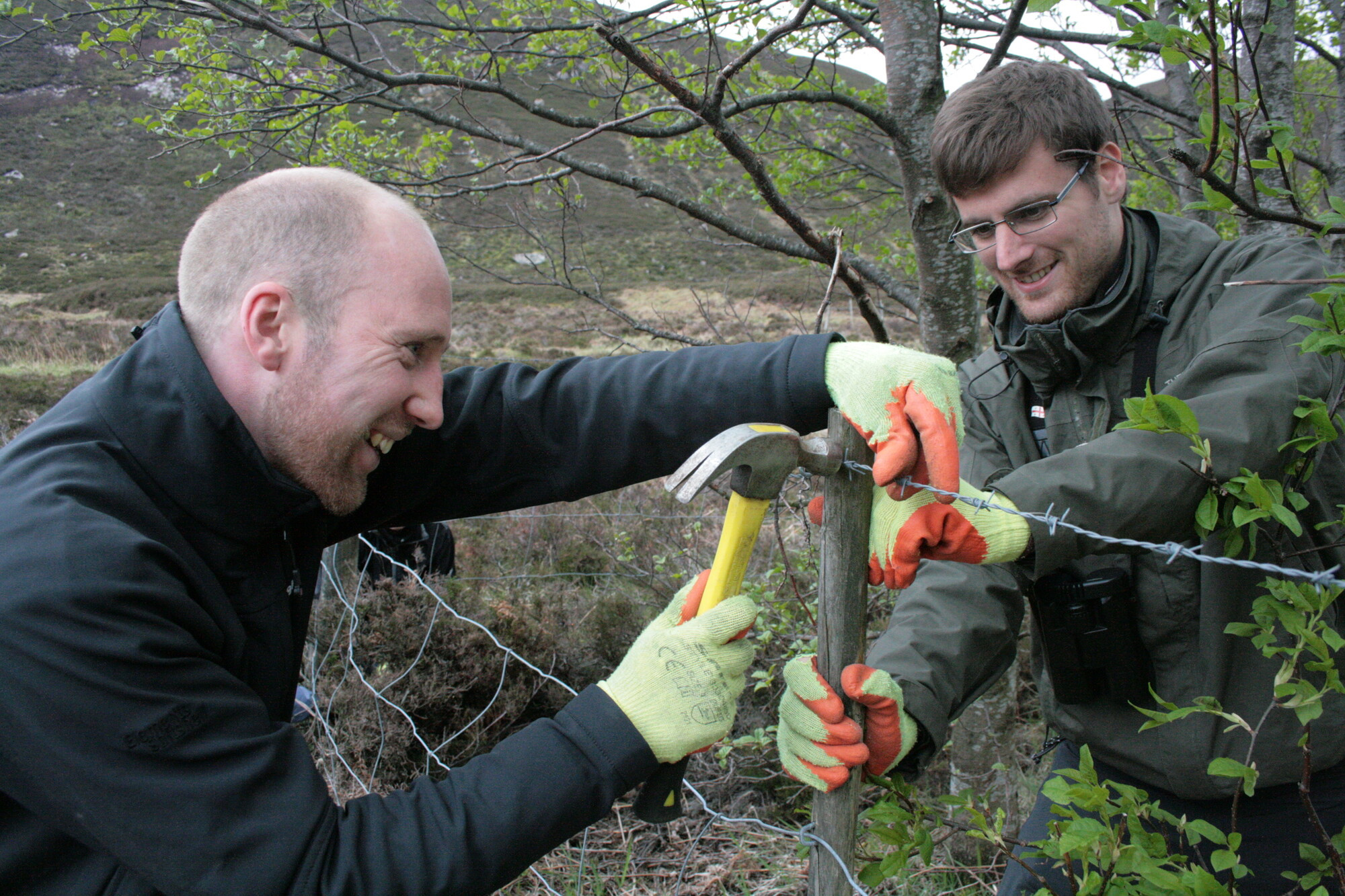
Deer fence removal: Over 12km of fencing has been removed within 5km of active leks in the last six months, with a further 5km identified for removal before the next breeding season. Approximately 120km remains, making accelerated removal a priority.
Diversionary feeding: Delivered across 19 sites in 2026. Good practice guidance and coordination between land managers is enabling expansion. Updated productivity results are expected in January 2027 to inform future recommendations.
Impacts of predator management: An action in the Emergency Plan is to study predator activity in relation to capercaillie hen densities and breeding performance in areas where predator management strategies (diversionary feeding and lethal control of foxes and crows) are in place. Board members discussed whether the study could also consider other management interventions alongside hen and brood data to provide a fuller picture.
Reducing the impact of disturbance: A study examining capercaillie responses to recreation (and predators) is nearing completion. A researcher involved is due to share early findings with the Park Authority’s Access Team, with an opportunity to involve access representatives from NatureScot and Forestry and Land Scotland in the discussion.
3. Update from the Scientific Advisory Group
The Scientific Advisory Group, now chaired by Kath Leys, NatureScot’s Head of Biodiversity and Geodiversity, met on 29 October and reviewed the latest draft of the Research and Monitoring Plan. Programme Board feedback has been addressed in the latest draft and a proposed stakeholder event in February/March 2027 provides an opportunity to launch the plan.
It was noted that habitat loss, identified in both the Emergency Plan and Research and Monitoring Plan, remains a nuanced issue, with differing perspectives on its extent given ongoing woodland expansion. However, habitat loss remains a recognised driver of capercaillie decline, with recent wildfires highlighting the ongoing risk. It was also noted that woodland expansion does not necessarily equate to an immediate increase in suitable habitat. The importance of communicating these distinctions carefully was highlighted, alongside opportunities to use CaperMap to illustrate the spatial extent of habitat expansion.
An update was provided on how the Capercaillie Integrated Population Model (CIPM) could be used to illustrate population trajectories at individual leks, helping to track responses to management interventions and inform future management priorities. A question was raised about whether the model could also help project how individual leks might respond to the recent wildfire.
A paper on the CIPM has been accepted by the Journal of Applied Ecology and is expected to be published shortly. The Scientific Advisory Group plans to explore further how extreme events and extinction risk are represented in the model, as well as contribute to the development of survey methodologies for woodland grazing and robocutting.
4. Staffing and resourcing the Emergency Plan to 2030
A draft paper outlining options for securing public agency resources to support ongoing delivery of the Emergency Plan through to 2030 was circulated ahead of the meeting. Board members supported the option of extending existing posts currently hosted by the Park Authority to maintain continuity of delivery, retain specialist knowledge and established relationships with land managers, and sustain the coordination needed to expand and embed interventions across the National Park. This approach also aligns with longer-term budget planning where applicable.
5. Funding interventions and strengthening the evidence base
An action in the Emergency Plan is to use emerging evidence of the benefits of woodland grazing and robocutting to influence future funding streams, supporting long-term habitat management and reducing reliance on annual funding.
Evidence gathering is already underway, with baseline surveys completed across several grazing and robocutting sites. The final report from the RSPB’s large-scale field-layer disturbance trial in Abernethy, involving cattle grazing and robocutting, is expected in 2027. Initial findings from separate assemblage monitoring by the RSPB in Abernethy have also identified positive impacts of cattle grazing on invertebrates, birds, fungi, lichens and twinflower.
It was suggested that greater emphasis could be placed on how woodland grazing contributes to wider policy ambitions, particularly woodland expansion. Evidence of long-term grazing supporting natural regeneration and woodland expansion could be especially valuable. Board members supported a suggestion of visiting sites where approaches have shifted from planting trees towards cattle-assisted natural regeneration. It was also agreed that a follow-up discussion with Scottish Forestry was necessary to explore these opportunities further.
6. Communications and stakeholder engagement
Updates were provided on events planned for early 2027:
- Woodland grazing event (January): Bringing farmers together to share learning, explore opportunities for expanding woodland grazing and strengthen engagement.
- Vole day (January): Sharing vole survey findings and bringing together land managers to coordinate monitoring efforts and expand survey coverage.
- Capercaillie stakeholder day (February/March): An opportunity to reflect on progress at the halfway point of the Emergency Plan, share emerging evidence, productivity results and priorities for future delivery. The day could also support the launch of the Research and Monitoring Plan, development of good practice guidance and input to the CIPM.
Board members discussed the importance of balancing achievements with the work still to be done, using the stakeholder day to progress practical discussions and planning. The event could also provide a springboard for wider public communications. It was noted that the Emergency Plan will be considered by the Park Authority’s Performance Committee in early 2027, with the associated papers made publicly available on the National Park website.
Actions
- Carolyn to invite FLS and NatureScot access representatives to the discussion on the emerging research findings related to capercaillie and the impact of disturbance.
- Carolyn to share the Programme Board’s feedback with the Scientific Advisory Group and seek its views on whether the proposed study of capercaillie hen densities and productivity in relation to predator management could usefully be broadened to consider other management interventions.
- Carolyn to explore with the Scientific Advisory Group whether the CIPM could be used to project lek-level population responses to wildfire.
- Carolyn to identify opportunities for a site visit to see examples of cattle grazing supporting natural regeneration and woodland expansion.
- Carolyn to arrange a follow-up meeting with Scottish Forestry to discuss the evidence needed and opportunities to support woodland grazing and robocutting through longer-term funding arrangements.
- Carolyn to establish availability of Programme Board and Scientific Advisory Group members for the proposed stakeholder day and develop an outline programme for the day.