
Programme Board meeting notes - Capercaillie Emergency Plan 290726
Capercaillie Emergency Plan Programme Board meeting
Wednesday 29 July | Park Authority office, Grantown-on-Spey and Teams
Attendees
- Alex Macleod: North Region Manager, Forestry and Land Scotland
- Andy Ford: Director of Nature and Climate Change, Park Authority
- Carolyn Robertson: Cairngorms Nature Manager, Park Authority
- John Risby: Highland and Islands Conservator, Scottish Forestry
- Shona Shentall: Head of Operations Central Highlands, NatureScot
1. Introductions
Shona Shentall was welcomed to the Board following Chris Donald’s retirement.
2. Glenmore / Abernethy wildfire
The ongoing wildfire in Glenmore Forest Park and Abernethy National Nature Reserve was discussed. It is the largest wildfire recorded in the Cairngorms National Park and has affected one of the UK’s most important capercaillie landscapes. The immediate and longer-term impacts on capercaillie remain unknown. It was agreed that public communications would remain reactive until the impacts of the wildfire are clearer.
It was noted that the affected area represents only part of the wider core capercaillie area and that the Capercaillie Emergency Plan provides a strong framework for responding. Delivery can be adapted and increased elsewhere, informed by the Research and Monitoring Plan, to help mitigate the impacts of the fire.
Habitat works due to be delivered in Abernethy as part of the Capercaillie Emergency Plan may be affected, depending on access, burn severity and staff capacity. Funding for affected works could be redirected to accelerate habitat improvement elsewhere, particularly in connecting woodlands. The robocutting programme planned in Glenmore as part of the Capercaillie Emergency Plan is still expected to be fully delivered, with work reconfigured outside the burnt area.
3. Draft 2026⁄27 Nature Restoration Fund (NRF) work programme
A draft Nature Restoration Fund work programme was reviewed. It is focused on continued delivery of the Emergency Plan habitat improvement priorities of woodland grazing, robocutting, fence removal and woodland restructuring. The programme will be delivered by 31 March 2027, building on the programme successfully delivered last year and continued high levels of engagement from land managers.
Bog woodland restoration was highlighted as an area of the Emergency Plan where further progress is needed. Work this year will focus on identifying opportunities for bog woodland and wet area restoration across the core capercaillie area, with some delivery this year and the majority expected next year.
It was noted that proposed woodland restructuring on Dorback Estate should be reviewed alongside the estate’s long-term forest plan, which is currently being updated.
4. Progressing deer fence removal in core capercaillie areas
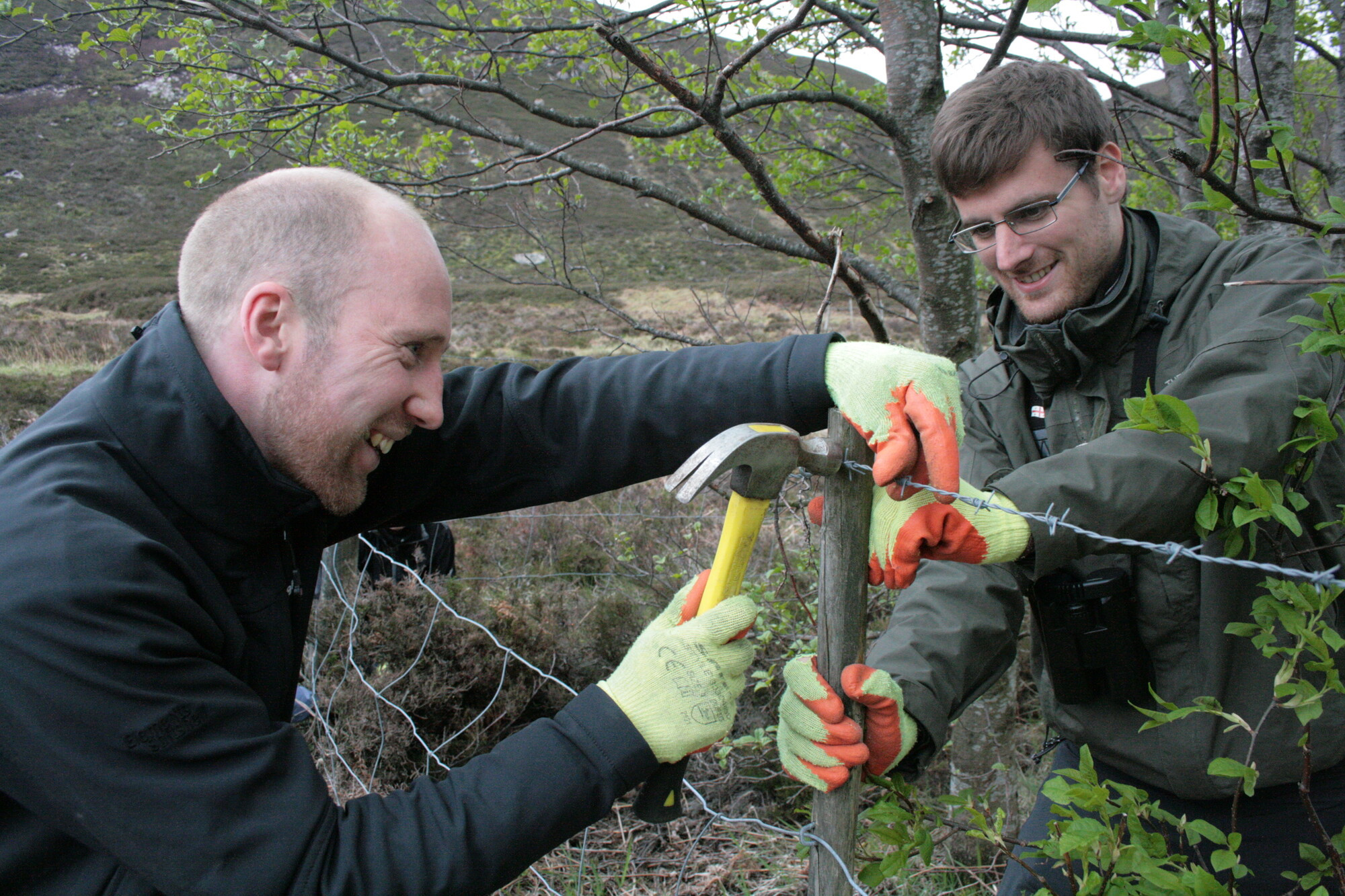
The Board discussed how to accelerate deer fence removal across the core capercaillie area in the National Park. In the last six months, over 12km of deer fencing has been removed from within 5km of active lek sites in the National Park. This has been delivered as part of the Emergency Plan, but over 50km of deer fencing remains. A multi-agency effort is needed to enable more progress and it was agreed that engagement with land managers should ideally be led by relevant agency staff, working to principles agreed by the Programme Board.
Greater flexibility to fold deer fences to stock-fence height could aid progress, particularly for boundary fences. It was agreed that clarification was needed on whether folding a fence would trigger a Habitats Regulations Assessment (HRA) or only if it was subsequently returned to deer-fence height. Once clarified, it was agreed that all land managers with identified at-risk fences should be approached.
The Board also discussed support for deer management as a means of keeping fences out of the core capercaillie area. Longer-term deer reduction was considered better suited to multi-year support through the Forestry Grant Scheme (FGS) rather than annual NRF funding. However, NRF support for thermal drones to enable more effective deer management and help avoid the need for fencing was supported. This should be linked to a long-term forest plan and compliant with interim guidance from NatureScot regarding drone use in capercaillie areas.
5. Delivery arrangements / staffing
The Board discussed how to sustain current ways of working, with Park Authority staff working directly with relevant land managers to provide an efficient link between the Programme Board and delivery of the Emergency Plan. This was considered alongside the RSPB Capercaillie Advisory Officer post, which is currently funded by RSPB with an annual Park Authority contribution.
Future options include Programme Board partners contributing to a post hosted by the Park Authority. As joint leads for the Emergency Plan, either the Park Authority or NatureScot was considered the preferred host. Headcount constraints were noted and further discussion, including with RSPB, is needed before options are brought back to the Programme Board.
The Board also noted the current role of the RSPB Capercaillie Advisory Officer in supporting access to FGS funding and providing advice to Scottish Forestry. With agencies now having direct access to capercaillie data, screening can be undertaken independently. Some support with data interpretation may still be required, but this could potentially be provided by experienced agency staff.
Actions
- Carolyn to update the draft 2026⁄27 Nature Restoration Fund work programme in response to the Board’s feedback.
- Shona to clarify the HRA implications of folding deer fences to stock-fence height.
- Carolyn to develop and circulate options for future staffing and resourcing, reflecting the Board’s discussion.