
UK National Parks Conference - workshop and field trip information
UK National Park Conference 2026
Field trip information
General accessibility information
Scotland is famous for having all four seasons in a day, so please bring warm layers, waterproofs, sunglasses and sunscreen with you. Our field trips have been graded on the basis of walking / activity difficulty, but if you’ve any specific questions please get in touch.
- ‘Easy’ — activities will involve short walks mostly on paths, sturdy shoes are likely to be fine.
- ‘Moderate’ — activities are likely to be longer walks with some rougher, uneven, sometimes hilly terrain, sturdy shoes or walking boots are suggested.
- ‘Strenuous’ — activities are likely to involve more challenging walks off-path and across uneven, possibly wet, rough hill ground, walking boots are suggested.
Field trip one
Back from the brink
Moderate
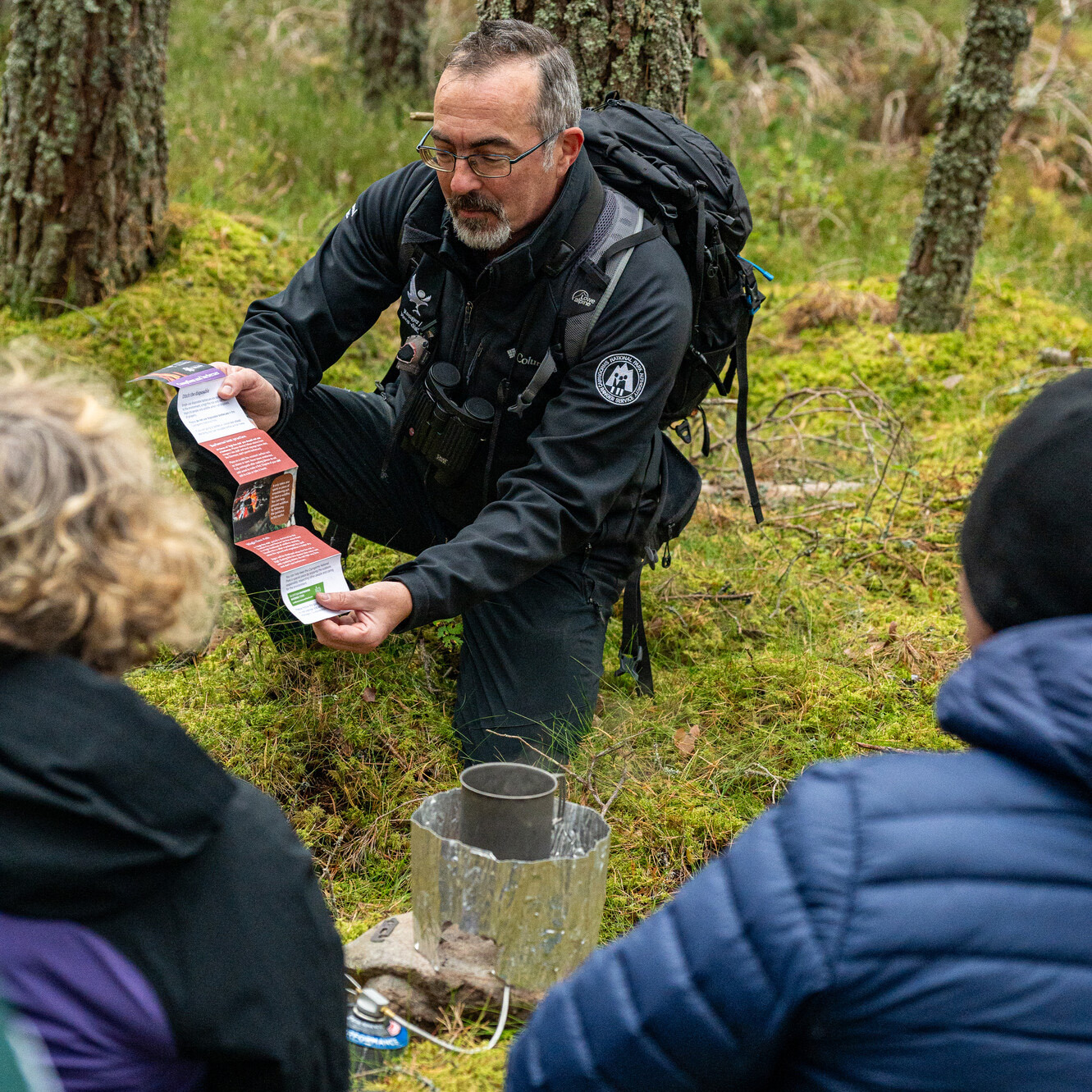
Join us for a unique field trip to Rothiemurchus Estate and Glenmore forest park, focusing on some of Scotland’s rarest and most threatened species. Exploring native Scots pine forests, you’ll see first hand habitat that is managed for capercaillie – the world’s largest grouse. Learn more about robocut areas and woodland grazing by cattle, both vital for improving conditions for this iconic bird, while also discussing wildcat tracking data and vole sign surveys in an area where our wildcat population is slowly recovering.
The day will include a visit to the pine hoverfly breeding centre at the Highland Wildlife Park, offering a unique insight into this vital conservation effort. Participants will take part in hands-on volunteering activities and explore the wildcat conservation centre, where an in-depth project talk will bring the work to life.
Led by experienced conservation staff, the session will reflect on both the successes and ongoing challenges of species recovery, with opportunities to share experiences and learning. There will also be time to explore the wider Highland Wildlife Park at your leisure.
Field trip two
Living with the land: Cairngorms as a cultural landscape
Easy
Hidden behind the Badenoch town of Newtonmore is the desolately beautiful valley of Glen Banchor. This rugged landscape was once home to sizable pastoral communities, their evidence still visible on the ground and in the surrounding place names.
Join Park Authority staff Duncan and Tania to explore the ruins of some of these townships while discussing the changes in land management and what that has meant for the people of the glen and local culture.
At noon, we will head to the Highland Folk Museum, in Newtonmore. There will be an opportunity to enjoy your packed lunch, explore the site and visualise the lifestyle of the former inhabitants of Glen Banchor and discuss the Gaelic concept of “Dùthchas”.
We’ll conclude with a guided archive tour and gain an insight into how cultural heritage is being celebrated through local project initiatives including [Badenoch Storylands].
There will be plenty of time to discuss cultural and creative engagement initiatives. Plus, you never know, a golden eagle may also grace the skyline.
Field trip three
Connections in the Cairngorms
Strenuous
This field trip will explore Glen Feshie, a landscape managed by Wildland Limited, which is regenerating at scale and pace to restore ecological diversity and function. Showcasing Wildland’s vision and what is being achieved through the Cairngorms Connect partnership, we will have several stops to view regenerating ecosystems shaped by deer management, natural regeneration, and woodland restructuring, and hear about species recovery.
The various restoration actions link through to the delivery of Cairngorms National Park Partnership Plan objectives, which we will discuss during the day, including Nature Networks, 50 x 45, and ecological monitoring. Participants will partake in discussion about the opportunities and challenges associated with landscape scale ecological restoration and how we could deliver more of it in the Cairngorms and other National Parks in the UK.
This trip will involve being outdoors all day, walking approximately 10km on uneven steep ground. There are no formal toilet stops except at the start the visit. Therefore, participants should be prepared with suitable outdoor clothing and equipment for changeable conditions.
Field trip four
Nature, wellbeing, and encouraging cycling
Easy
We will enjoy cycling together on the Cairngorms National Park Authority’s fleet bikes (e‑bikes and standard bikes both available) from Aviemore to Badaguish, learning along the way about how we are supporting active travel across the National Park.
At the Badaguish Outdoor Brain Health and Dementia Resource Centre we will share how people living with dementia and their families and carers are experiencing the benefits of nature. We will also learn how connecting to nature is supporting residents’ health and wellbeing through a Nature Prescription service, and delegates are invited to connect to nature themselves, through a guided forest bathing session.
Returning to the bikes, we will ride back together through the woodland. The cycle rides will be at a gentle pace for around 30 — 45 minutes for a total of about 10km, primarily on shared use paths which take us through beautiful pine forests.
Field trip five
Connecting with communities: empowerment and innovation
Moderate
Join us on a minibus trip over the SnowRoads, with incredible views over the iconic Cairngorms landscape, to visit Royal Deeside. In the beautiful town of Ballater we will meet the local community council’s flooding issues group and learn about their work reducing the risk of flood damage to the village while walking alongside the banks of the River Dee. We will then get lunch at the charming Rothesay Rooms, a café celebrating the best of Scottish produce.
In the afternoon, we will visit natural flood management and restoration projects that have been delivered by the River Dee Trust in Glen Muick. We will discuss river restoration strategies, trade-offs and practicalities with the option to get stuck in installing a leaky barrier on a small tributary. We will then head back over the hill to Aviemore in time for dinner.
The morning’s walk will be 3km in total, with stops for discussion, and mostly on a flat path. The afternoon sites will be accessible by short (<30 minute) walks from the vehicle but over rough ground without paths. The drive over the hill will take about an hour and a half each way.
Field trip six
Peatlands: carbon, culture and care
Moderate
Join us for a day exploring peatland restoration in action on Dorback Estate, just outside Grantown-on-Spey, followed by lunch on site and a whisky tour at Cairn Distillery.
Delegates will observe live peatland restoration work being carried out by contractors and discuss what this means for carbon storage, climate action and local communities. The visit offers the opportunity to meet and learn from those directly involved in the project, including the landowner, agent and contractors.
The day will include shared discussion and learning between delegates alongside the landowner Oxygen Conservation, funder and host the Cairngorms National Park Authority, contractor TAIGA Upland, and agent Caledonian Climate Partnership.
Delegates will visit the Cairn Distillery to enjoy the Explorer Experience. This engaging tour explores how the distillery’s location, heritage, and environment shape its approach to Scotch whisky. Guests will be guided through the production process and the art of maturation, before concluding with a tasting in the Discovery Tasting Room overlooking the River Spey.
Please note this is an outdoor field trip requiring a good level of fitness, with walking over uneven ground in exposed upland conditions.
Field trip seven
Fields of the future
Moderate
Join us for a hands-on field trip focussed on practical conservation, innovation, and sustainable food production, and including a tour of the local distillery.
The morning will be led by the Cairngorms National Park Authority’s Agricultural Advisor on his family’s working farm, exploring the wide-ranging conservation work underway — from the upland moorland to the species that depend on the enclosed habitats below. He will share insights into their wider environmental work on the farm:
- Virtual fencing collars – a live demonstration showing how they are improving habitat condition, boosting biodiversity, and reducing wildfire risk.
- Transition back to native cattle breeds, and the essential role of grazing herbivores in healthy, functioning ecosystems.
- Species-rich grassland management – risks, best practice, and restoration goals. A live demonstration of grassland toppers used in a new loaning scheme for farmers.
- Introduction to rare invertebrates including the small scabious mining bee from the Rare Invertebrates in the Cairngorms Project Officer.
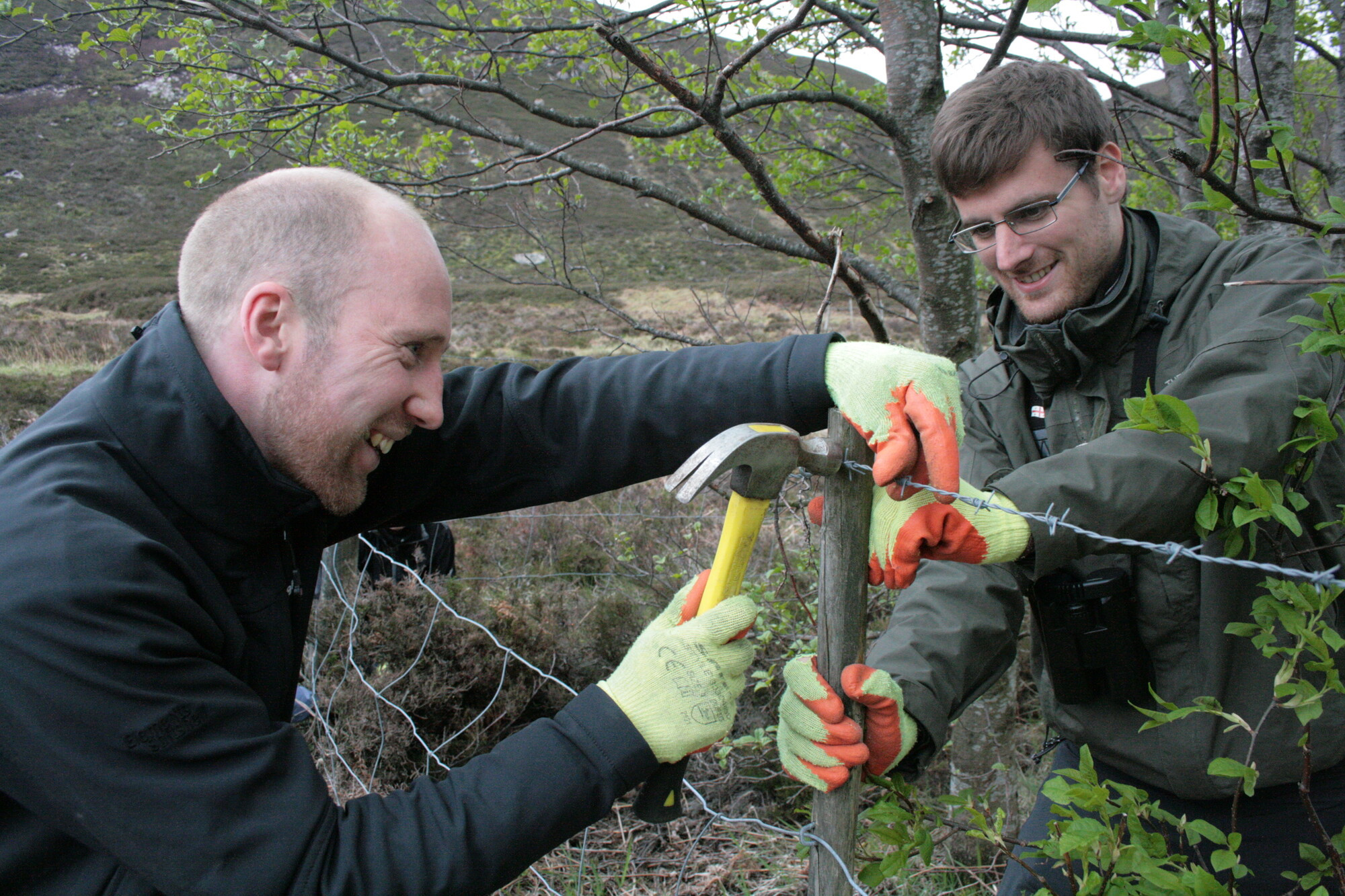
- Aspen woodland restoration and its role in landscape resilience including a chance to practically help suckering aspen by removing competing birch saplings.
After a barbecue lunch, featuring the farm’s own 28-day aged shorthorn beef burgers and rolls from a local bakery, we will go to the other side of the River Spey for a tour of Cairn Distillery.
Field trip eight
Cairngorm mountains
Moderate
This field trip explores the Cairngorm mountains from a range of viewpoints, offering insight into the landscape at different levels. Beginning at Loch Morlich, delegates will look towards the surrounding mountains while considering visitor experience and management. At Coire na Ciste, views across Glenmore provide a setting to explore landscape change over time, with input from a landscape artist on how these changes can be visualised and communicated.
The journey continues via the Cairngorm Mountain funicular to the upper slopes, with the option of a guided walk to the summit (1,245m), or to remain at the Ptarmigan Restaurant. Here, discussions will focus on wildness, ecology, land use and visitor pressures within this iconic mountain environment. Throughout the day, contributions from rangers, specialists and creatives will enrich understanding of the area’s distinct qualities and challenges.
The programme also includes a visit to Aviemore and Glenmore Community Trust at the Visitor Centre, showcasing a successful community enterprise, alongside a creative session exploring landscape change through art and photography.
Please note: this is a full day outdoors in an exposed mountain environment. Suitable clothing and footwear are essential. The summit walk is steep and optional.
Field trip nine
River revival
Strenuous
Join us for a fascinating canoe trip down the River Spey from Loch Insh to Aviemore. You will be paddling through three beaver territories and some of the highest quality and most extensive riparian woodland in all of Scotland.
On the way we will talk about the ecological importance of the River Spey and some of the long-term resident and newly returned native species found there – fresh water pearl mussels and beavers; and maybe even see some evidence of them.
We will visit a local landowner, and hear about the motivations for reintroducing beavers on their land. Lunch will be taken nearby, with tea, coffee and cake provided alongside your packed lunch. There will be toilet stops just before the trip begins and again at the end at the Old Bridge Inn in Aviemore; otherwise, you may need to use the “loo with a view”. At the Old Bridge Inn, there will be time to relax and enjoy a drink by the river we have just paddled.
Field trip 10
Changes for the future
Easy
Join us for a visit exploring how land management is evolving in response to climate change and other key drivers. Once managed under a traditional sporting model, the estate is now undergoing a significant transition following its recent acquisition by the Durrell Wildlife Conservation Trust. The focus is shifting towards restoring natural ecological processes, including extensive woodland expansion, as well as peatland and river restoration.
During the visit, we will also look at how the estate is working with local communities and neighbouring land managers. We’ll consider the historical use of Dalnacardoch and explore how estates are diversifying their economic base, alongside developing the skills and knowledge needed for careers in modern land management.
We will learn about these developments through conversation with the estate and Park Authority staff and see how the Cairngorms 2030 programme is facilitating and supporting changes.
Lunch and refreshments will be provided. The day will include some travel on estate tracks in 4×4 vehicles, as well as short walks over rough terrain. As we will be outdoors for several hours, please come prepared with suitable footwear and waterproof clothing.
UK National Park Conference 2026
Workshop information
Workshop one: Wildfire management
Wildfires threaten man-made assets like houses, windfarms, fences and other built infrastructure and they also threaten natural assets like forests, peatlands and less mobile species and habitats. This workshop will discuss reducing the risk of wildfire, preparing for wildfires that do start, mitigating impacts of wildfires in the landscape and what role National Park Authorities have in tackling these issues.
Workshop two: Water management
The changing climate is leading to more droughts and flooding impacting on communities, businesses and nature in our catchments. This workshop will look at river restoration techniques, the financing of this work, what are some of the key barriers to overcome and what role National Park Authorities have in delivering resilient catchments.
Workshop three: National Parks Partnerships
National Parks Partnerships (NPP) will explore how National Parks are attracting private finance for nature, sharing real-world case studies that generate income from carbon and nature markets to support landscape-scale action. The session will also outline an upcoming public and philanthropic campaign aimed at strengthening the National Parks brand, diversifying income, and positioning parks as leaders in nature recovery, climate resilience, and community impact.
Workshop four: Widening participation
A key theme of the Cairngorms 2030 programme is widening participation and building long-term relationships with underrepresented audiences. In this interactive workshop, the Cairngorms 2030 public engagement team will share practical ways of widening participation and deepening engagement with National Park communities.