
Keeper for Capercaillie
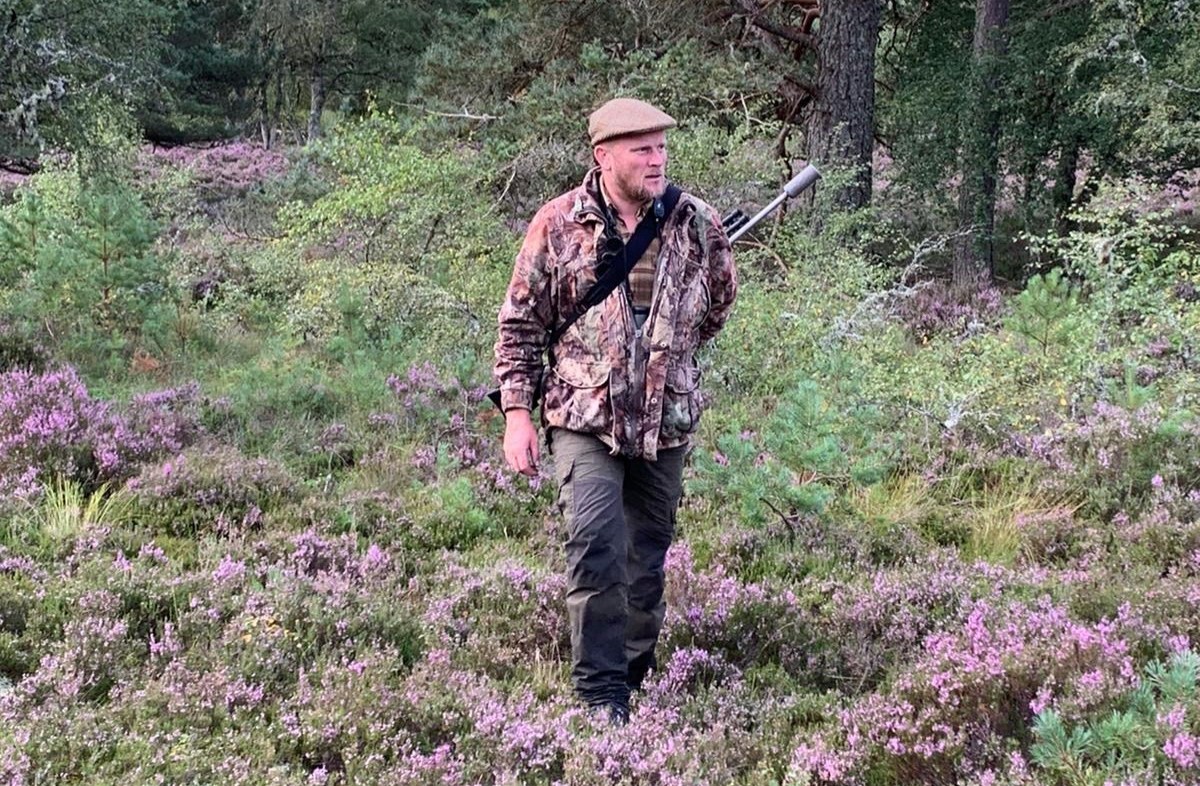
Keeper for Capercaillie
For our August rural workforce theme, we have been looking at the valuable contribution made by men and women who work long hours in all weathers to make the Cairngorms National Park the special place that it is.
There are many gamekeepers and deer stalkers employed on estates across the Cairngorms National Park helping to conserve and enhance landscapes, benefiting a wide range of habitats and species. Probably one of the most interesting and challenging roles is that of Gamekeeper with the Cairngorms Capercaillie Project, and that role belongs to David Clark.
David – or Poppy as he is known to most – is employed and managed by Seafield & Strathspey Estates with his post 90 per cent funded by the National Lottery Heritage Fund. With the Strathspey area being the last remaining stronghold for capercaillie in the UK, efforts to enhance the species’ chances of survival are largely focussed in this area of the Cairngorms National Park.
Poppy’s role involves managing fox and crow numbers in the spring to help capercaillie during the breeding season. He also carries out deer management activities, which helps ensure that the capercaillie habitat is in prime condition as well as supporting woodland management objectives.
“I’ve been a gamekeeper for over 20 years but had never seen a capercaillie until I took this job – I really appreciate the fact that I am getting to work with such a rare and fascinating bird and I am really trying my best to ensure it has a future,” said Poppy.
It’s a job that involves being outside for long periods, often in terrible weather, especially in the spring when the workload is particularly intense – but there are rewards.
“When you control species that predate ground nesting birds, all ground nesting birds benefit. So as well as being really excited to see a capercaillie – it is hugely rewarding to see a rise in the number of waders as a result of your efforts” he said. “You hardly ever see caper chicks, they are so well hidden, but the sight of wader chicks in the summer is a good indication that your hard work is paying dividends.”
It’s a unique job and one of the best things about it, according to Poppy, is doing the lek counts. Leks are where capercaillie gather to breed and it provides estate staff with an opportunity to establish the local capercaillie population. Poppy and his colleagues have to spend an uncomfortable night in a hide but the dawn brings forth a wildlife experience like no other.
“You are sitting in a hide in that grey light of dawn in the spring, then the woodlands start to come alive with the sound of capercaillie ‘dropping in’ – it is amazing. It is one of the most special, and most calming things to experience, sitting in this ancient Caledonian pinewood, surrounding by nature – you are witnessing something truly unique.”
The job sounds idyllic but it is not without its frustrations.
“Witnessing dogs off leads in the spring time, being allowed to run through capercaillie habitat, is very disappointing to see when you consider that we are devoting long hours to conserve ground nesting species and then one dog can unintentionally wipe out an entire brood. With caper numbers so low, we cannot afford for this to happen. Also pine martens and badgers are known to prey on capercaillie but as protected species they can only be controlled under licence and only in very specific circumstances.”
The job does throw up some rather unusual situations too explained Poppy, “like when the police are delighted you’re able to move a rogue capercaillie from a busy road that’s been attacking cars – that is not something that happens every day!”
Poppy’s passion for wildlife and conservation is obvious and he applauds both his employer, Seafield & Strathspey Estates for their forward thinking, modern approach to estate management and to the Cairngorms National Park Authority – who run the Cairngorms Capercaillie Project – for recognising the benefits of predator management and making the commitment to employ a professional to do the job.
“It can be 2am in the morning, it’s probably snowing, raining and blowing a gale but I still wouldn’t swap this job for a warm office and sociable hours. This is a vocation, a way of life for me, and I hope there continues to be gamekeepers as we are playing a crucial role in conserving and enhancing our countryside.”
Alert
Latest from the National Park
Cultural heritage fund returns
Cairngorms Communities and Cultural Heritage Fund reopens with £50,000 available
Park Authority board appointments
New board member appointed and Deputy Convener re-elected.
Recipients of 2026 Climate Adaptation Fund announced
£300,000 given to successful applicants from businesses to community groups
Relevant alerts
-
There is an ongoing wildfire situation in Glenmore and Strath Nethy within the Cairngorms National Park, albeit the situation continues to improve and the majority of the National Park is unaffected (with Glenmore, Aviemore and Nethy Bridge all open to the public). Click here for all the latest. We would encourage members of the public to follow current guidance and be aware that the situation may change.
Various paths and trails remain closed. Check out our path closures page for all the latest updates.