
Land Reform Act – 20 years in the Cairngorms National Park
Land Reform Act – 20 years in the Cairngorms National Park
It’s 20 years on 24 February since the Land Reform (Scotland) Act 2003 received its Royal Assent. Later the same year, the Cairngorms National Park was established and in February 2005, the statutory right of responsible access came into effect.
The 2003 Act and the Cairngorms National Park have essentially worked alongside each other for the last two decades.
With three main provisions in the Act – the creation of a legal framework for land access, the community right to buy and the crofting community right to buy – it is the first part that we want to celebrate as the Access Authority, as it has played a significant role in how people have enjoyed, discovered and worked in the Cairngorms National Park since its inception.
The 2003 Act establishes the statutory right to access to land in Scotland, specifically a right to be on land for recreational, educational and certain other purposes, and a right to cross land. A person only has access rights if they are exercised responsibly, as specified in the Scottish Outdoor Access Code – which was established as a result of the Act – and these rights only apply to non-motorised activities, including walking, cycling, horse-riding, wild swimming, canoeing and so on.
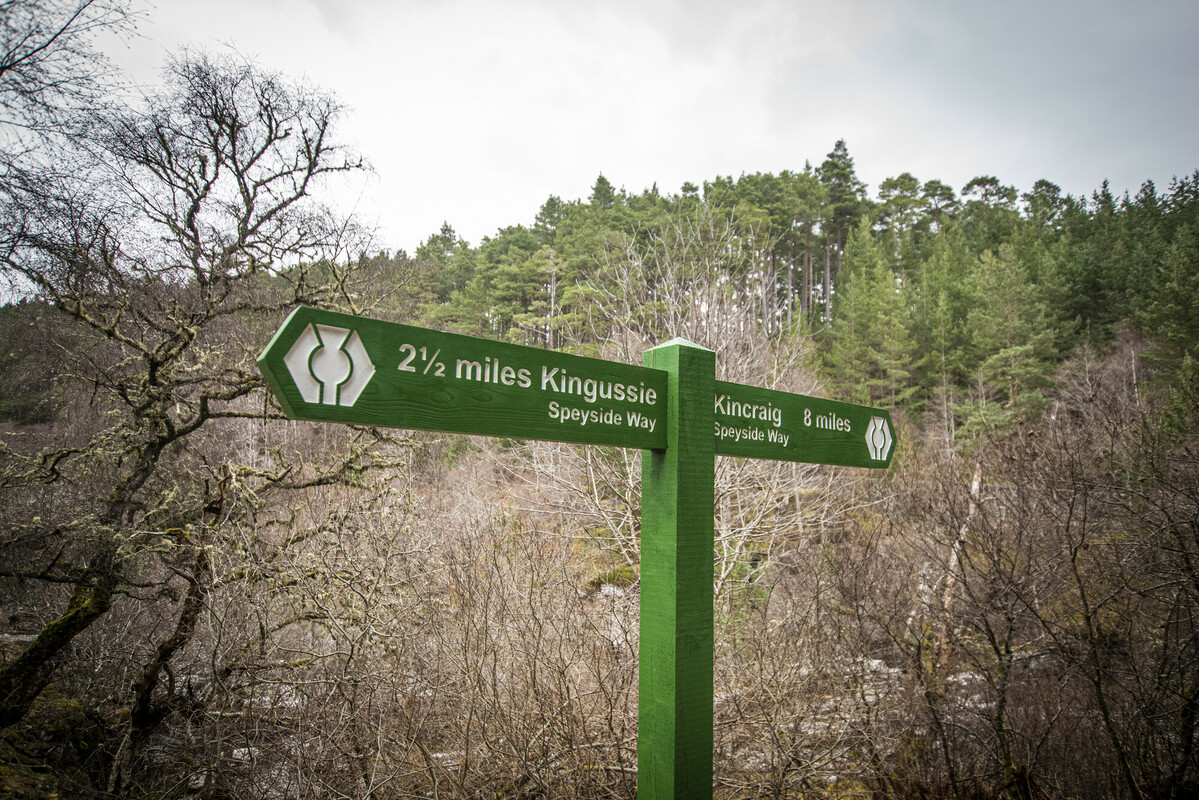
In 20 years, one of the biggest impacts the 2003 Act has had in the Park, has been paving the way for the extension to the Speyside Way Long Distance Route. This project included the first ever use of a Path Order in Scotland, to secure rights to develop the path on the preferred route. The extension of the Long Distance Route to Newtonmore was approved in 2009 and was officially ‘opened’ just last year.
Murray Ferguson, Director of Planning and Place at the Cairngorms National Park Authority explained: “There had long been a desire for the communities south of Aviemore to have the Speyside Way extended as far as Newtonmore and when the Park Authority came into being, we were determined to deliver for those communities and businesses along the route, as well as for visitors. It was extremely challenging, particularly when a key section of the preferred route was objected to by one of the land managers. The Land Reform Act 2003 provided a solution by enabling us to apply for a Path Order, which helped to see the route extension finally get underway.”
With the introduction of the Land Reform (Scotland) Act 2003, the Cairngorms National Park Authority automatically became the Outdoor Access Authority for the entire area. This tasked the Park Authority with a number of specific duties and powers under the Act such as developing a Core Paths Plan, keeping routes free of obstruction, promoting the Scottish Outdoor Access Code and establishing a local access forum. The development of the Core Paths Plan – of which there are over 670 miles in the Cairngorms National Park – resulted in another first under the legislation with the River Spey becoming the first waterway to be designated a core path in Scotland.
Nancy Chambers, author of the River Spey Canoe Guide said: “The River Spey is the most obvious long-distance water route through Badenoch and Strathspey. It is often described as the heart of paddling within the area and therefore it was very fitting that it became a Core Path. All along the Spey there are recognised access and egress points from the river and it is enjoyed by many users each year. The Core Path designation within the Cairngorms National Park forms a positive part of the access framework to create good and co-operative practice for all when on or around the river.”
The Cairngorms National Park Authority was also responsible for setting up the Cairngorms Local Outdoor Access Forum in March 2005. This group, initially chaired by Dick Balharry, has proved invaluable in providing advice, shaping guidance, promoting partnership working, developing the key messages that help to promote good behaviour from the public and best practice in the case of land owners.
John Grierson, Chair of the Cairngorms Local Outdoor Access Forum commented: “The access forum has a crucial role in ensuring we can all continue to enjoy the special qualities of the area, by providing advice to the Park Authority and others about outdoor access issues, particularly where they might be conflicts. We have also played a key role in areas of work such as the development and review of the Core Paths Plan, the formation of the Capercaillie Framework, as well as the ongoing promotion of responsible access. Given the high numbers of visitors in recent years, this latter area of our work has been critical to ensure that communities, businesses and wildlife are not being impacted negatively.”
Duncan Bryden, Chair of the Outdoor Access Trust for Scotland and a former Convener of the Cairngorms National Park Authority also shared his reflections on 20 years of the Land Reform (Scotland) Act 2003.
“We should all be very proud of what has been achieved in relation to outdoor access in the Park over the last 20 years,” he said.
“The Land Reform (Scotland) Act 2003, was a big step forward in ensuring that the right of access is enshrined in Scots Law and everyone is clear on what they can expect and in turn, what is expected of them when enjoying the outdoors.
“The Cairngorms National Park has an enviable path network, with many more trails than the hundreds of miles of designated Core Paths, which are designated as such as they are deemed to be the key routes for getting about communities.”
Core Paths are those which are prioritised for resources and path development projects, and are seen as key routes for people to get about their local area, but also linking up with other communities in the Park. The Core Paths Plan also helps to support visitor management plans on sensitive sites and ensures that these main routes are waymarked and signposted so that they can be promoted by communities and partners.
Murray Ferguson added: “Improved access provision supports healthy living, social inclusion, provides business opportunities, helps to tackle climate change and really does help rural economies. I think that the 2003 Act has helped us make massive strides in this area and you only need to look around the Park to see that in action – for example, all the communities now have their own path networks, close to where people live and promoted through their own path leaflets. These facilities really help people enjoy what’s special about the Park in a sustainable way. ”
Latest from the National Park
Park Authority Planning Committee news
Green light given for active travel route from Aviemore to Carrbridge
YLAG youth fund opens
The Cairngorms Youth Local Action Group has £5,000 for people under the age of 30
Fit it taks tae train a horse
A blether wi Derek Gray aboot hoo he trained Monty, the new Lonach Horse