
Park Talk: Lambing time advice for dog owners
Park Talk: Lambing time advice for dog owners
By Eleanor Mackintosh, CNPA Board Member
Please forgive us here at the Park Authority if we sound like a broken record! But please can we remind those of you with dogs to keep them on a lead or under very close control around livestock as we approach the lambing season.
Every year, we issue the same plea in the hope that people take notice – I am pleased to say, that I think most people do.
Incidents of livestock worrying in the Cairngorms National Park are thankfully low but we can never be complacent. Especially as dog ownership has risen in the last few years. Ten years ago 22 per cent of UK households were dog owners – a figure that remained stable for a long time – until it jumped to 33 per cent in 2020/21, as more people purchased pets in lockdown.
What dog owners might not be aware of, is that new legislation has come into force since the last lambing season, which is designed to enhance the protection of all livestock with increased fines and the potential for custodial sentences (and I don’t mean the dog).
The Dogs (Protection of Livestock) (Amendment) (Scotland) Act 2021 came into force on the 5 of May 2021. Under the new legislation, camelids such as llamas and alpacas, together with ostriches, enclosed game birds – meaning any pheasant, partridge, grouse, black game or ptarmigan that are being kept enclosed prior to their release for sporting purposes, and domestic poultry including fowls, turkeys, geese or ducks – and farmed deer are now protected as well as livestock. The new law also includes provision to fine the owners of dogs that attack livestock up to £40,000 or even send them to prison.
Before anyone suggests that I am writing this because I don’t like dogs – I do – I love my dogs very much. As a farmer, dogs are essential tools for rounding up sheep but they are very well trained and know what to do.
Not all dogs will know how to behave around sheep, cows or chickens. And in a place like the Cairngorms National Park – it might not always be obvious that you are walking in an area where there could be livestock. So we must all be very careful, vigilant and take notice of any signs when out and about with our four legged friends.
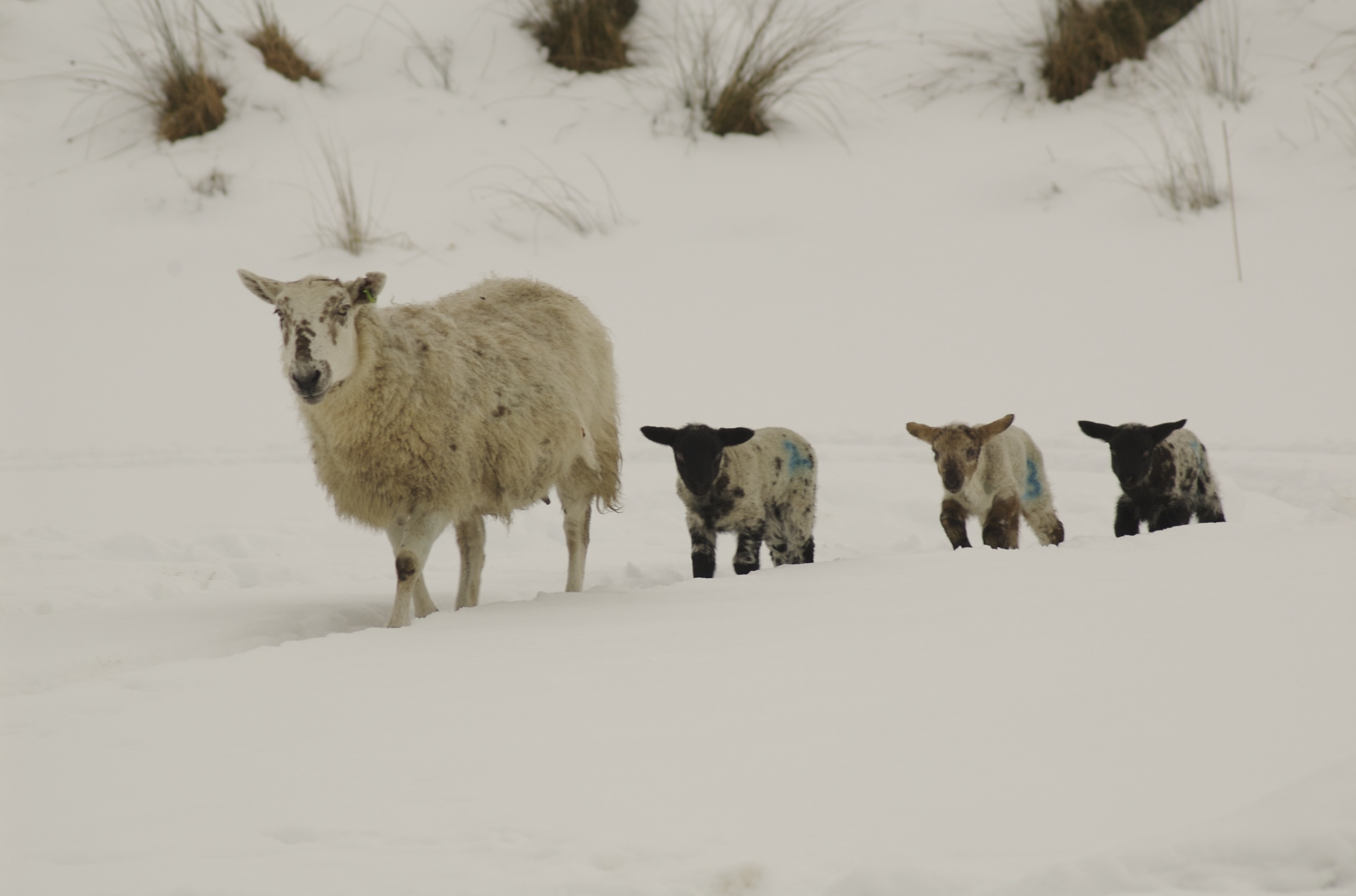
Pregnant ewes and newborn lambs are extremely vulnerable and nervous and should not be worried by dogs that have been allowed to run loose. The consequences can be devastating from miscarriage to injuries as a direct result of chasing or attacks by dogs that are not in control.
We think it is really important that everyone ‘plays their part’ to make the Cairngorms National Park the best, whether that is responding to a consultation like the recent National Park Partnership Plan, or maybe volunteering in your community. If you have a dog, you can ‘play your part’ to protect the Park’s livestock and wildlife, such as ground nesting birds, by sticking to the paths where possible in the spring, and always ensuring that your dog is under close control or on a lead.
Latest from the National Park
The King visits Lochan Uaine
His Majesty visited Lochan Uaine in the Cairngorms National Park this morning to unveil a commemorative stone and meet members of the community who were affected by the recent wildfire.
Conference puts national spotlight on conservation in Cairngorms
2026 UK National Parks Conference kicks off in Aviemore
LDP Evidence Report agreed by Scottish Government
The agreement follows two years of evidence gathering, consultation and engagement with people who live and work in the National Park