Finding ‘win-win-wins’ in farming
What is the Cairngorms 2030 future farming project all about?
The aim is to support farmers to lower their carbon footprint and boost nature on their farms whilst producing good food and increasing business resilience.
In the first couple of years, the project has worked in detail with a small group of farms that represent the different farming types found in the National Park. We’ve supported these farmers to trial a range of practices so we can learn what’s most effective in terms of carbon, nature, ease of use and profitability.
We’re now entering the next stage of the project, which is about scaling up this work. This will involve supporting more farms to trial and adopt the practices with the most potential for impact. These ideas have been developed collaboratively, drawing on the experience of the farmers as well as input from farm advisors. We’ll be promoting the first of these opportunities to the farming and crofting community over the next few months.
At the heart of the project is a focus on identifying and promoting ‘win-win-win’ solutions: actions that are good for the farmer, good for carbon reduction and good for nature. Often these practices also reduce costs and improve the resilience of farm businesses.
What is your role and how do you work with the farmers involved?
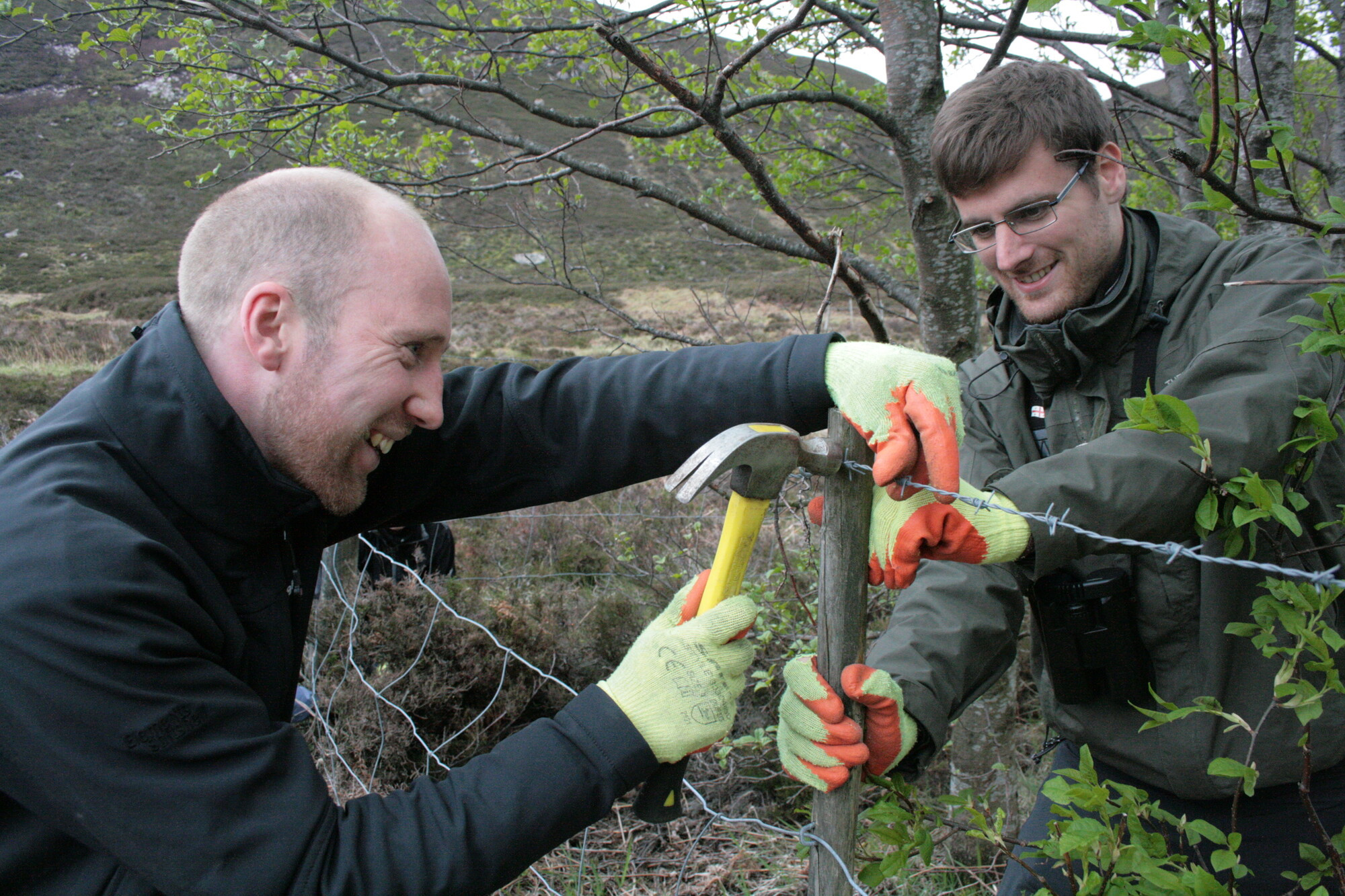
My role is best described as a facilitating one. It is not about going onto farms and telling them what to do but about talking with farmers about what would be most helpful for them as they explore changes on their land. Some farmers already have clear ideas of what they want to try, while others are less sure, and my role is to support both by creating opportunities to test and develop ideas. The emphasis is on making sure farmers can access the expertise and tools they need, rather than directing them toward any particular path.
Another part of my role is to make sure we capture information about how different practices have impacted the farmer, business and the environment so we can share these learnings more widely. Going forward, I’ll be spending more time organising events and workshops where farmers can come together to share experiences and learn from each other.
What has been the most exciting part of the project in 2025?
Seeing how different farmers have approached this project has been great. For example, one already knew the specific question he wanted answered about how he managed his cattle and he just needed support to make it happen through access to advisors and the right equipment. The future farming project stepped in to provide that support, helping test and refine his ideas in a way that worked for his business.
For others, the starting point was completely different. A couple of farms came in with a much more ‘blank page’ approach. They weren’t sure what changes to explore and were interested in getting fresh perspectives on their business. For them, the real value was in having an experienced advisor visit the farm, look at stocking, financials, carbon footprintand overall operations, and talk through ways to be more efficient or sustainable.
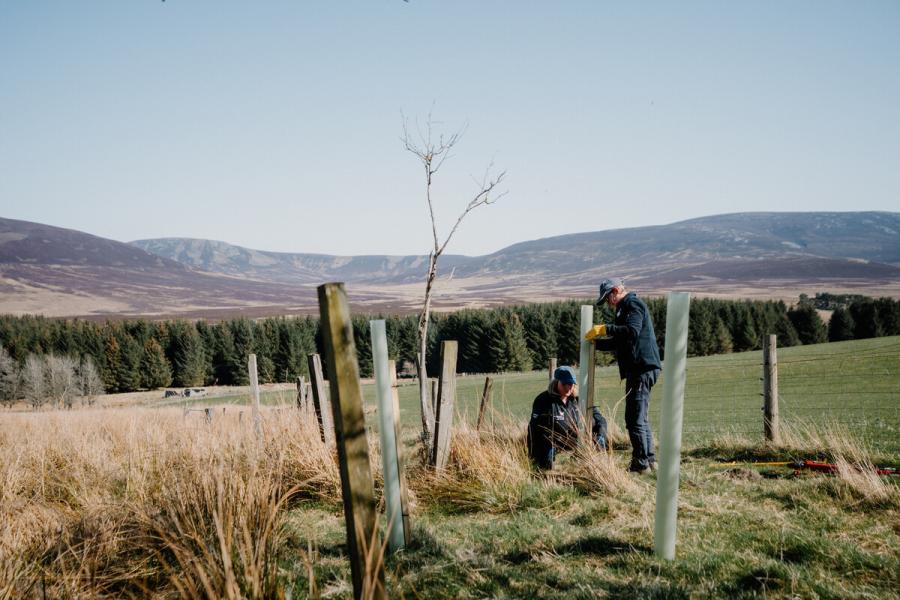
The farmers’ goals are varied; some are focused on whole-business, lower-input systems, while others are more interested in creating space for nature. In all cases, farmers recognise that pressure to reduce carbon footprints and enhance biodiversity is increasing whilst they maintain food production, and they want to explore options that fit their individual farms.
Knowledge sharing is an important part of the project. How can other farmers and crofters get involved?
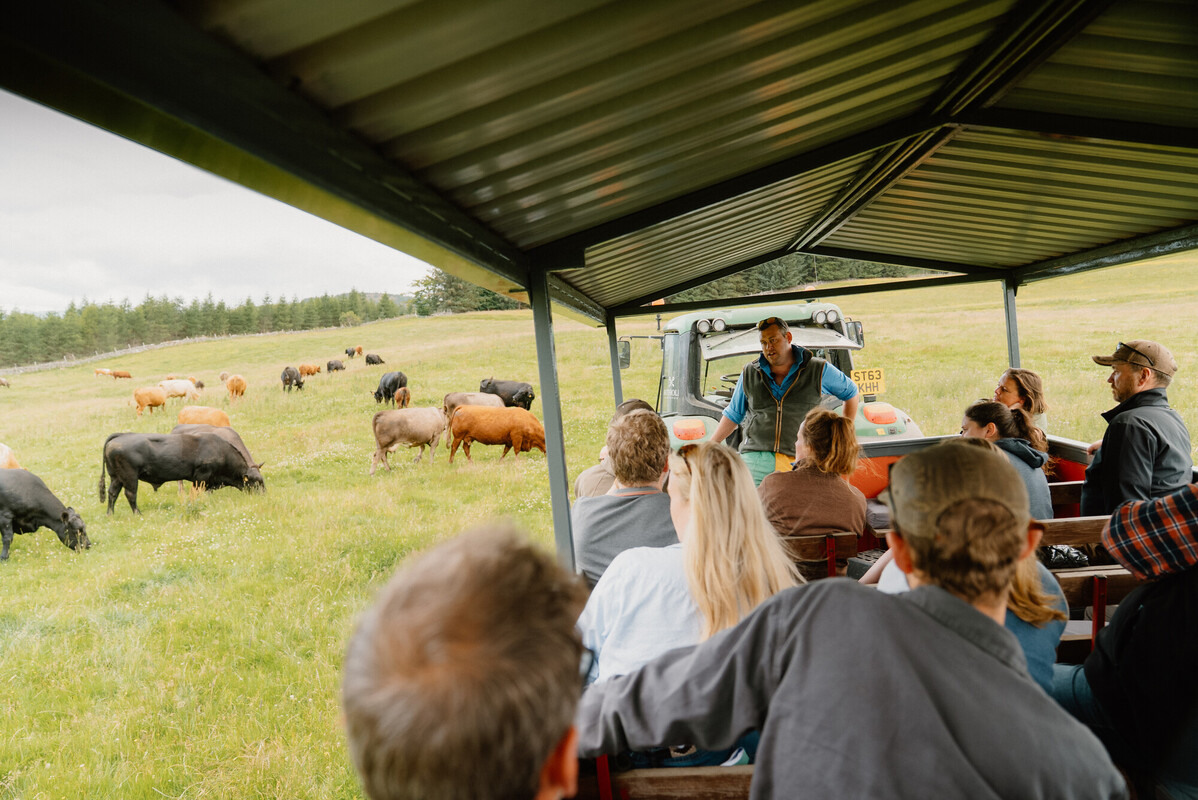
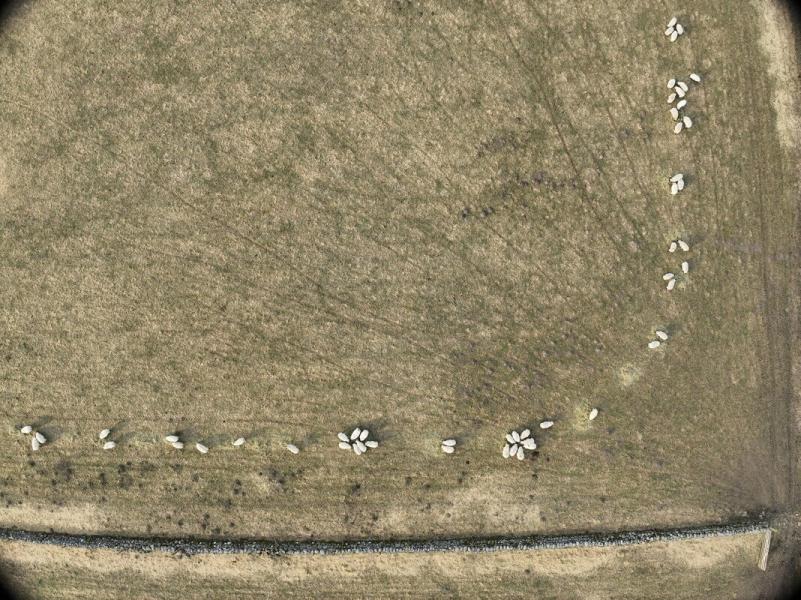
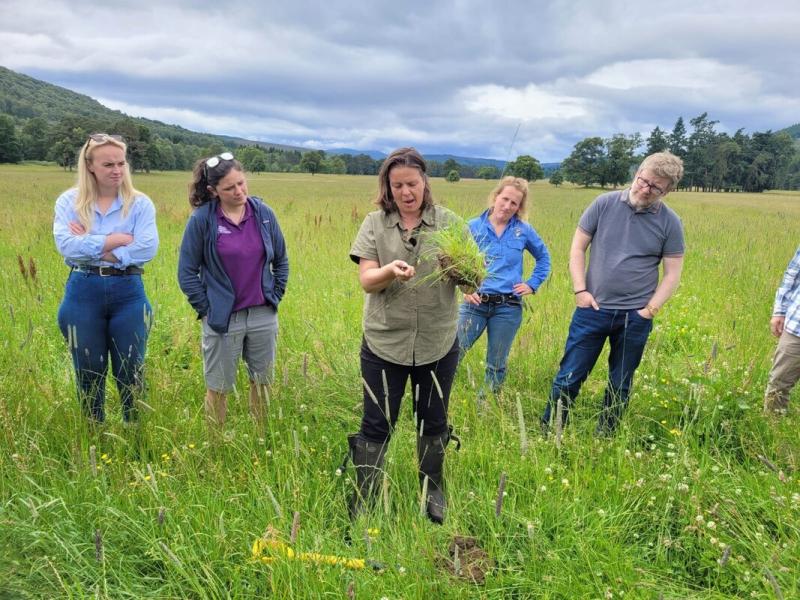
We’ve held two knowledge-sharing farm events in 2025. The first was at Balanloan Home Farm of Atholl Estates in Highland Perthshire and looked at regenerative grazing using a ‘whole farm system’ approach. We heard how the soil, plant, animal and farm ecosystems must all work together to reduce inputs and increase pasture productivity and saw how this approach was being put into action on the farm.
The second event was hosted by the Miller family in Strathspey, and we heard about how they’ve used the Farmax scenario modelling tool to explore management decisions. This included looking at different youngstock sales strategies and the use of deferred grazing and how they can influence both profitability and carbon footprints. The event was well attended by farmers, with valuable questions and discussion throughout.
Each event offers open discussion, practical demonstration and the chance to build new connections. Any farmer or crofter in the Cairngorms National Park is welcome to attend.
What is next for the project?
As we start the third year of the project, there will be opportunities for more farmers across the National Park to get involved.
In early 2026 we will be opening two support packages that offer advice and training linked to small capital grants for applications from farmers and crofters in the National Park.
The first will allow farms to explore in detail the financial impacts of adopting various sustainable farming practices. The second support package is for farms interested in transitioning to a whole-farm regenerative system.
More details and calls for applications will be announced first to our agricultural newsletter mailing list so please sign up here by filling in this form. Calls for applications will also be further advertised in the local papers and on social media.
Farmers and crofters can find out more about the Cairngorms 2030 future farming project and events by emailing [email protected].
The Cairngorms future farming project, part of the Cairngorms 2030 programme and supported by The National Lottery Heritage Fund, is working with farms in the Cairngorms National Park to adopt practices that benefit nature or reduce carbon emissions, all while maintaining business profitability.

More news and views
-
Come and meet us!
-
Draft Partnership Plan consultation goes live
-
Time well spent as we stop to blether about farm realities
-
Go ahead for Slugain Burn project
-
Restoring high altitude peatlands
-
The King visits Lochan Uaine
-
Conference puts national spotlight on conservation in Cairngorms
-
LDP Evidence Report agreed by Scottish Government