
Winter beaver diary
New arrivals
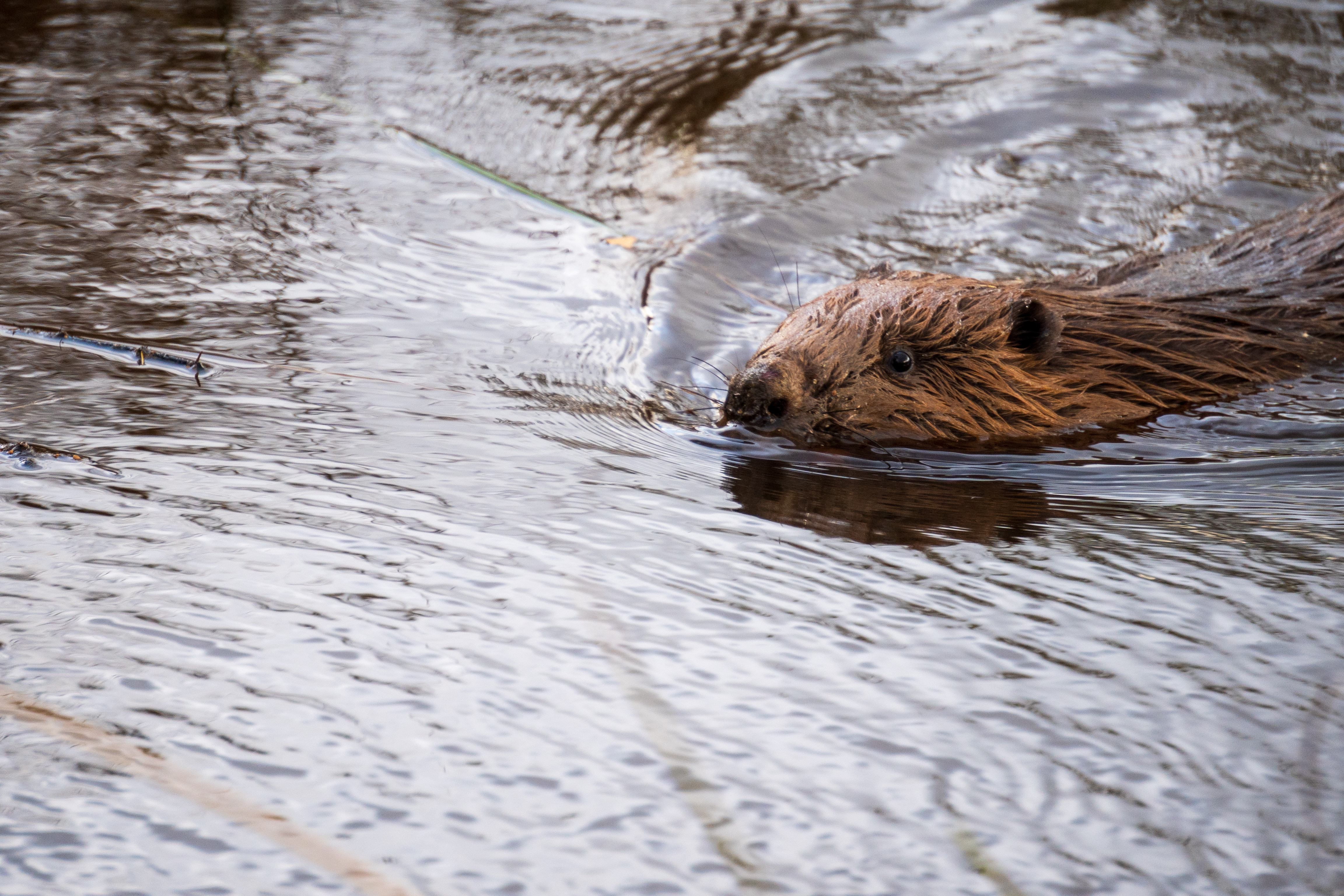
The great news is that we now have 18 kits in the National Park – up from the 16 we reported back in June. Two families which had originally been observed with two kits each in fact had three. I actually let out a squeal of delight when I spotted the extra kits on the live-streaming camera footage! Beaver kits usually take a few months to emerge from the lodge and they don’t always come out at the same time, so it’s very handy to have technology up our sleeve to keep an eye on things even when we’re not physically around.
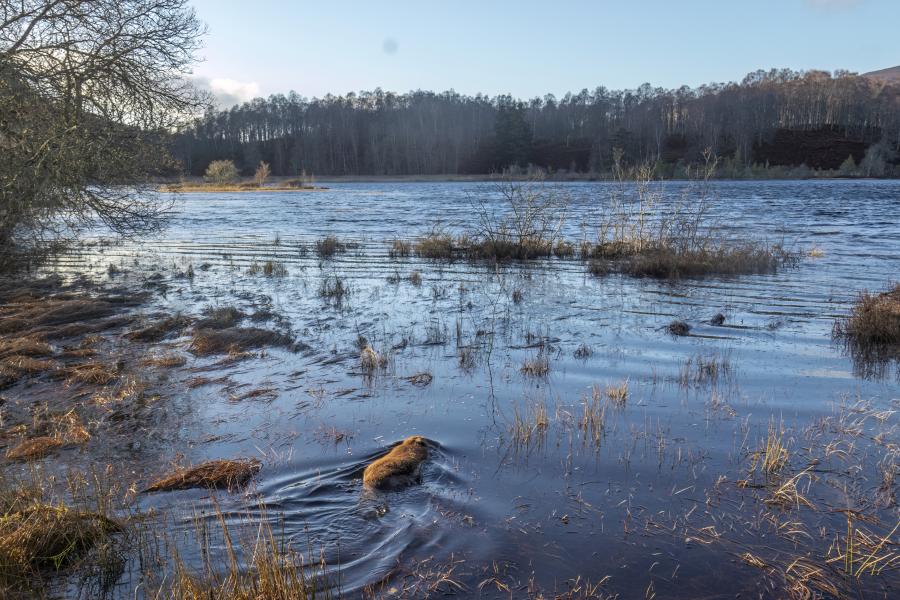
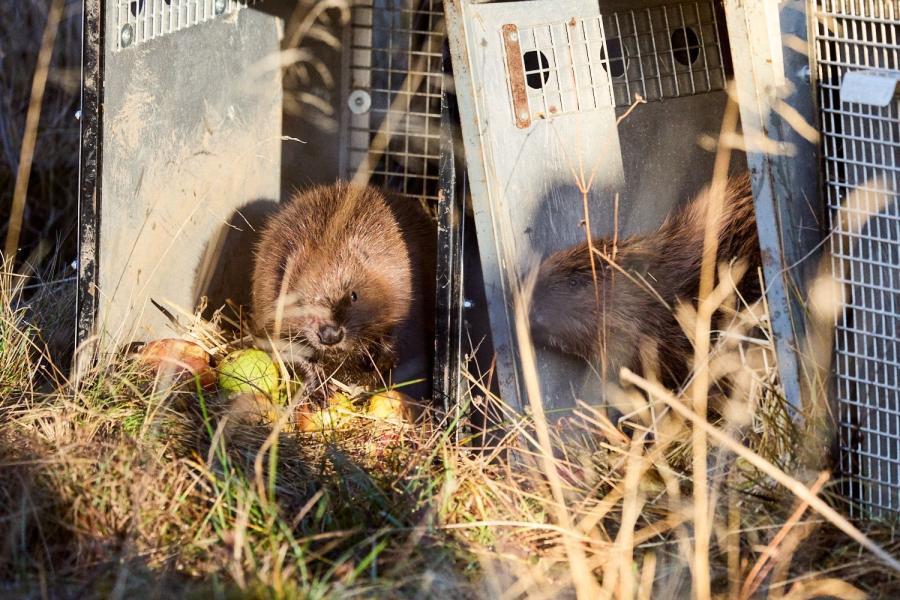
With the final release of the year taking place this month, we now have a total of 57 beavers in the upper Spey catchment and one down at Garmouth. In line with our original licence from NatureScot the latest release took place at a location where beavers were already present, but where there was space for an additional family to make their home.
Over the next few months, we’ll be reviewing all our webcam and camera trap footage and reporting on our monitoring work. We’ll also be watching the new arrivals to ensure they have enough food to get them established and keeping a weekly check on the other sites.
A key task for early next year will be exploring release sites for the final four pairs or families we are permitted to release. We’ll keep you updated on our progress in future editions of this blog.
Nature’s engineers
We often use the phrase ‘nature’s engineers’ when we're talking about beavers and this summer they’ve been demonstrating why they deserve this description, building some amazing new dams. The ability of these dams to store water is quite staggering and just a small structure can have a very big impact. During the extremely dry summer of severe water shortages, we saw them create mini reservoirs, allowing vital wetland habitats to remain wet and keeping private water supplies flowing.
Another thing beavers are very good at is tree felling, which is something they do as they start to fatten up for the winter. Beavers eat the bark of the trees they fell and much of this nutrition is stored as fat in their tails. You can recognise a healthy beaver by the rounded cross-section to its tail: by the end of a hard winter, the bones start to form a visible central ridge as all the fat stores are used up.
Aspen impacts
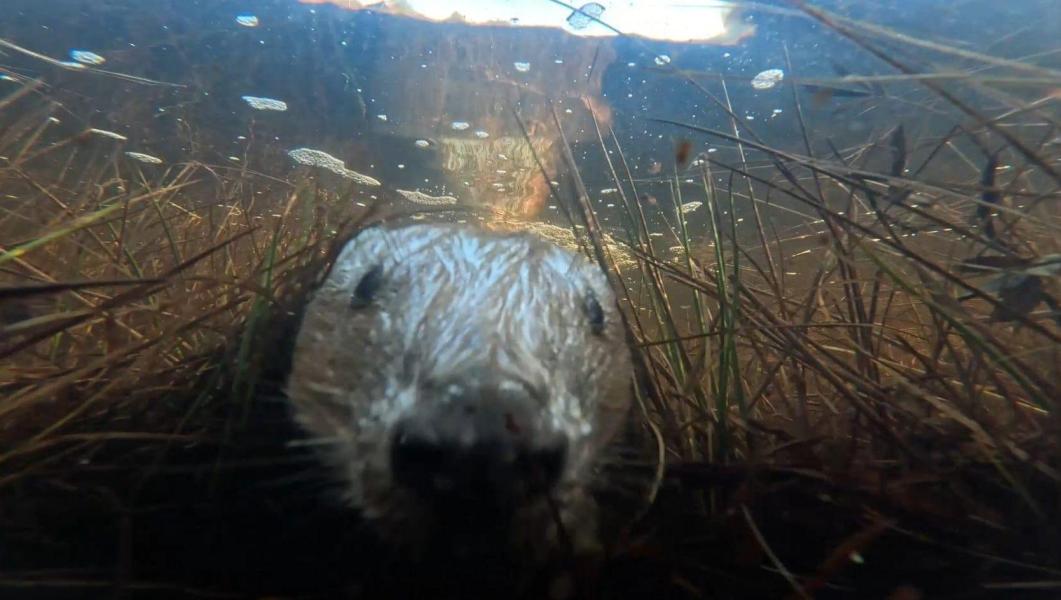
Tree felling can have an impact on other species too, so we need to keep a close eye on their activity and react quickly to mitigate where required. On one site we have thousands of aspen trees, but only 117 (yes, we did count them!) are located beside the favourite feeding area of the beavers. These aspen host an important species of lichen, and we met with the landowner and lichen experts to discuss how best to manage beaver feeding in this area. The result is that we have now protected 12 trees from the beavers to allow the lichen to grow.
One positive outcome of the felled aspen is that its bark is ideally suited to the aspen hoverfly, and its deadwood is a key habitat for many other species. Even the bark-stripped twigs in the water are providing a habitat that has not been seen in the Cairngorms for hundreds of years, one which benefits some of our rarest invertebrates. Managing these sites is always a compromise, but we believe that beavers doing beavery things will be good for a great many species.
One of the things we are really interested in looking at next spring is whether the shock of being gnawed by beavers will cause the aspen to flower. Aspen do not flower very often in Scotland and usually reproduce with underground suckers but, when they do, they can pollinate and produce seeds for the next generation, enhancing their genetic diversity.
We will, of course, keep you updated with all the latest beaver news on social media, so make sure and follow us on Facebook and Instagram for the latest updates. I hope you have a lovely festive season when it comes!

More news and views
-
The King visits Lochan Uaine
-
Conference puts national spotlight on conservation in Cairngorms
-
LDP Evidence Report agreed by Scottish Government
-
Park Authority welcomes Ministerial Statement on wildfires
-
Communities shift up a gear with cycle hub funding awards
-
Pioneering £1 million fund opens for applications
-
Park Authority Planning Committee news
-
Wake-up call on wildfires.