CNPA considers climate emergency as snow cover report is published
CNPA considers climate emergency as snow cover report is published
Biodiversity loss, disruption to water supplies and flooding are just some of the global challenges that are likely to be caused by rising temperatures – and the Cairngorms National Park is not immune. However, the Park is well placed to help tackle the climate emergency through nature based solutions according to a paper going before the Cairngorms National Park Authority (CNPA) board on Friday (6th December).
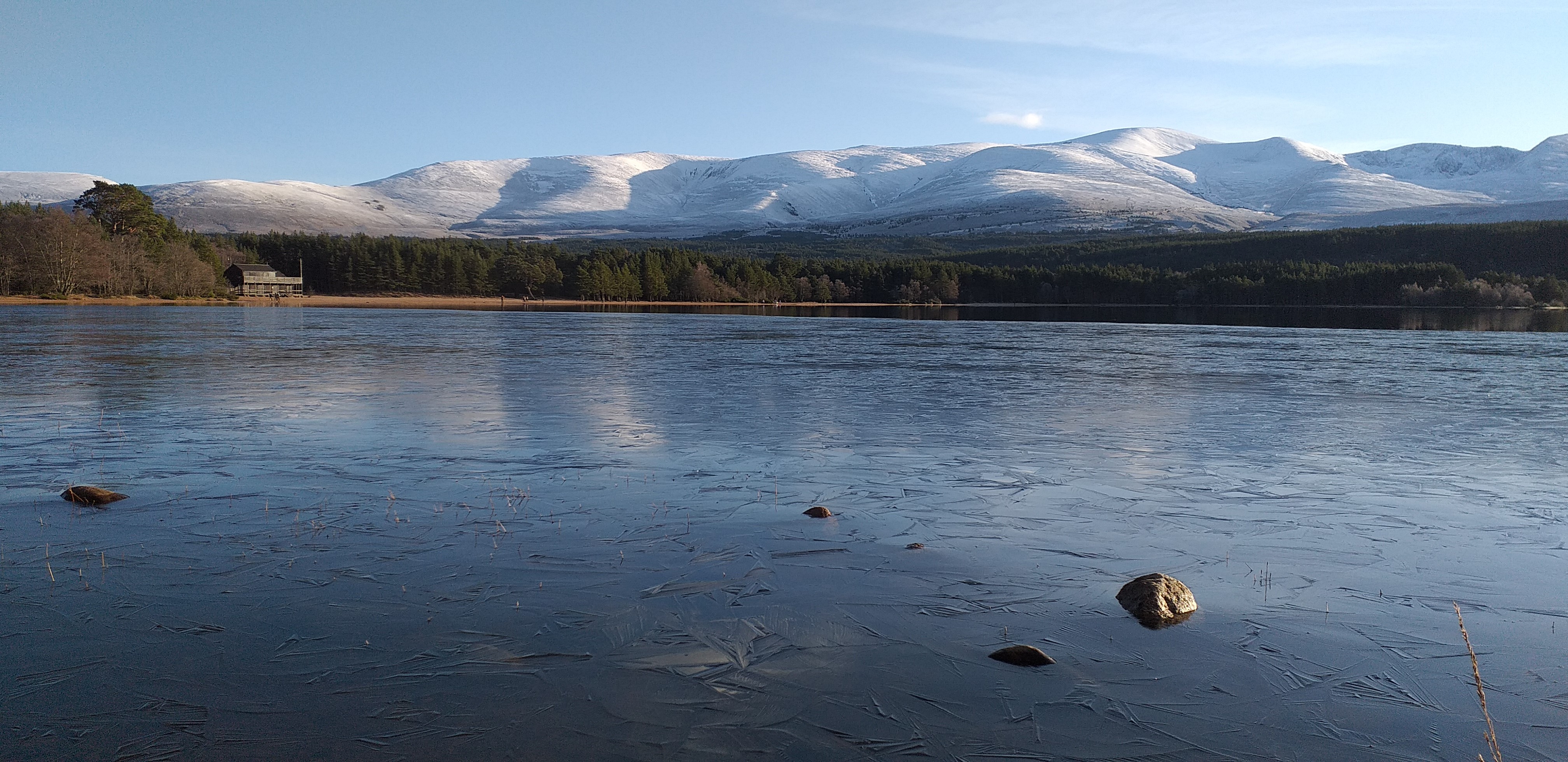
Furthermore, a new study looking at temperature trends and snow cover in the Park is published today (Monday 2 December) which models possible future changes to snow cover caused by climate change on the sub-arctic high mountains of the Cairngorms National Park.
Chief Executive of the CNPA, Grant Moir will present the paper titled ‘Net Zero with Nature’ to the board on Friday, outlining where the organisation and the Park should be focusing efforts to contribute to the Scottish Government’s 2045 net zero greenhouse gas emissions target. At the same time, board members will consider the ‘Snow Cover and Climate Change in the Cairngorms National Park’ report.
Commissioned by the CNPA and ClimateXChange – Scotland’s centre of expertise connecting climate change research and policy – the snow cover report suggests that in the next ten years, snow cover patterns may remain the same as the previous ten years, but from 2030 onwards there is likely to be a substantial decline in the number of days of snow cover.
The study has been carried out by researchers at the James Hutton Institute and Scotland’s Rural College, using historic temperature and precipitation data going back 100 years with observed snow cover days from 1969 – 2005 to identify how temperature affects snow. They then used data modelling and climate projections from the Met Office to identify some possible future trends for snow cover in the Cairngorms National Park.
“It is crucial that the assessment of snow cover is considered as part of the wider work on climate change with implications for hydrology, biodiversity as well as the local economy,” said Grant Moir.
“There is much good work already being done in the Park from woodland expansion and peatland restoration, to new infrastructure for active travel and renewable energy development, but this needs to be scaled up to help tackle the climate emergency.
“As well as looking at what can be done with partners across the Park, we are taking our corporate responsibilities very seriously with various changes to how we operate, such as switching to more environmentally friendly vehicles and other changes to internal policies which will promote a reduction in emissions.”
Global warming caused by increasing greenhouse gas emissions is impacting on snow cover as well as biodiversity in mountain areas across the world, and while there have been significant snow events in recent years, the overall trend is declining snow cover – this is predicted to continue and accelerate in the future.
Decreases in snow cover will have important consequences for species composition and distribution, potentially resulting in biodiversity loss. The amount and temperature of ground water, streams and rivers, and reduced river flows in winter will impact local water supplies and there is the potential for increased flooding due to rapid snow melt.
The snow cover report’s modelling of future trends is using the only daily climate projections available – it is a scenario based on continued high global emissions. There are substantial uncertainties dependent on what action is taken to reduce greenhouse gas emissions, and how air flow over the UK – for example the location of the jet stream – is affected by global scale climate.
Mike Rivington of the James Hutton Institute explained: “There are many weather factors that determine when, where and how much snow falls, and what happens to it once it’s on the ground, for example how windy it is. This report only looks at what rising temperatures may mean for the number of days with snow on the ground in the Cairngorms National Park. If we are successful in reducing emissions globally, we may moderate the impact.
“The historical snow cover data for the Park is incomplete, limiting analysis. Combined with daily climate projections available only for one emissions scenario, we need daily projections to look at the number of snow cover days in the future, this report is only a first step, and not a blueprint.”
Grant Moir added: “The Cairngorms National Park has significant natural assets and we have the opportunity to set out an ambitious vision and programme of action to lead the way to a low carbon future that supports a nature-rich Park, benefitting resilient local communities.
“I look forward to the board discussions around climate change and our proposed next steps at the meeting on Friday, where we will also consider what further research is required. Tackling climate change is set to be at the core of our next National Park Partnership Plan.”
To read the board paper ‘Net Zero with Nature’ please click here. To read ‘Snow Cover and Climate Change in the Cairngorms National Park’ please click here. The CNPA is hosting a Climate Conference in Aviemore on 9 March 2020, details of this event will be available in the New Year.
ENDS.
Alert
Latest from the National Park
Glenmore and Strath Nethy wildfire update - 27 July at 19:15
An update on the Glenmore and Strath Nethy wildfire from 27 July.
Glenmore and Strath Nethy wildfire update - 26 July at 8pm
Grant Moir, Chief Executive of the Park Authority, shares an update from the scene of the wildfire in Nethy Bridge.
Glenmore and Strath Nethy wildfire update - 25 July at 11am
A brief update on the Glenmore and Strath Nethy wildfire
Relevant alerts
-
There is an ongoing wildfire situation at Glenmore within the Cairngorms National Park. Click here for all the latest. We would encourage members of the public to follow current guidance and be aware that the situation may change.
Due to the this wildfire incident, the following paths and routes are closed:
- All the paths around Loch Morlich, Glenmore and Badaguish are closed.
- The Ryvoan pass is closed, this includes all access to the Green Lochan (Lochan Uaine).
- Routes providing access to Cairngorm Mountain, the Northern Corries, Meall A’Bhuachaille, Strath Nethy and Bynack more should be avoided.
- The Abernethy Forest area to the south of Forest Lodge and towards Ryvoan bothy is closed.