
Keeping capercaillie safe this spring: How you can help
Keeping capercaillie safe this spring: How you can help
By Jocasta Mann, Cairngorms Capercaillie Project
Being outdoors in spring is an extra special experience after a long Scottish Highland winter, especially in the Cairngorms National Park, a home to some of the UK’s most impressive – and rare – wildlife.
This past year, many more of us have been rediscovering the benefits of fresh air, beautiful views and sightings of wildlife we might not previously have seen. Late 2020 saw a post-lockdown surge in visitors to the Cairngorms (and it’s easy to see why); Locals, too, have been taking greater advantage of the amazing trails on their doorstep. So what does this increased activity mean for the Park’s more ‘hidden’ residents?
Capercaillie: Our largest ground nesting bird
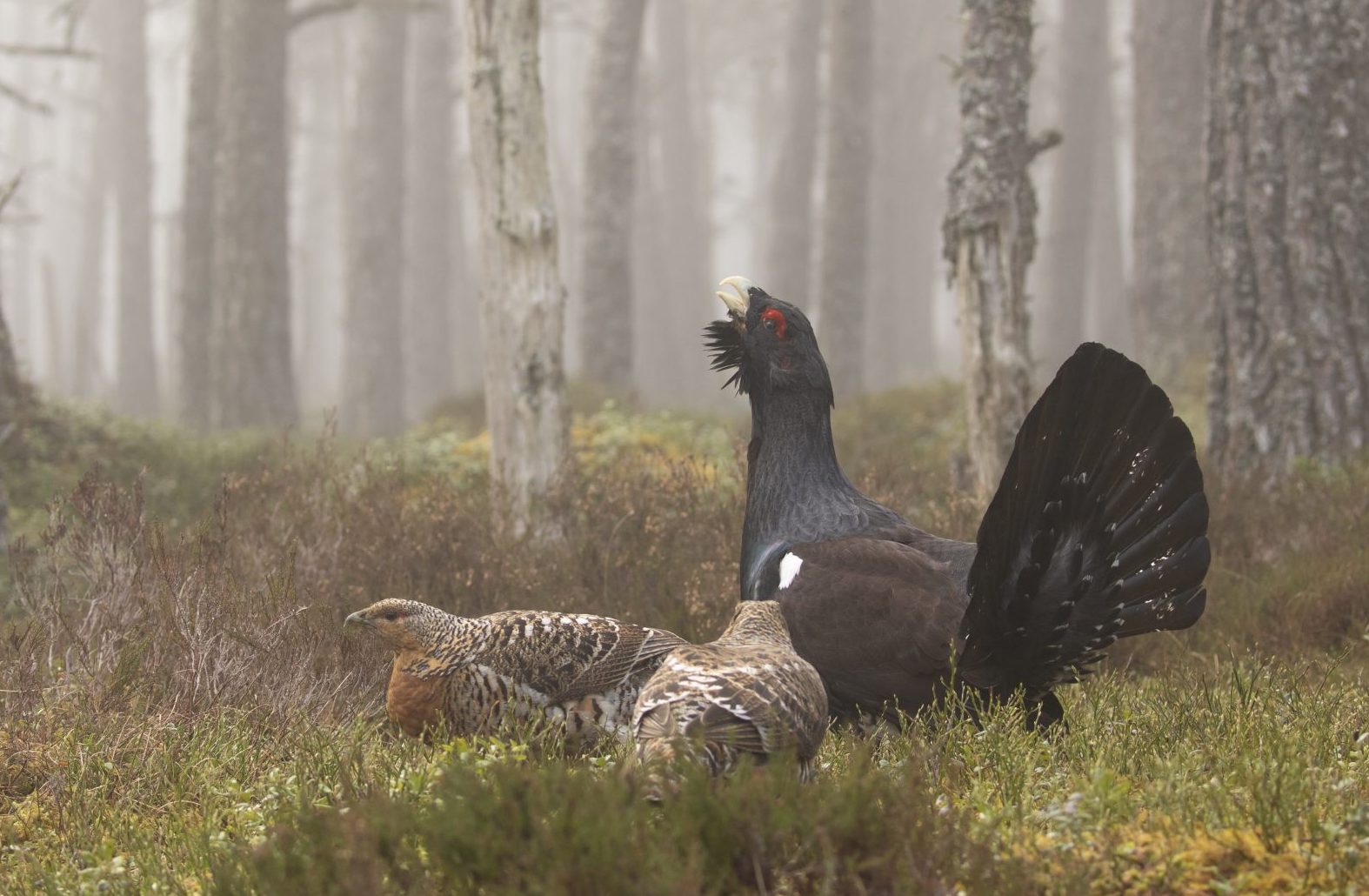
There are a number of ground nesting bird species in the Cairngorms – from the lapwing in wetland areas to dotterel in the mountains – but by far the largest is the turkey-sized capercaillie, dwelling deep in our pine forests. Its Gaelic name, capall-coille, means ‘horse of the forest’ due to its distinctive mating call. Capercaillie were resident in Scotland as early as the last ice age, and it’s easy to picture that, given their remarkable appearance.
Around 85% of the small remaining UK capercaillie population now live in the Cairngorms National Park. This makes us extremely lucky – but it also means we must take extra care to protect this striking bird, as it is again threatened with extinction and is especially sensitive to disturbance.
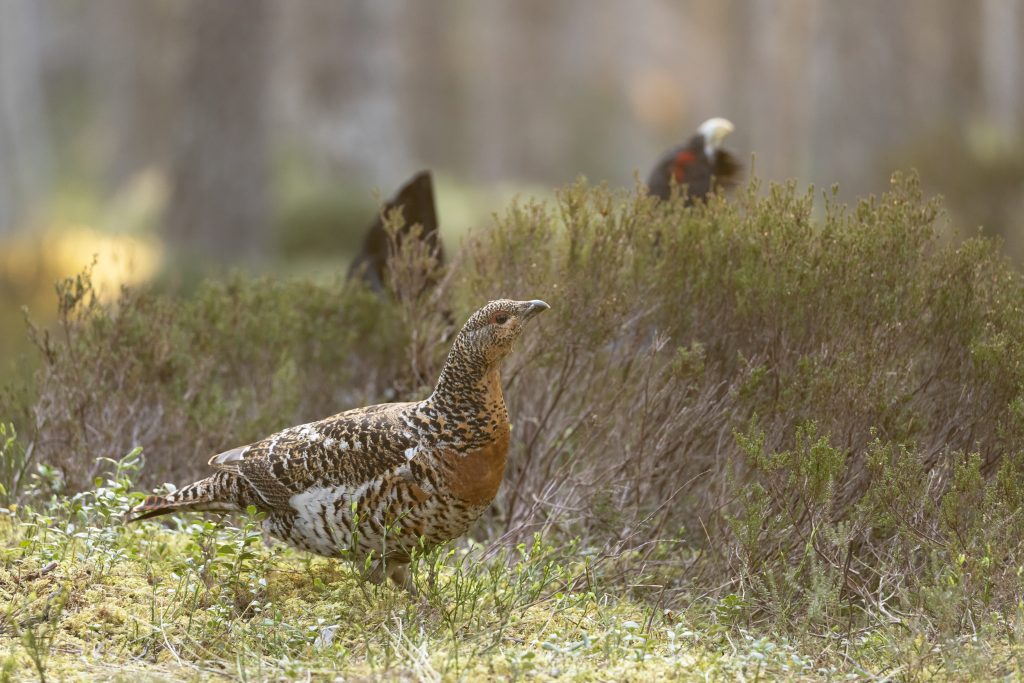
- Capercaillie (Tetrao urogallus) female at lek in forest with male in background
Why is spring such an important time of year for capercaillie?
Each spring, capercaillie gather in specific areas of native pinewood to mate. Males will perform an extraordinary courtship display called a lek (old Norse for ‘dance’), strutting about with their heads high and tails fanned, making strangely un-bird-like wheezing and popping and clattering noises.
If undisturbed, a lek site will host generations of these displays. But if it is disturbed, especially during the very short window where female capercaillie are in season, they might not breed at all that year. Since they’re already incredibly rare in Scotland, each year really does count.
Capercaillie also prefer very specific conditions due to their diet and nesting needs, which leaves them only a few options for other lek sites if they abandon their usual one. (Naturally, being rare and choosy isn’t easy).

The big threats
Like all ground nesting birds, capercaillie need peace and safety while rearing their chicks. If disturbed they might abandon their lek, nest or young and these scattered families may not regroup – chicks sadly will not survive without their mothers.
Causes of disturbance to capercaillie include visitation by humans, intentionally or not, and accidental encounters with dogs who range off-path.
Capercaillie are a protected species – meaning it’s a legal offence to intentionally or recklessly disturb them while they’re lekking, nesting or rearing young. That’s why it’s so important to familiarise ourselves with the Scottish Outdoor Access Code, so that we know we’re always helping to protect the environment we love.
How we can help our ground nesting birds thrive
We all love getting out and enjoying the amazing landscapes and habitats of the Cairngorms National Park, which we share with many special rare species. By following these simple steps during capercaillie breeding season we can help ensure they survive and thrive:
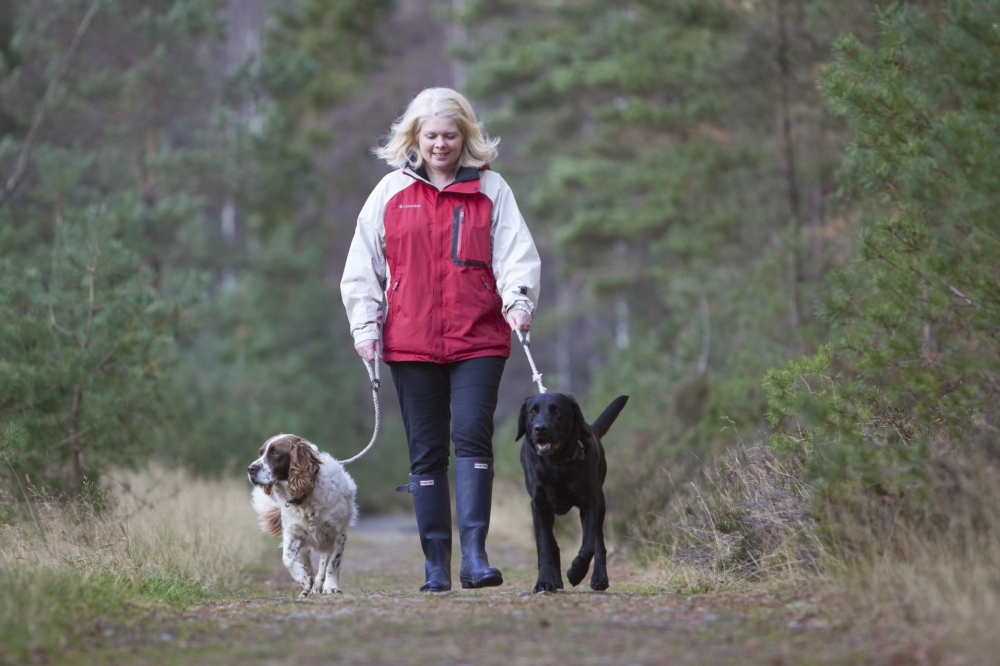 Keep your dog on a lead
Going for a walk with the dog keeps us moving and our canine friends happy – but please be mindful that although your dog might be well behaved and friendly to humans, a ground nesting bird like a capercaillie sees them as a threat and a predator. Between April-mid August, when in pine forests please keep your dog on a lead when requested by signage. You can also exercise your dog off-lead in dedicated dog exercise areas, like the area beside Loch an Eilein.
Walk on paths
The Cairngorms National Park boasts a wealth of beautiful trails, and one way we can help capercaillie is by sticking to paths in capercaillie forests from April to August. If we stray off into deep pinewood during that time, it’s possible we will have unknowingly crossed a capercaillie lek site or a nesting area. You can discover more trails and paths in the Cairngorms on our website.
Trust us, we’d love to spot a capercaillie on our daily walks. But for now if we leave them in peace and give them the space they need to flourish, perhaps one day in the future that might just become a reality!
Check out the Cairngorms Capercaillie Project to find out more about this remarkable bird, and discover the work being carried out to conserve it as well as ways you can get involved.
Latest from the National Park
Come and meet us!
The Park Authority team will be out and about at events this autumn and winter
Draft Partnership Plan consultation goes live
People living and working in or visiting the National Park asked for feedback on the next Partnership Plan.
Time well spent as we stop to blether about farm realities
The latest column from our Agricultural Adviser - first published in the Press and Journal