Park Talk: COP26 reflections
Park Talk: COP26 reflections
Grant Moir, Chief Executive, CNPA
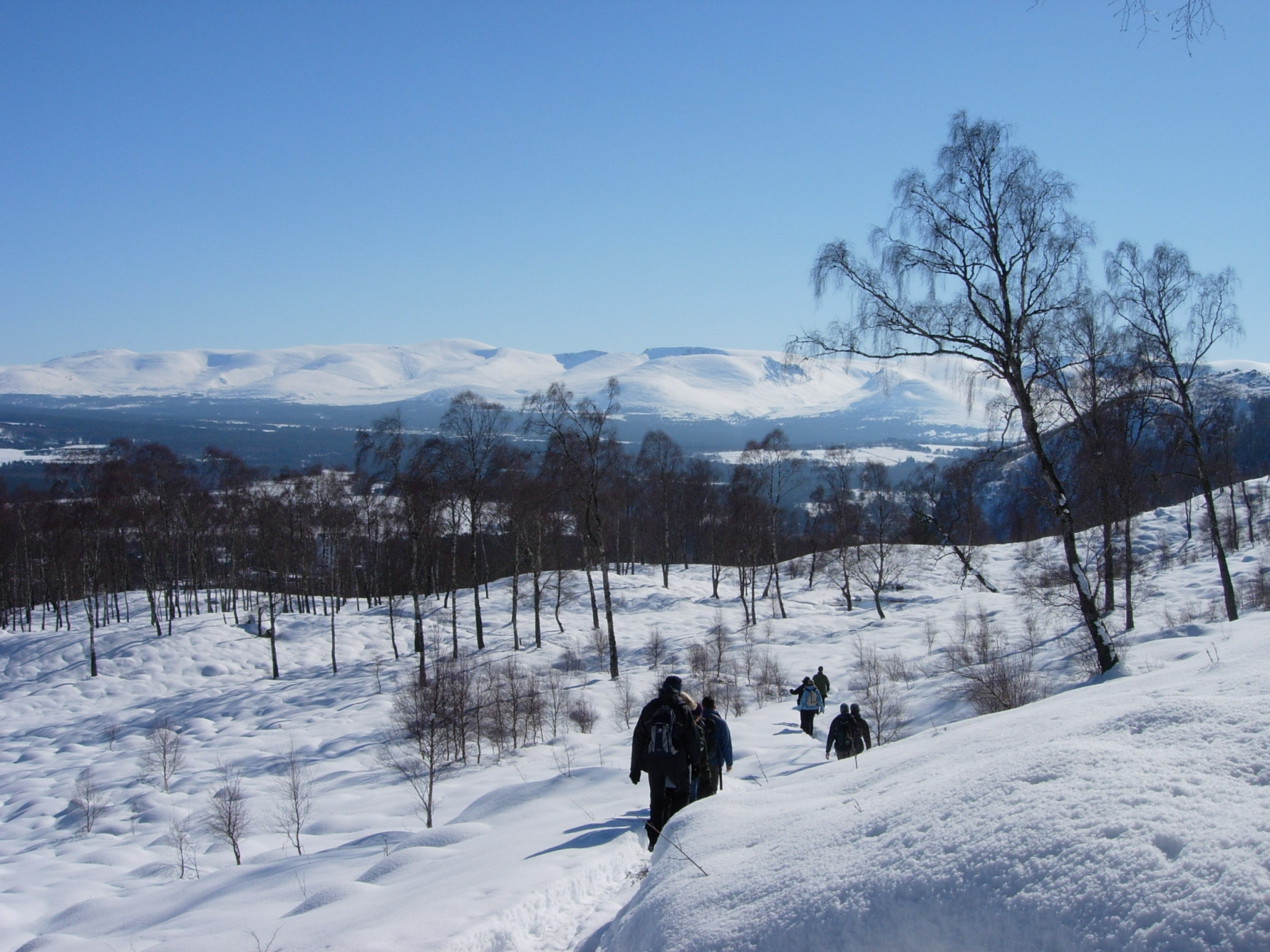
Going to Glasgow for COP26 was in equal parts inspiring, crazy and worrying. I was in the blue zone speaking at the Cryosphere Pavilion on the future of snow in the Cairngorms and the implications for the National Park. The next day I spoke about using private finance to fund nature-based solutions, including things like peatland restoration, woodland expansion or river restoration as part of the work of UK National Parks.
It was great to see how these events work. There were thousands of people walking purposefully (all in masks) and lots of great conversations and discussions. The glaciologist that I got talking with gave a presentation that really did cut me to the quick. Even if we meet our commitments to hold temperatures to 1.5oC above pre-industrial levels, 60% of glacier mass will be lost and 15cm of sea level rise is inevitable. And that does not take into account the predicted melting from Antarctica and Greenland. The scenarios for above 2oC are terrifying.
So what did I take away from the conference?
Firstly, it is not too late. However, the changes that we have to make are structural and will affect us all. It is not a case of recycling and turning the thermostat down (good things though they are). It is about fundamentally changing transport, energy, housing and land use. The year 2030 is fast becoming the critical date by which we must have made significant progress.
Secondly, it is about a just transition. It must be fair for those countries, mainly in the global south, that are most affected by climate change but have emitted the least carbon. It must also be fair within countries, so that the burden does not fall on those that can least afford a Tesla or a ground source heat pump.
Thirdly, there can be no more debates. We have to cut emissions if we are going to pass on a safe planet to our children and grandchildren. It is not going to be easy, but doing this work will create opportunities for jobs in a future green economy. For instance, if we are going to restore all the degraded peatland in Scotland, we will need thousands of people working on this for years to come.
I thought about making this article less stark and talking about all the positive things that are happening, but we have to be honest and say that we need to do much more.
The Cairngorms National Park Partnership Plan is out for consultation right now. It represents the most ambitious set of targets we’ve ever compiled but, having been to COP, I’m more convinced than ever that now is the time to step up to the plate as a Park and as a society, to actually reduce our emissions and restore nature.
I realise that as a call to action ‘please send in your views to a consultation’ isn’t up there with ‘save the polar bears’, but we need to hear your views on the key issues that you want to be tackled in the Park. Visit cairngormsviews.co.uk for more information and to take part.
The Cairngorms National Park Authority is committed to tackling the twin climate and nature crisis and all of us within the Park need to work together on these most critical of issues. Our future depends on it.
Alert
Latest from the National Park
Come and meet us!
The Park Authority team will be out and about at events this autumn and winter
Draft Partnership Plan consultation goes live
People living and working in or visiting the National Park asked for feedback on the next Partnership Plan.
Time well spent as we stop to blether about farm realities
The latest column from our Agricultural Adviser - first published in the Press and Journal
Relevant alerts
-
The Cairngorms National Park will experience extremely windy weather as a result of Storm Boelo. This is expected to last until Monday 26 October.
Please take extra care when out and about, #PlanAhead and stay safe.
For up to date details, visit the Met Office website here.