In conversation with Duncan Grant
Why did you come up with the idea of adapting this vehicle for use in tackling wildfires?
The idea of adapting a tracked dumper truck for wildfire response grew from my own experiences at wildfire incidents. Argocats and all-terrain vehicles can reach difficult ground, but the volume of water they can carry is limited, particularly in demanding conditions. Crews need to make repeated journeys to refill, and the nearest water source may be a considerable distance away. When every minute matters, those round trips can affect efforts to bring a fire under control.
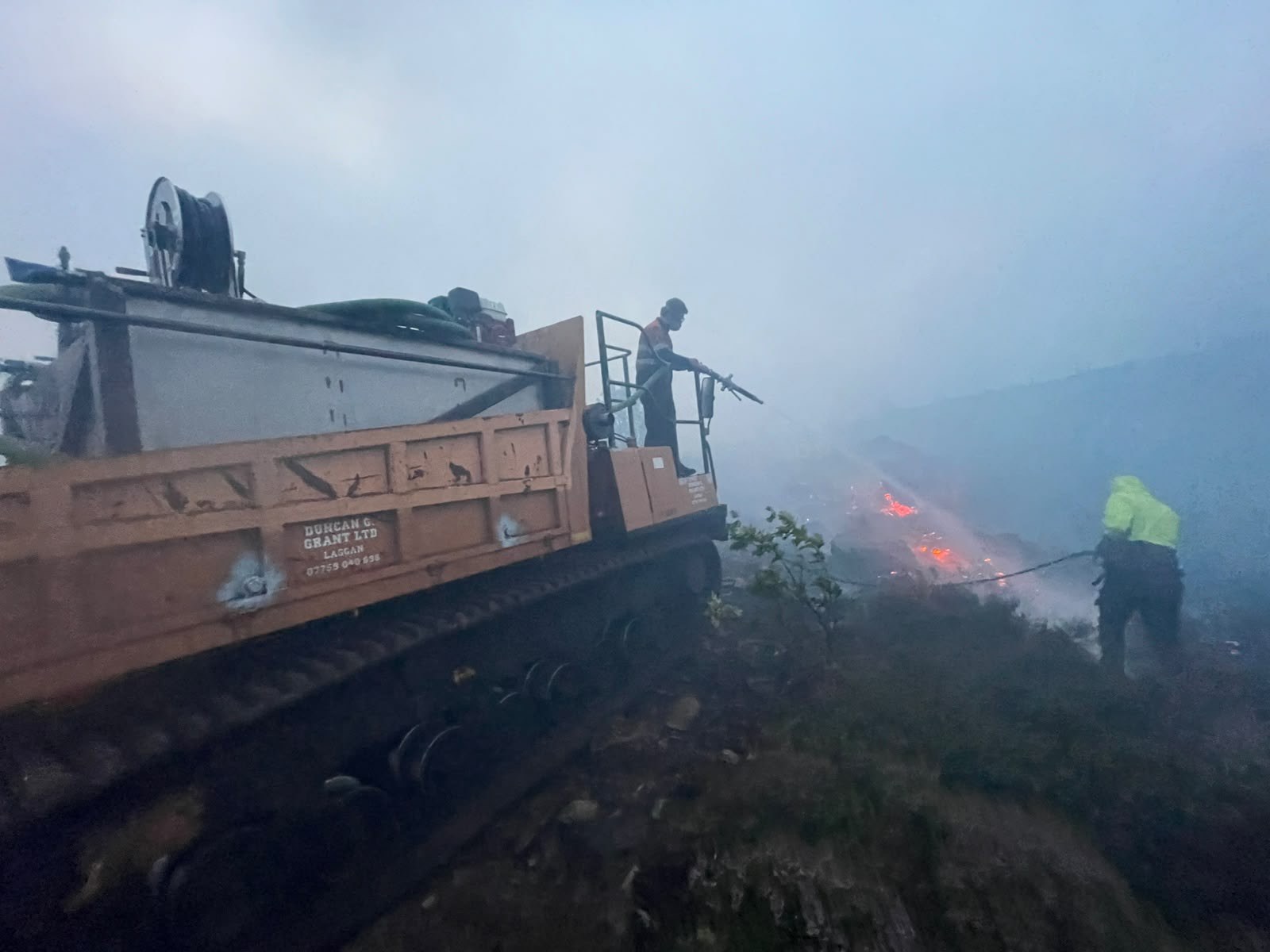
The potential of a different approach became clear to me during the fire at Dava Moor. A Morooka tracked dumper was used as a "mothership", following the Argocats near the fire front and replenishing their water supplies in under five minutes. Without it, the smaller vehicles could face a round trip of up to 90 minutes. Although the system fitted to the dumper was fairly simple, its performance proved the concept and inspired me to go on and develop a purpose-built firefighting unit.
How was the vehicle used in the Glenmore and Strath Nethy wildfire?
Funding from the Cairngorms National Park Authority's Climate Adaptation Fund helped meet part of the project's cost. Working with Evan's Engineering and Fire Fogging Systems Ltd, my team created a system featuring two fogging pumps, twin hose reels, and a high-volume pump for filling and discharging water. At its heart is a bespoke tank for holding 4,200 litres of water - typically ten times the capacity of most ATVs.
We equipped the machine with safety railings and access steps, improved lighting, cameras, and a protective ring of high-pressure jets underneath. These jets can suppress fire around the undercarriage and help safeguard the vehicle in hazardous conditions.
We put the system to work for three weeks at the Glenmore and Strath Nethy fire. Initially, my crews used the twin fogging pumps at the fire front while also transferring water to estate ATVs. During the following two weeks, we tackled flare-ups and back-burning areas. Large volumes of water had to be driven deep into the peat before the surface was flooded using the high-volume pump.
It was very time consuming and hard work for the team. It was a credit to all involved that we contained the area that we were tasked with.
What is the most prominent memory you have of the Glenmore and Strath Nethy wildfire?
It was a test of willpower and an emotional rollercoaster as there were many areas that we thought we had extinguished but within several hours would reignite and we would have to go back in. At the time, it felt like it would never come to an end, but slowly the tide turned in our favour and the battle was won!
We worked closely with other contractors, estate staff, local farmers, Bright Sparks Burning Techniques, SFRS, FLS and RSPB. Without this collaborative effort, the fire would never have been contained. Despite the huge environmental loss, we need to take the positive from the event - that the collaborative response locally was amazing.

More news and views
-
Boost for communities in the National Park with new Cairngorms 2030 fund
-
Bringing beavers back to the Cairngorms wins at Nature of Scotland Awards
-
Meet the Cairngorms 2030 Communities Fund forum
-
The right nibbler in the right place
-
Cairngorm Mountain toboggan track approved
-
Creative expression and iconic shots
-
Cairngorms Creative Collective goes global
-
Bike bus network expands across the Cairngorms National Park