
Shetland learnings
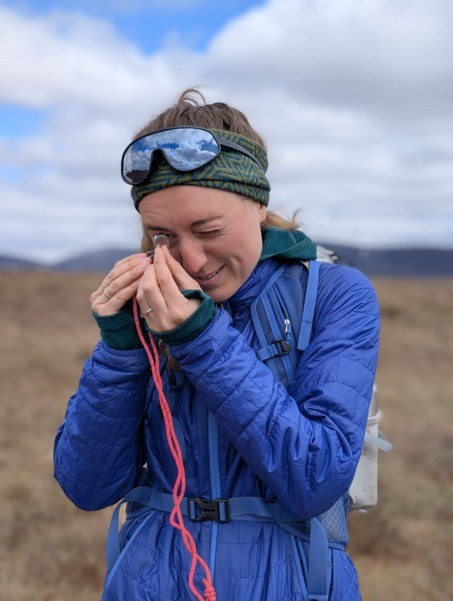
It was a pivotal step for me in my transition to a different career, moving from teaching to peatland restoration via mountain guiding. I started out as a Peatland ACTION trainee with Shetland Amenity Trust back in November and when my training came to an end, I was lucky enough to move back home and immediately get a new job as a Peatland ACTION Project Officer with the Cairngorms National Park Authority. It was undoubtedly my time in Shetland that prepared me for this new and exciting adventure!
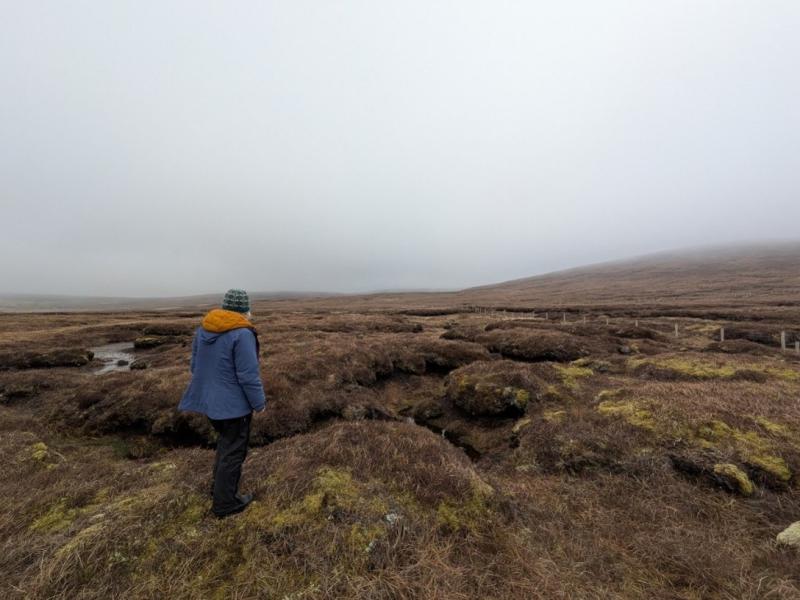
Shetland prerestoration site visit with Sue White
Shetland’s peatland is among the most degraded in the country, with an estimated 77% needing restoration. It’s believed to be Shetland’s biggest carbon emitter: bigger than all the islands’ transport combined, bigger than the Sullom Voe oil terminal (a major European oil and gas facility), bigger than anything! There’s a lot to be restored, and a lot to be learned for a trainee.
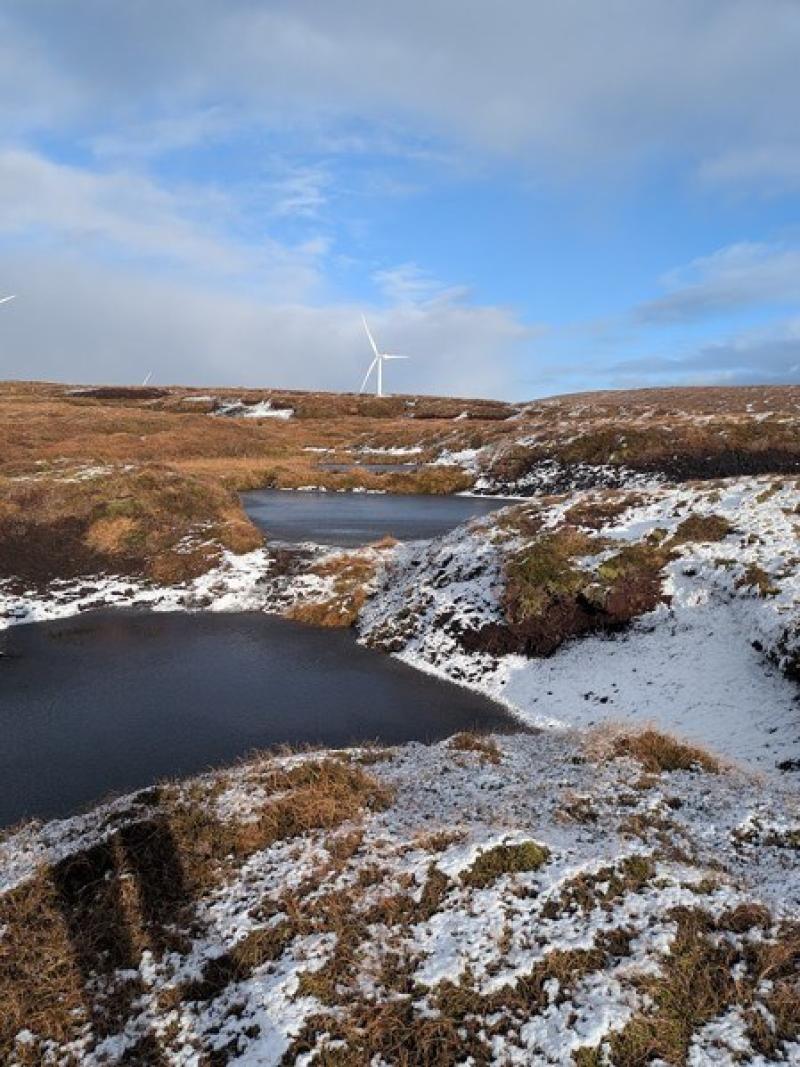
Post restoration site visit in Shetland showing successful peat dams (spot the windmills harvesting the wind that is making peatland restoration so challenging!)
My line manager Sue White, and colleague Ash-Lynn Tavener took me to a great variety of previously restored sites, active projects and potential future projects. I learned that what sets Shetland apart from other areas of peatland is its exposure to extreme wind and rain, creating relentless erosion which is then combined with a short growing cycle. Nowhere else in the UK is the growing cycle so short, and nowhere else is hammered as much by wind and rain as Shetland – except perhaps the Cairngorms.
Similarities and differences
I was delighted that the skills and knowledge I gained from my time in Shetland was seen as a great asset when I applied for the job in the National Park. My new team values the way I can apply what I learned there to what I see here in the Cairngorms; there are many parallels. Where Shetland gets wind and water exposure due to being on its own in the middle of the North Atlantic Ocean, the Cairngorms get plenty of wind and water exposure from being so high up. Whilst the growing season in Shetland is short due to the late arrival of spring, and the reduced period of longer sunnier days, the Cairngorms also have a short growing cycle from being so exposed and relatively far north. In Shetland an imbalance in sheep numbers can impact the success of restoration, in the Cairngorms it’s mainly deer that can affect project success.
Cairngorms start
On my first day for the Cairngorms, I was lucky enough to visit a previously restored site in Atholl. As this was a trial area to monitor deer impacts on restored erosion features, the presence of deer was immediately clear; we saw many antlers and some deer wallows. Although the whole site visit was at a higher altitude than Shetland’s highest point, the erosion features looked very similar. We saw small and big gullies, and hags, all in similar conditions to some of the Shetland sites. The same techniques had been used: mainly peat dams and baffles, with turves borrowed from nearby donor sites. A technique that was new to me was chequerboard harvesting, where turves were borrowed from the bottom of the gully at intervals and made to look like a chess board with squares of vegetation and bare peat.
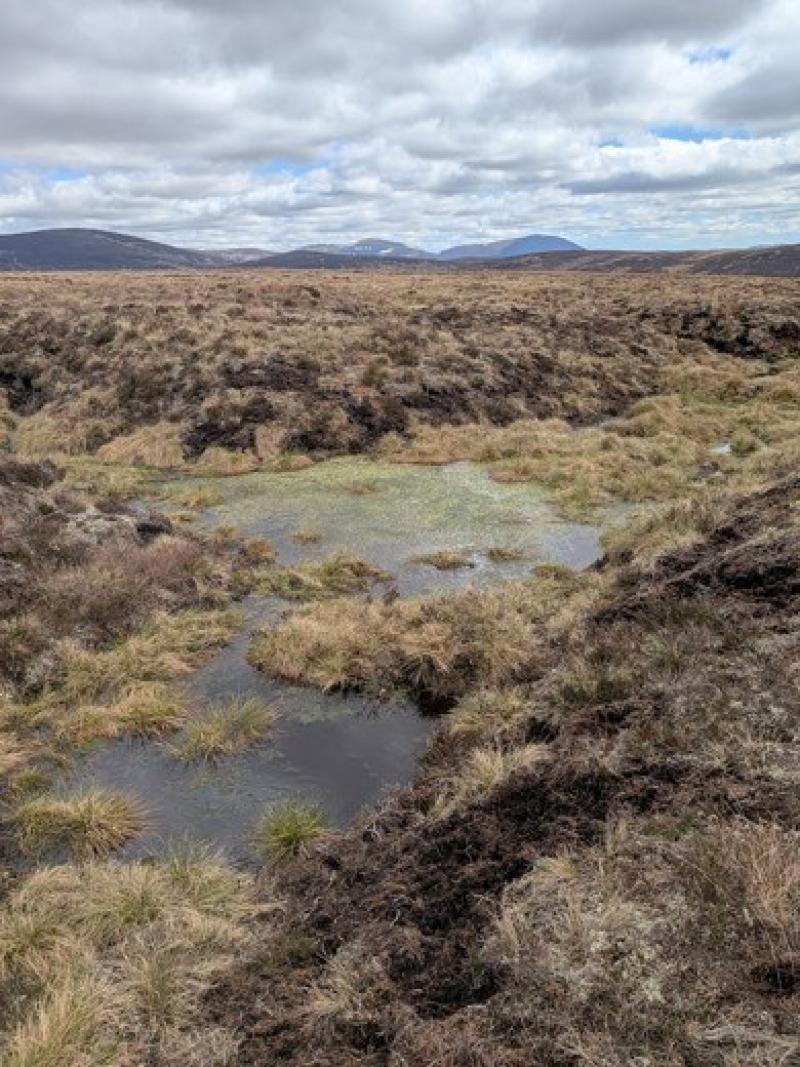
Successful baffles at Atholl slowing the flow of water. In the foreground some erosion from recent deer movements can be seen.
My next site visit was in a pre-restoration area in Glen Feshie on WildLand Cairngorms terrain. This site was even higher and although it was extremely exposed, we saw vegetation starting to take hold, mainly due to the lack of deer and sheep in the area. Peatland restoration here would probably address the hydrology with a light touch and aide the recovery of vegetation perhaps with some plug planting, seeding, and / or the application of geotextiles or brash.
It’s lovely to be able to look at the Cairngorms through the lens I developed in Shetland, compare techniques, and chat about what would and wouldn’t work. I’m grateful for the training opportunity, the amazing mentoring I received in Shetland, and how it’s led to a brilliant job I couldn’t have imagined successfully obtaining a year ago.
This project is delivered through Peatland ACTION, and is also part of the Cairngorms National Park Authority’s Cairngorms 2030 programme, made possible by The National Lottery Heritage Fund with thanks to National Lottery players

More news and views
-
Time well spent as we stop to blether about farm realities
-
Go ahead for Slugain Burn project
-
Restoring high altitude peatlands
-
The King visits Lochan Uaine
-
Conference puts national spotlight on conservation in Cairngorms
-
LDP Evidence Report agreed by Scottish Government
-
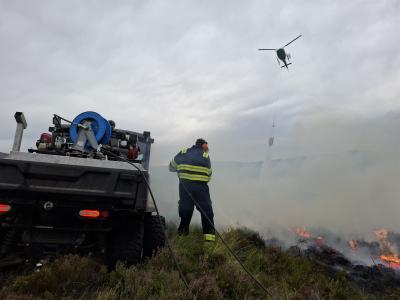
Park Authority welcomes Ministerial Statement on wildfires
-
Communities shift up a gear with cycle hub funding awards