
“Warts and all”
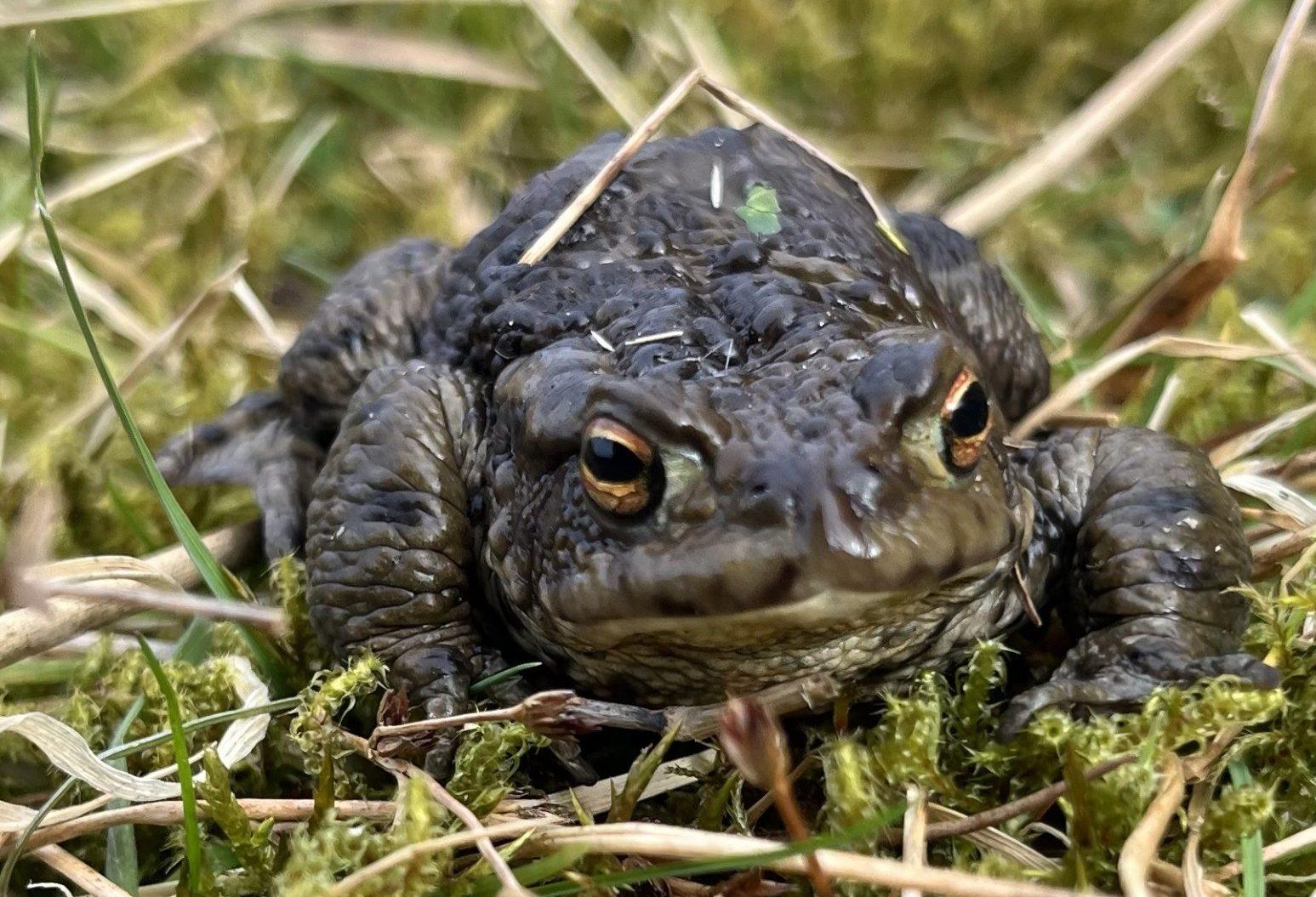
It always amazes me how they travel every spring without fail from a wooded hillside where they overwinter, through a stock fence with chicken wire (presumably they squeeze through?!), across a road, over a stone wall, around a large field, then finally swim across a burn. Toads are incredibly faithful to ancestral breeding ponds and will stop at nothing to get to their pond, regardless of the obstacles.
We are most likely to encounter toads in the evenings when they are migrating - or if we happen across one in the garden which has taken up residence in a compost heap or log pile. They prefer to breed in much deeper ponds than frogs, which will happily spawn in shallow puddles, so we are much less likely to find their spawn.
Females can lay an impressive 1,500 eggs each spring, which hatch after 2-4 weeks into tadpoles. It then takes just 16 weeks for tadpoles to change into toadlets and leave their pond for the big wide world, where they must avoid predation from a wide variety of birds and mammals. Luckily for toads, their warty skin gives them the edge and they have a gland on their back that produces a nasty tasting toxin. In Gaelic: Chan eil losgann-dubh blasta “a toad is not tasty”!
Just to clear up an old myth, touching a toad will not give you warts.
If you have a resident toad in your garden, then you are in luck, for they are well known for devouring slugs and snails. Toads live away from ponds for most of the year and can tolerate much drier habitats that frogs. They often live in one place for long periods and will have a favourite cool, shady spot that they hide in during the day. Migration takes place again in autumn to find overwintering sites. They can spend the winter buried in deep mud, inside compost heaps or under piles of deadwood where they are safe from frost.
If you are blessed with a “garden toad” – be sure to take care of this special guest, as toads are exceptionally long-lived. Most wild toads are thought to live 10-12 years but in captivity (or where conditions are very stable, such as a wildlife friendly garden) they can live far longer. A study by York University found that a toad living in a garden in Hull was nearly 40 years old!
Draining of ponds and loss of migrating routes has lead to a national decline in toads, frogs and newts. At home, creating a garden pond and gardening for wildlife generally will help all our amphibians. You can learn more about this at www.froglife.org and via the Amphibian and Reptile Conservation website: www.arc-trust.org

More news and views
-
Come and meet us!

-
Draft Partnership Plan consultation goes live

-
Time well spent as we stop to blether about farm realities

-
Go ahead for Slugain Burn project
-
Restoring high altitude peatlands
-
The King visits Lochan Uaine
-
Conference puts national spotlight on conservation in Cairngorms

-
LDP Evidence Report agreed by Scottish Government