Restoring high altitude peatlands
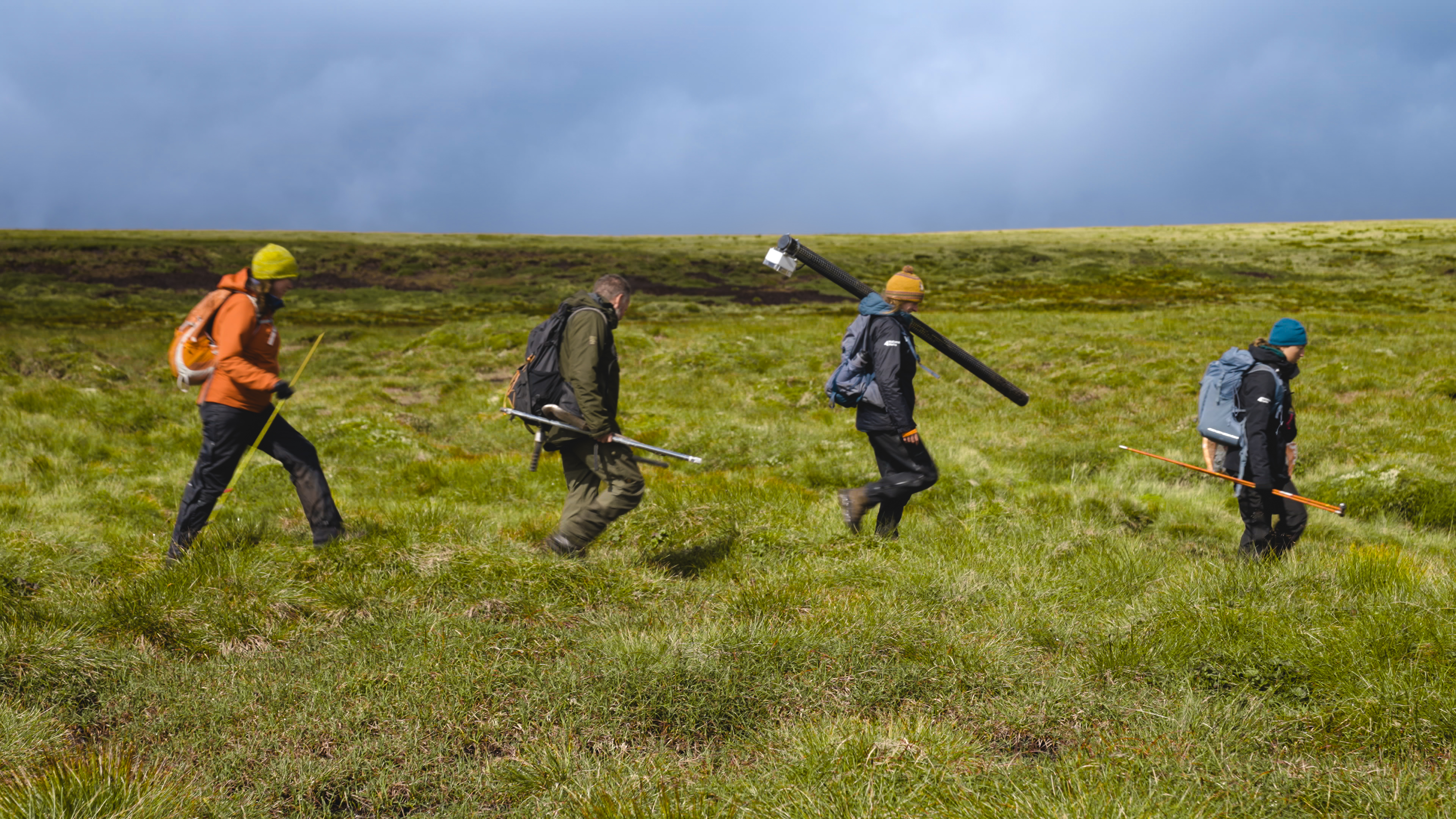
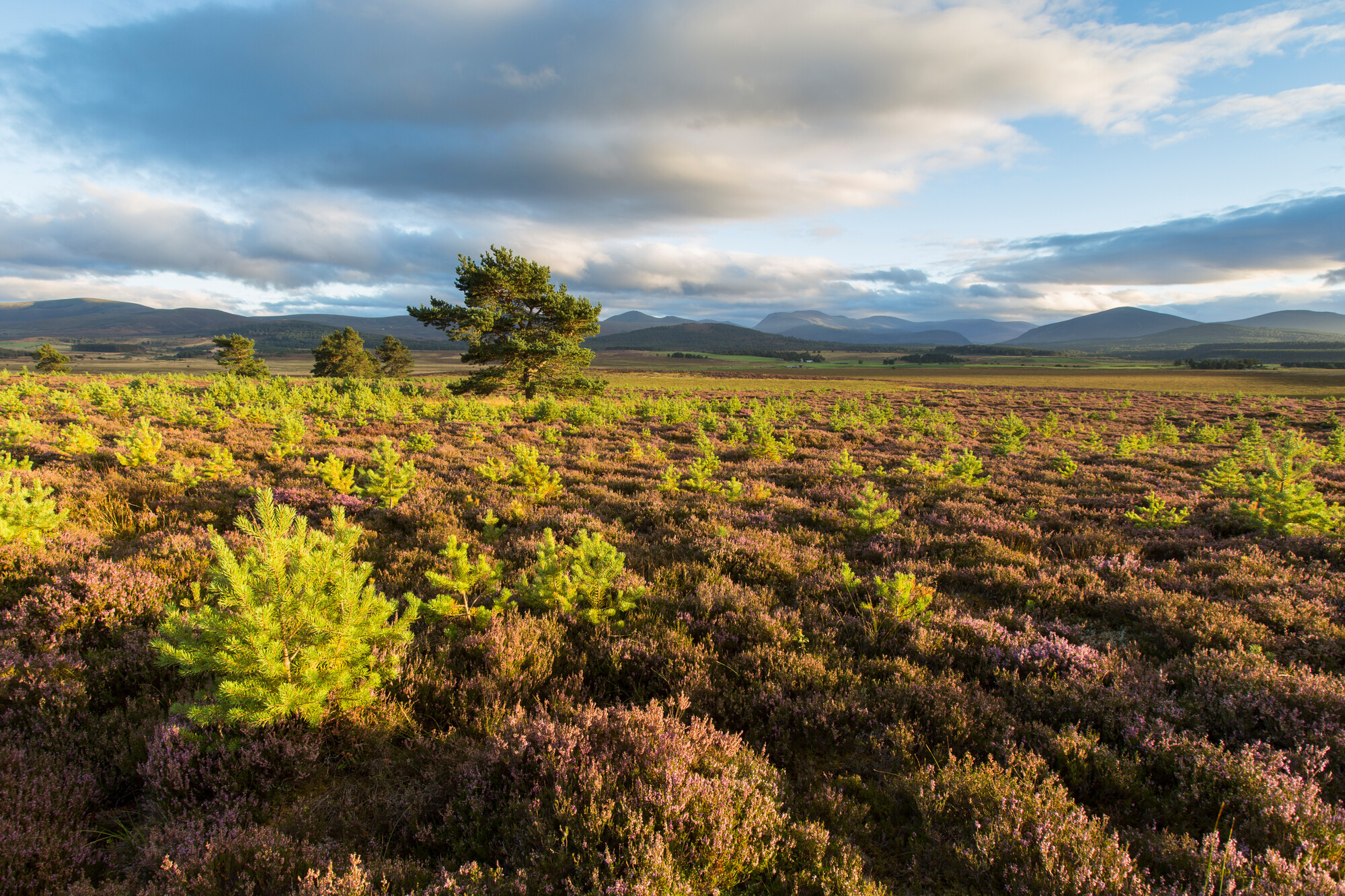
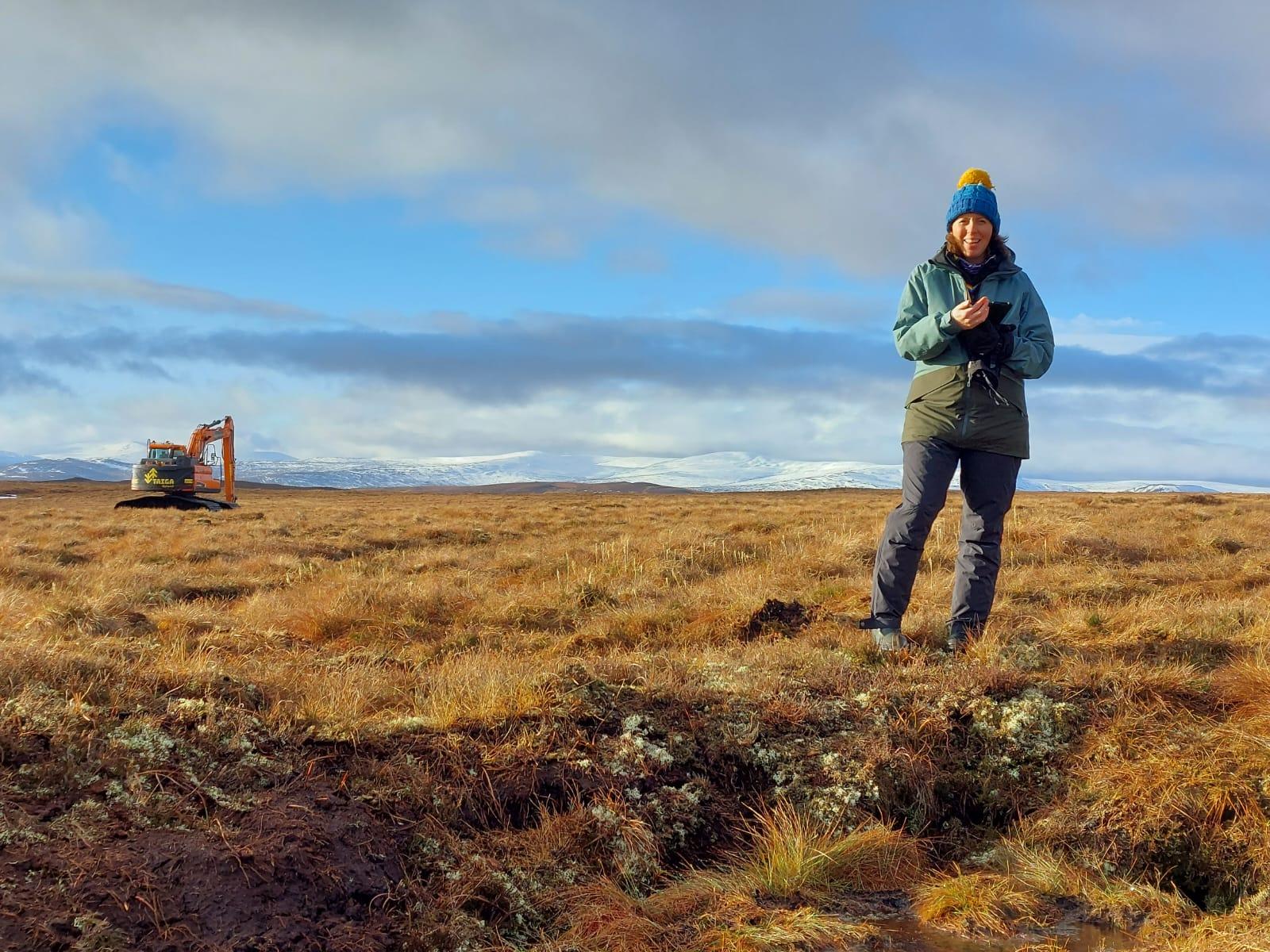
Our small team has decided to focus on areas of more challenging peatland restoration to support advances in the sector. One such area is peatlands at high altitudes. Peat over 600 meters above sea level is battered with extremes of weather including high winds, heavy rain, snowfall and frost, and dry spells. Restoration techniques need to be robust to these conditions, and vegetation takes longer to establish due to a shorter growing season.
Many of our projects fall within the 600-800m altitude range, but we estimate that 6000ha of the 90,000ha of our degraded peatland in the Cairngorms National Park is above 800m. We have questions to answer. Are these areas simply too challenging and expensive to restore? Will the restoration interventions last? How would techniques need to be adapted to work at high altitude?
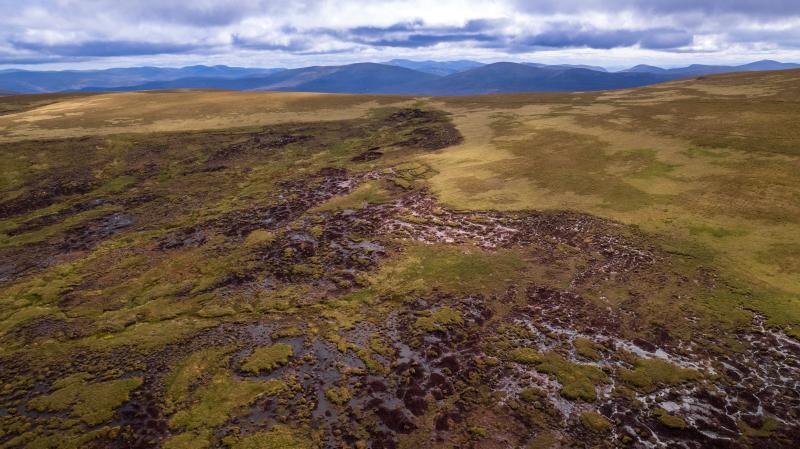
We have the opportunity to begin restoration of Moine Mhor on Glenfeshie Estate, owned by Wildland Ltd; a vast area of eroding peatland sitting atop the hill at 900-950 metres above sea level. Prior to Wildland Ltd taking ownership, this area was intensively grazed by sheep and red deer, but with reduced herbivore impact in recent times, the site has a chance to start recovering its lost vegetation. This would protect the exposed peat from being lost to the elements. Intervention will support the acceleration of revegetation of bare peat and protect it from being lost to the elements. This would also improve habitat conditions for birds and insects and improve water quality downstream.
Design considerations at 900m
Design work has started this year, for a project to be delivered in 2027.
As peatland restoration projects go, this site has a lot going for it; there is excellent 4x4 access to all reaches of the 900ha, herbivore pressure is low, the landowner is supportive both practically and financially.
There are other constraints to work around. The site has an abundance of wildlife to protect during project delivery, so this must be carefully surveyed and protections factored into the design.
At 900m, the snow arrives earlier and stays longer. This means that the project delivery will be sandwiched between the end of the breeding bird season and the onset of snow, just a few months later.
Techniques used to support re-vegetation, such as the use of mulch or seed may have to be trialled in different approaches to see what will take in the high winds and limited growing season.
Monitoring the outcomes
The project is important to us as it will show us what is possible at higher altitudes, and crucially, what isn’t. We are in the process of carefully mapping the site and collecting baseline data on things like depth of peat, peatland condition, and protected species. The site will have enhanced monitoring established to look in more detail on how techniques are holding up to the elements, and whether the intended outcomes are being realised. We will also survey the site using a drone to get quality before and after imagery to track the changes.
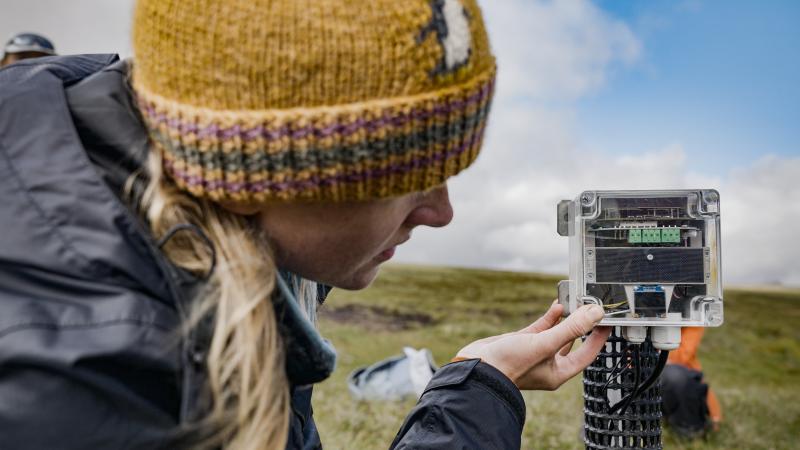
A bit of innovative kit we have installed on site is a Plant-E SensorStick. This device runs off a battery powered by interactions between the plants and the soil, which means you don’t have to stomp up the hill to change batteries. The data is beamed to a satellite, meaning we have instant access data about changes on site, including water table depth and soil temperatures.
Longer term we will work with the landowner to monitor the changes in birdlife resulting from the interventions. The area is home to breeding dotterel, dunlin and golden plover which are species that would benefit from the habitat enhancements we aim to deliver.
Prioritising the future programme
After the initial phase of work, we will review the initial delivery as well as the monitoring data to assess the project outcomes including logistics of high-altitude work and the initial signs of habitat recovery.
This analysis will inform future phases of work on other areas of Moine Mhor, as well as give us an indication of factors we need to consider for future high-altitude areas. Understanding the relative success of the initial phases in relation to the costs will help steer the future programme’s decision to intervene in sites at similar altitudes. We’ll be discussing these outcomes with our Peatland ACTION delivery partners, so it will impact not just our programme, but the rest of Scotland.
This project is delivered through Peatland ACTION, and is also part of the Cairngorms National Park Authority’s Cairngorms 2030 programme, made possible thanks to The National Lottery Heritage Fund.

More news and views
-
Come and meet us!
-
Draft Partnership Plan consultation goes live
-
Time well spent as we stop to blether about farm realities
-
Go ahead for Slugain Burn project
-
The King visits Lochan Uaine
-
Conference puts national spotlight on conservation in Cairngorms
-
LDP Evidence Report agreed by Scottish Government
-
Park Authority welcomes Ministerial Statement on wildfires