The new fire byelaw
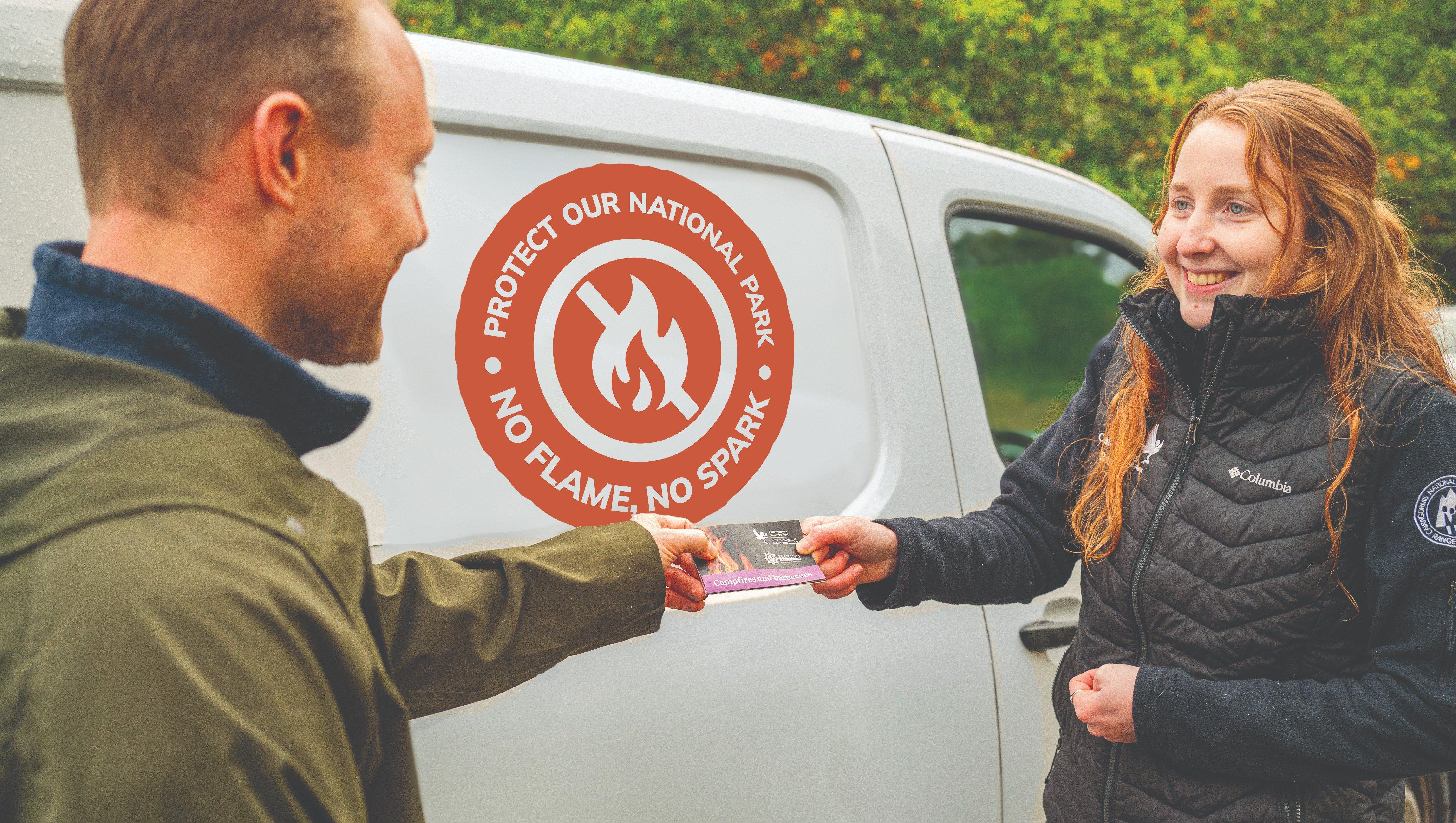
Protect our National Park. No flame, no spark
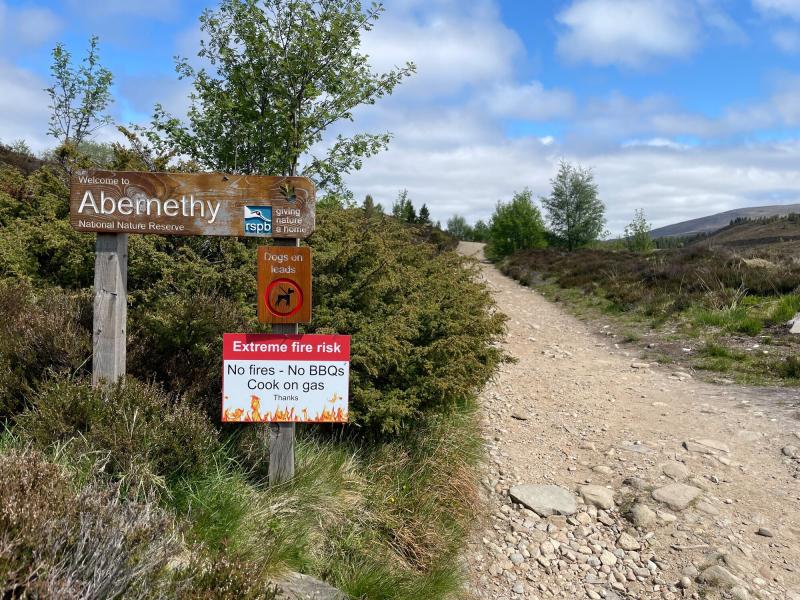
From 1 April to 30 September each year, fires and barbecues are banned in the National Park under the Cairngorms National Park Fire Management Byelaw (2025). Breaking the byelaw could result in a fine of up to £500.
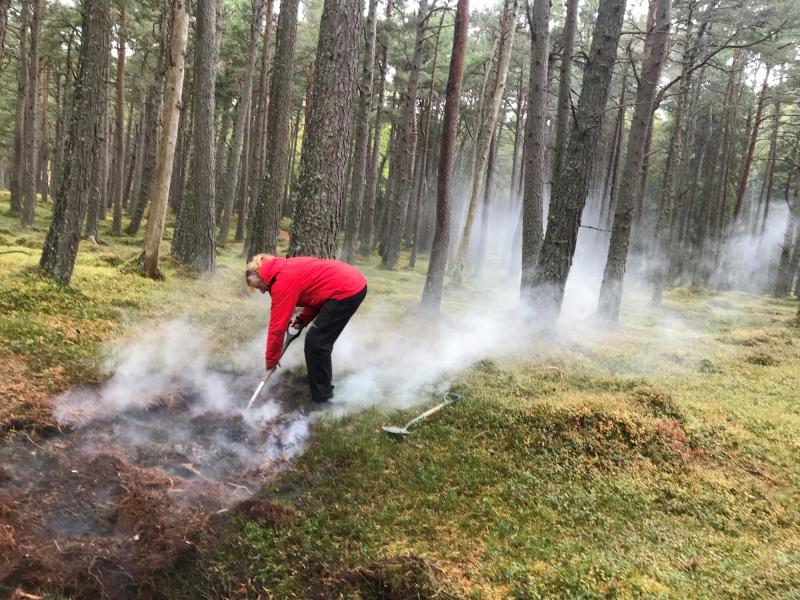
The reason for this is simple: if we want to protect what we all love, we must act. In the Cairngorms – as in so many places around the world – our weather patterns are changing. In summer we’ve experienced more severe hot spells and drought, making the threat of wildfire greater than ever before.
The National Park is home to precious landscapes, rare wildlife and more than 18,000 people. It is a treasured haven for local residents and visitors alike, and a wildfire has the potential to be devastating. People often ask us what they can do to protect and look after this special place. One of the most straightforward answers is this: don’t light fires.
Fire byelaw - your questions answered
We've pulled together answers to some of the most common fire byelaw questions below; however, if you have a question which isn't covered please email us at [email protected] and we will come back to you as soon as we can.
Yes, fires and barbecues are allowed in people’s gardens – including in short term lets and holiday cottages.
In times of high fire risk, extreme caution should always be exercised, even in the garden. Sparks can fly and it only takes one to start a wildfire.
If you are concerned about a live or smouldering fire call 999, ask for the Fire Service and provide them with the location.
If you see or suspect anyone acting suspiciously call Police Scotland on 101 or Crimestoppers on 0800 555 111.
If you find evidence of a recent fire that is cold, this does not need to be reported; however, if you know the land manager or see a ranger it may be helpful to mention it to them and share the location.
Breaking the byelaw can result in a fine of up to £500. This can be enforced by the police, or by Cairngorms National Park Authority ranger staff.
Registered campsites are not included under the byelaw, so you will need to check with the specific site whether they allow fires and / or barbecues or not.
No, campfires are not permitted in any shape or form. This includes mesh or metal fire pits, fire bowls and portable stoves.
Most camping stoves and gas barbecues are allowed, so you can still cook your dinner! Wood and charcoal stoves are not permitted under the byelaw, but if your stove uses gas or liquid fuel, methylated spirits or solid fuel blocks then you are good to go.
Always follow Scottish Outdoor Access Code guidance when using camping stoves and gas barbecues. This includes placing your stove on a level, non-flammable surface away from dry grass and vegetation (and your tent!), and keeping a close watch while using it. Be particularly careful at periods of high fire risk.
Yes! Using the stove or fireplace in a bothy is allowed. Campfires outside bothies are not permitted, though.
The Scottish Outdoor Access Code says that you should never light a campfire in woods, on peaty ground, farmland, cultural heritage sites, near buildings or when there is a high fire risk.
Outwith the fire byelaw period there is still almost nowhere in the National Park where you could light a fire responsibly. We would ask you to help set a good example to others by not lighting a campfire anywhere, anytime.
No, but it only takes one spark, so anyone lighting and smoking a cigarette should always make sure that it is put out properly and disposed of carefully. Although cigarette ends may appear to cool down quickly, they can still ignite dry grass if left on the ground.
The same goes for glass bottles or any pieces of broken glass, as these act as a magnifying glass for the sun and can start fires.
Landowners – including farmers and tenant farmers – can have fires on their land. Tenants may also include businesses that use fires, such as wood-fired saunas.
Landowners also have discretion to be able to grant permission for fires to take place on their land, which may be of interest to groups like scouts, forest schools, bushcrafters etc. This must be provided in writing and show the dates and location that permission has been granted for. Landowners must be contacted in advance, and you should ensure that you have a copy of the written permission available to show if asked.
In times of high fire risk lighting any fires should always be avoided, even if you have permission. For more info download our landowner guidance document.
Groups - eg scouts, forest schools, bushcrafters etc - that wish to have a fire on private land must seek written permission from the landowner. This document must show the dates and location that permission has been granted for.
Landowners must be contacted in advance, and you should ensure that you have a copy of the written permission available to show if asked.
In times of high fire risk lighting any fires should always be avoided, even if you have permission.
If you are a local business, landowner or community group we'd welcome your help in helping spread the word about the fire management byelaw. We've pulled together a set of resources below for you to use.
This includes social media, website and TV graphics, as well as an online order form to request physical materials (from posters to beer mats and window stickers) be posted out to you free of charge.
We're investing heavily in a targeted communications campaign, ensuring that everyone in the Cairngorms National Park knows the new rules, and that visitors from all over know what to expect before making the journey. This will be backed up by on-site signage, ranger patrols, local business engagement and much more.
You can help take care of the communities, wildlife and habitats of the Cairngorms by spreading the word: Protect our National Park. No flame, no spark.
The fire byelaw came into force for the first time on 1 April 2026, but preparation for the byelaw began long before.
In 2024, the Park Authority consulted on the potential introduction of a recreational fire byelaw. With broad public support for the idea, the Park Authority consulted again on the specific wording of the byelaw, before submitting it to Scottish Government ministers for approval.
The existing byelaw was approved on 25 September 2025 and work has since focused on enforcement and training, a communications campaign, signage at key locations and work with partners to ensure a joined-up approach.
Click here to read more about how the fire byelaw came about.
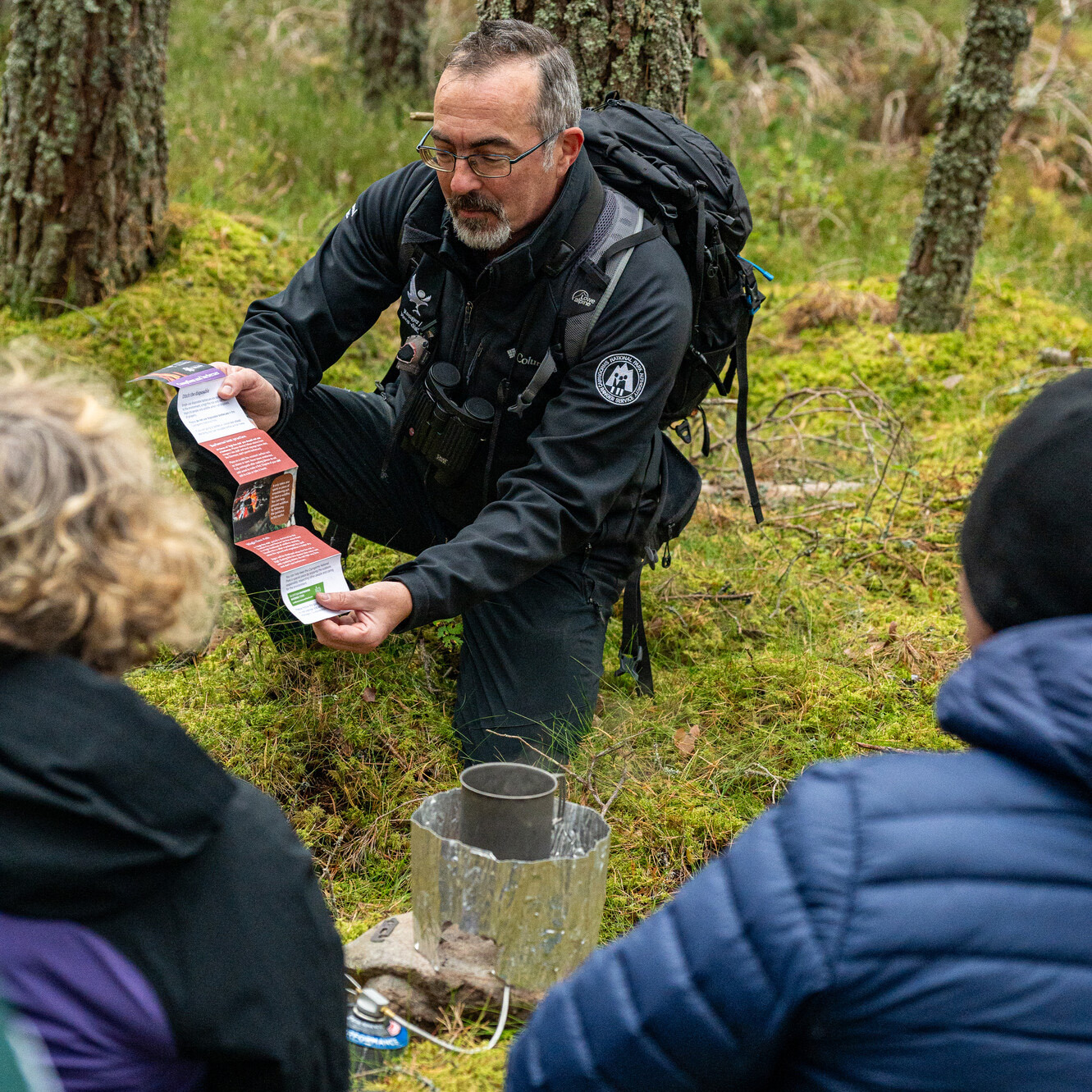
A significant part of our work to prevent wildfires is delivered through the Park Authority ranger service and our partner ranger services, who patrol the National Park daily, engaging with people and providing helpful information and resources on responsible access. During the 2025 season alone Park Authority rangers engaged with 6,643 people and dealt with and removed 615 fire sites.
In addition to direct delivery, the Park Authority funds partner ranger services in the National Park, putting boots on the ground to be able to make a difference in communities across the Cairngorms. In the past few years, we've funded additional police patrols in high-risk areas, ensuring a swift response to fire setting and other anti-social behaviours.
Collaboration on this issue is key, which is why we've coordinated our communications on fire risk with Scottish Government, VisitScotland and other local and national partners, developing an alerts system for social media to disseminate further information to the public in times of fire risk.
We host fortnightly Managing for Visitors meetings with key partners throughout the summer season to respond to emerging trends or issues, and meet monthly in winter to coordinate planning for the season ahead with our partner agencies and landowners.
Our work in this area is not limited to prevention, either. Our land management team works closely with landowners, managers and workers across the Cairngorms to ensure we are as prepared as possible in the event of a wildfire.
Click here for more information on our Integrated Wildlife Management Plan.
No, the byelaw does not cover muirburn. In 2024, new legislation for muirburn was introduced by the Wildlife Management & Muirburn (Scotland) Act.
The Scottish Government has delayed the introduction of the new muirburn licence to autumn 2026. From this point onwards, a licence will be required from NatureScot to carry out muirburn on any land in Scotland. It will be an offence to carry out muirburn without a licence.
The fire byelaw bans the use of barbecues in the National Park but it does not legally prevent the sale of disposable barbecues by individual retailers. However, as part of the byelaw rollout we wrote to retailers within the National Park encouraging them not to stock these items. Click here to read our letter to retailers, sent on 1 April 2026.
We have also been working with partners at a national level to encourage retailers to stop selling disposable barbecues and will continue to advocate for this. We would encourage individuals who feel strongly on this to share their views with retailers directly.
No flame, no spark - partner resources
Whether you are a local business, community group or landowner, there are a number of ways you can help spread the word about the fire management byelaw. We've pulled together a suite of materials below, but you can also contact us at [email protected] to request specific items or additional material.
- 'No flame, no spark' graphic for social media / websites - circular or landscape
- No fires or barbecues poster - A3 portrait or A4 portrait or click here for hard copies
- No fires or barbecues signage - A3 square or A4 square
- No fires or barbecues leaflet - A7 landscape - click here for hard copies
- 'Table talker' display for restaurant / B&B tables - A6 portrait - click here for hard copies
- Social media graphics - 4:5 ratio portrait or 9:16 ratio portrait
- TV screen graphic - 9:16 ratio landscape
- Beer mat - click here for hard copies
- Car sticker - click here for hard copies
- Window sticker - click here for hard copies
Planning and preparedness
Our work in this area is not limited to prevention, and our land management team works closely with landowners, managers and workers across the Cairngorms to ensure we are as prepared as possible in the event of a wildfire.
Future projections indicate that the National Park will experience further warming over the coming decades, resulting in an increasing number of dry days and number of consecutive dry days, during summer months.
The Integrated Wildfire Management Plan – the first of its kind in the UK – aims to provide support and guidance for land managers in the National Park to reduce the risk of fires, be better prepared to tackle wildfires and to make the landscape more resilient. Containing a number of recommendations and actions, the plan was approved by the Park Authority Board in June 2025.
In addition to the plan our Climate Adaptation Fund has awarded money for fire-fighting equipment and training on land in the Cairngorms, providing the practical tools and skills necessary to respond to the increasing risk of wildfires in the National Park.
Download a template wildfire risk assessment | Download a template estate fire plan
-

Date
Ongoing
-

Partnership plan objectives
-

Partners
- Scottish Fire and Rescue Service
- Forestry and Land Scotland
- NatureScot
- Police Scotland
- Scottish Government
- Land managers / estates